Youths of the oil-rich Ogoni ethnic nationality in Rivers State have demanded that the Nigerian National Petroleum Company Limited (NNPCL) provide at least 500 direct employment opportunities for qualified youths in the area as part of plans to resume oil exploration and production in Ogoniland.
The demand comes against the backdrop of the 40 employment slots reportedly allocated to Ogoni youths by the national oil company and its subsidiaries as part of measures to rebuild confidence ahead of the proposed return of oil operations to the area.
The youths, under the umbrella of the Ogoni Youth Federation (OYF) Worldwide, described the 40 job opportunities as grossly inadequate considering the historical contribution of Ogoni to Nigeria’s oil industry and the prolonged economic consequences of the suspension of oil exploration in the area.
The group has consequently resolved to convene a national congress of Ogoni youths to deliberate on the planned resumption of oil and gas activities and address growing concerns and divisions surrounding the development.
Speaking in Port Harcourt during the weekend at the inauguration of the Planning Committee for the proposed congress, President-General of OYF Worldwide, Legborsi Yamaabana, said the gathering would provide an opportunity for Ogoni youths to collectively examine issues surrounding the proposed return of oil exploration.
Yamaabana commended President Bola Ahmed Tinubu for what he described as renewed efforts by the Federal Government to reopen discussions around oil exploration and production in Ogoniland after decades of suspension.
However, he cautioned that the proposed resumption of oil activities must be handled with sensitivity and fairness, given the history of environmental degradation, economic marginalisation and community grievances associated with oil production in the region.
He said Ogoni was currently at a critical point in its history and that decisions concerning the future of oil exploration could have far-reaching implications for the people and the wider Niger Delta.
“The Ogoni nation stands at a critical crossroads in its history,” Yamaabana said, noting that the renewed attention from the Federal Government had generated significant interest among the people.
He stressed that any engagement concerning Ogoniland should be based on environmental justice, equitable benefit-sharing and protection of the rights and dignity of the Ogoni people.
According to him, Ogoni youths must have a meaningful role in determining the future of their communities, particularly because they would bear the long-term consequences of decisions taken today.
Yamaabana described the Ogoni struggle as an ongoing issue rather than merely a historical event, arguing that it remains closely connected to the broader debate about sustainable development, environmental protection and resource control in the Niger Delta.
He also appealed to Ogoni youths and community leaders to remain calm over the 40 employment slots reportedly allocated by NNPCL.
The OYF leader acknowledged that employment opportunities were important but argued that the number allocated was far below what would be considered reasonable given the circumstances.
He therefore announced that the federation would use the proposed congress to formally demand a minimum of 500 direct employment opportunities for qualified Ogoni youths in NNPCL and its subsidiaries.
According to the organisation, the demand is intended to provide a more meaningful pathway for young people who have experienced prolonged economic inactivity during the more than three decades of suspended oil operations.
OYF said the controversy surrounding the 40 slots should not become a source of division among Ogoni communities.
“In the interim, the leadership of OYF Worldwide has observed the unnecessary tension and uproar surrounding the reported 40 employment slots allocated to Ogoni youths at NNPCL and its subsidiaries, as part of the Federal Government’s confidence-building measure toward the resumption of oil and gas activities in Ogoniland,” the organisation said.
The federation described the 40 positions as “paltry and insignificant” when measured against the sacrifices made by the Ogoni people over the years.
It warned against allowing competition for the limited opportunities to create friction among youths, community groups and political stakeholders.
OYF appealed to Ogoni political, traditional and community leaders to avoid unnecessary disputes over the available employment slots and instead focus on developing a comprehensive framework that would ensure broader benefits for the people.
“We strongly appeal to all Ogoni political, traditional, and community leaders to sheath their swords, maintain calm, and refrain from unnecessary squabbles over crumbs,” the organisation said.
The federation further emphasised that the upcoming congress would be the appropriate platform for Ogoni youths to determine their collective position on the planned resumption of oil activities.
It noted that the proposed 500-job demand was not intended to pre-empt the decisions of the congress, which is expected to consider several issues relating to oil exploration, employment, environmental protection and community participation.
“Without pre-empting the sovereign deliberations of the upcoming congress, let it be noted that Ogoni youth will not settle for tokenism,” OYF declared.
The group said it would formally place the demand for at least 500 direct employment opportunities before the congress, with the expectation that the demand would subsequently form part of engagements with the Federal Government and NNPCL.
“At the upcoming congress, we shall formally demand a minimum of 500 direct employment opportunities within the Nigerian National Petroleum Company Limited (NNPCL) and its subsidiaries for qualified Ogoni youths, who have been economically sidelined and left inactive throughout this 33-year stalemate,” the federation said.
The planned congress is therefore expected to serve as a major platform for Ogoni youths to articulate their expectations regarding the proposed return of oil operations.
Beyond employment, the gathering is likely to focus on broader questions surrounding environmental remediation, community participation, compensation, infrastructure and equitable distribution of benefits from oil and gas activities.
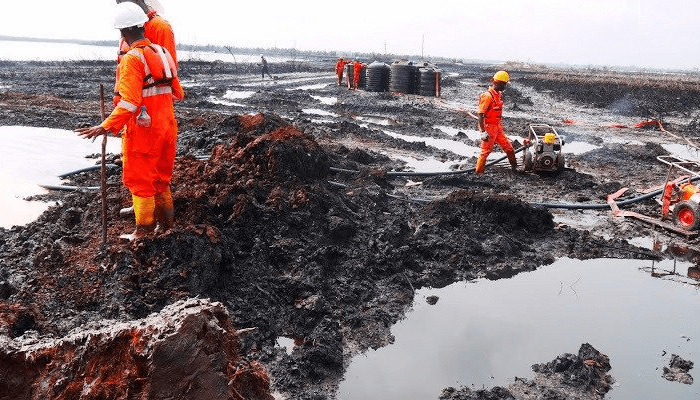
The Ogoni region has long remained central to Nigeria’s debate over environmental justice and resource development, particularly because of the environmental consequences associated with decades of oil exploration.
Against this background, OYF insists that any renewed oil activity must be accompanied by meaningful benefits for local communities and opportunities for the younger generation.
The federation’s demand for 500 jobs represents an attempt to ensure that Ogoni youths are not merely observers of renewed economic activity in their homeland but become active participants and beneficiaries.
As preparations for the national congress continue, the group has urged stakeholders to maintain peace and unity while awaiting the outcome of the collective deliberations.
The proposed congress could ultimately provide a platform for Ogoni youths to establish a unified position on the resumption of oil exploration and present a structured set of demands to the Federal Government and NNPCL.
For the youths, the central message is that any return to oil production in Ogoniland must go beyond symbolic gestures and provide tangible economic opportunities while addressing the environmental and historical concerns that have shaped the Ogoni struggle for decades.