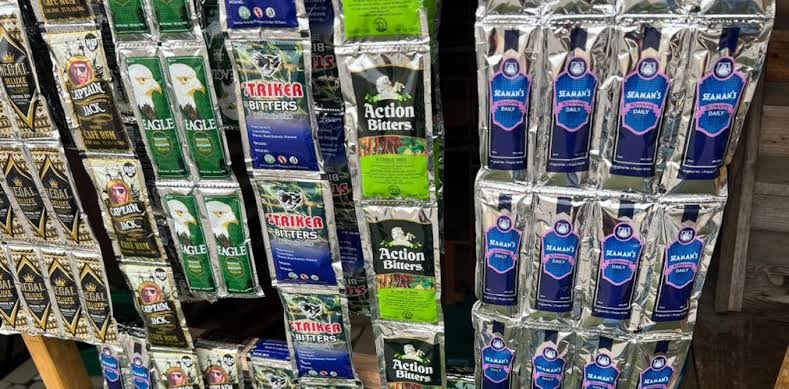
The National Agency for Food and Drug Administration and Control (NAFDAC) has reiterated that it will not reverse its ban on small-volume alcoholic drinks in Nigeria, insisting that the policy is a critical public health measure aimed at protecting young people and reducing alcohol-related harm.
The agency stated that enforcement of the ban is already in progress across several parts of the country and warned manufacturers and distributors that the implementation would continue until the affected products are completely removed from the market.
Speaking in an interview, NAFDAC’s South-East Zonal Director, Dr Festus Ukadike, said the current enforcement phase is focused on manufacturers, distributors and marketers of sachet alcoholic beverages and other alcohol products packaged below the approved volume.
According to him, the next stage of the operation will involve a broader market sweep to ensure that remaining stocks are withdrawn from circulation.
Ukadike stressed that the agency’s position on the policy is final and that no consideration is being given to reversing the ban.
He explained that the measure is not intended to shut down legitimate businesses, noting that manufacturers remain free to continue producing alcoholic beverages in approved packaging sizes.
“The ban does not stop companies from operating,” he said. “Manufacturers can continue to produce alcoholic beverages in bottles of 200 millilitres and above.”
The NAFDAC official disclosed that enforcement activities have already led to arrests and product seizures in several South-East states, including Enugu, Imo, Abia, Ebonyi and Anambra.
He said regulatory officers have intensified monitoring of warehouses, distribution centres, retail outlets and open markets to identify and confiscate prohibited products.
Ukadike identified the protection of children and adolescents from early exposure to alcohol as one of the major motivations behind the policy.
According to him, the widespread availability of cheap sachet alcoholic drinks has made alcohol easily accessible to underage persons, thereby contributing to unhealthy behaviours and long-term health risks.
“If our children are no longer exposed to sachet alcohol, they will live healthier lives, curb antisocial behaviours and promote the country’s fight against cancer and other terminal diseases,” he said.
He added that excessive alcohol consumption has been linked to a range of health conditions, including liver disease, certain cancers, cardiovascular problems and mental health disorders, and argued that reducing access to inexpensive alcohol products is an important preventive strategy.
Ukadike also urged adult consumers to moderate their alcohol intake, insisting that the removal of sachet alcohol from the market should not be regarded as a major inconvenience.
According to him, responsible alcohol consumption remains essential regardless of packaging size.
Addressing concerns that the ban could make alcohol less affordable for low-income consumers, the NAFDAC director maintained that public health considerations must take precedence over commercial and pricing concerns.
He said the agency’s responsibility is to safeguard public health rather than promote alcohol consumption.
Ukadike further revealed that Nigeria is expected to adopt a stricter regulatory framework within the next 12 months under which no alcoholic drink will be permitted to be sold in packaging smaller than 200ml.
He described the proposed framework as part of a broader effort to strengthen alcohol regulation, improve public health outcomes and align Nigeria’s policies with international best practices.
The ban has generated mixed reactions among consumers, traders and public health advocates.
Some members of the public support the policy, arguing that it could help reduce alcohol abuse among young people and improve road safety.
Others believe the restriction should be implemented more selectively.
A consumer identified as Charles Otubo said he supports tighter regulation of alcohol sales but suggested that the restriction should be limited to motor parks and similar locations where alcohol consumption by drivers could contribute to road accidents.
According to him, targeted enforcement in such areas might be more effective in reducing drunk driving.
Another consumer, identified simply as Godwin, said he had personally observed schoolchildren purchasing sachet alcoholic drinks, hiding them in their school bags and taking them to school premises.
He argued that the ease with which minors can obtain small alcoholic sachets is a serious social concern.
Godwin proposed that alcoholic beverages should be sold only through designated liquor stores where age restrictions can be more effectively monitored and enforced.
Public health experts have long expressed concern about the marketing and distribution of sachet alcohol, particularly its low cost and portability, which they say make it attractive to underage consumers.
NAFDAC has repeatedly maintained that the ban is part of a broader national strategy to reduce harmful alcohol consumption and protect vulnerable groups, especially children and adolescents.
With enforcement now expanding across multiple states, the agency says it will continue working with law enforcement agencies, market authorities and other stakeholders to ensure full compliance with the policy and prevent prohibited products from returning to the market.