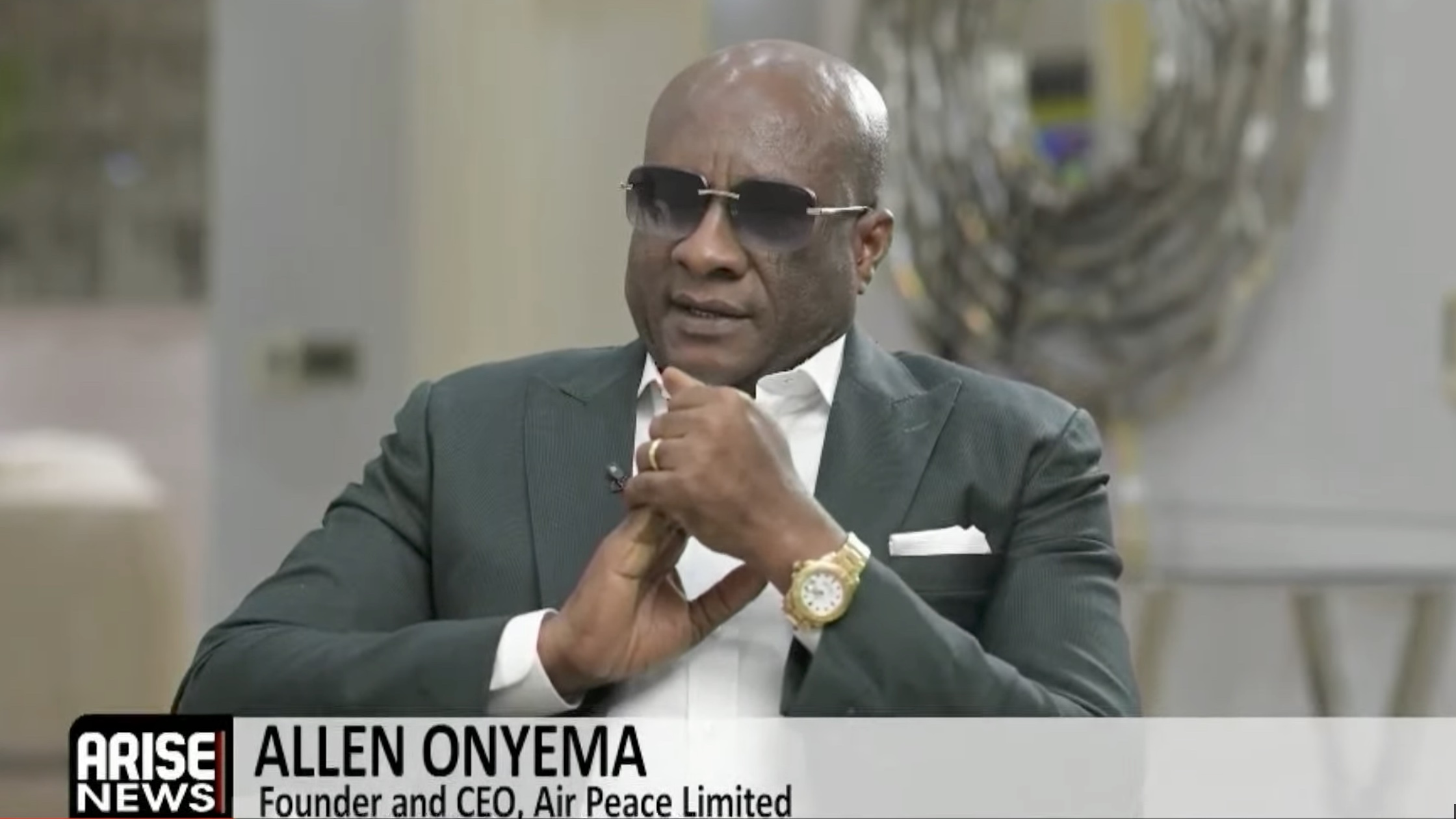
The Founder and Chief Executive Officer of Air Peace, Allen Onyema, has called on Nigerians to boycott South Africa and suspend further investments in the country in response to recurring xenophobic attacks against Nigerians and other foreign nationals.
Speaking during an interview on ARISE News on Monday, Onyema expressed deep concern over the continued harassment, intimidation, and violence directed at Nigerians living and conducting business in South Africa. While supporting calls for consequences against South Africa over the attacks, he emphasized that any response should be peaceful, lawful, and focused on economic measures rather than violence or retaliation against South African businesses operating in Nigeria.
According to Onyema, the repeated attacks on Nigerians have become unacceptable and require a strong response from both the Nigerian government and citizens. He criticized South African authorities for what he described as their inability or unwillingness to adequately protect foreign nationals whenever xenophobic violence erupts.
He questioned how such attacks could repeatedly occur in a country with established security institutions, arguing that law enforcement agencies should be capable of preventing mob actions against foreigners.
Onyema lamented situations where foreign nationals are allegedly singled out, harassed, and forced to prove their right to remain in the country. He described reports of individuals being dragged from their homes, interrogated by hostile groups, and ordered to leave South Africa as disturbing and inconsistent with the principles of human rights and international relations.
The airline boss stressed that many Nigerians residing in South Africa are not a burden on the country but are contributing significantly to its economy through entrepreneurship, investment, and job creation. He noted that several Nigerians have established businesses using their own resources and have created opportunities that benefit local communities and the South African economy.
According to him, rather than being targeted, such entrepreneurs should be appreciated for their contributions to economic development. He argued that Nigerians operating businesses in South Africa often bring innovation, skills, and investment capital that help stimulate commercial activities.
Onyema further stated that South Africans could benefit from learning entrepreneurial skills from many of the Nigerians who have successfully established businesses in the country. He maintained that economic cooperation and mutual respect should define relations between Africans rather than hostility and discrimination.
While supporting calls for a response to the attacks, Onyema rejected any suggestion of violent reprisals. He urged Nigerians to remain peaceful and avoid taking actions that could endanger innocent people or damage diplomatic relations between the two countries.
He emphasized that Nigerians are generally welcoming and hospitable to foreigners and should not resort to the kind of actions that they have experienced elsewhere.
The Air Peace chairman also opposed proposals for the closure of South African-owned companies operating in Nigeria. He argued that such measures could hurt Nigerians who have investments, employment, and financial interests in those businesses.
According to him, companies such as MTN and other South African enterprises operating in Nigeria provide jobs and economic opportunities for many Nigerians. He warned that shutting them down could have unintended consequences for local investors and workers.
Instead, Onyema advocated what he described as a more powerful and effective form of retaliation through economic disengagement. He urged Nigerians to deliberately avoid investing in South Africa and to withdraw financial support from the country’s economy.
He explained that refusing to invest in South Africa would send a clear message without resorting to confrontation or violence. According to him, economic decisions often have a greater impact than street protests or acts of retaliation.
Onyema maintained that Nigerians should focus on protecting their economic interests by directing investments to countries that value and respect them. He argued that individuals and businesses should not continue supporting an environment where they feel unwelcome or unsafe.
The aviation entrepreneur added that South Africans should remain free to invest in Nigeria if they choose, stressing that his proposed response is not based on hostility but on the principle of withdrawing support from those who fail to show mutual respect.
He described economic boycotts as a legitimate and peaceful tool for expressing dissatisfaction and encouraging change. According to him, Nigerians should use their economic influence strategically to promote fairness and accountability.
Concluding his remarks, Onyema reiterated that his call is not for confrontation but for a peaceful economic response that reflects the frustrations of many Nigerians over recurring xenophobic incidents.
He argued that withdrawing financial support and avoiding investment in South Africa would constitute a powerful statement, demonstrating that respect and cooperation must form the foundation of relations between African nations. He maintained that such a non-violent approach would be more effective in addressing the issue while preserving peace and protecting innocent lives.