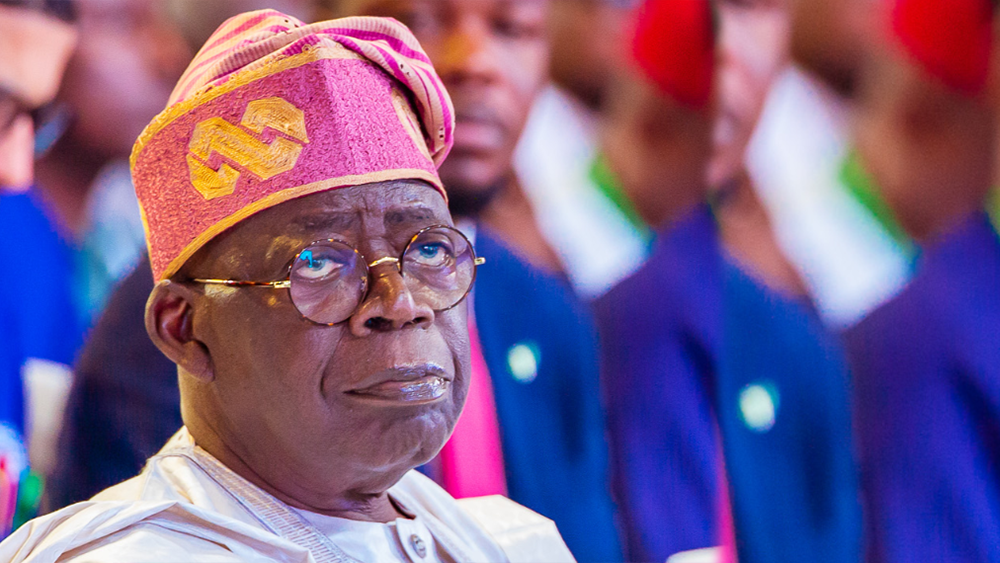
The Presidency has dismissed reports claiming that President Bola Ahmed Tinubu is planning to initiate constitutional amendments aimed at changing Nigeria’s name to the “United States of Nigeria” and abolishing Sharia Law in northern Nigeria.
The denial was contained in a statement issued on Thursday, May 21, by presidential spokesman Bayo Onanuga.
According to Onanuga, the report currently circulating in some sections of the media and online platforms is entirely false, misleading and politically motivated.
He described the publication as a calculated attempt by unnamed political actors to create confusion, provoke tension and destabilise the country ahead of the next general elections.
The presidential aide said the story relied heavily on anonymous sources and fabricated claims designed to misinform Nigerians and stir unnecessary controversy within the polity.
Onanuga maintained that there was no truth whatsoever in the allegation that President Tinubu was working on any constitutional amendment proposal seeking to rename Nigeria or abolish Islamic legal systems operating in parts of the North.
He urged Nigerians to completely disregard the report, insisting that it was the handiwork of individuals seeking to inflame public sentiment and create political unrest.
According to him, those behind the publication are agents of destabilisation who are determined to overheat the political atmosphere through misinformation and propaganda.
“The report is fake, malicious and politically motivated,” the presidential aide stated.
He added that the publication was part of deliberate efforts to generate public disaffection and trigger division among Nigerians ahead of the election season.
Onanuga also rejected claims that President Tinubu intended to transmit a proposed constitutional amendment bill allegedly code-named “Project True Federation” to the National Assembly before the end of the year.
According to the report being circulated, the bill was allegedly scheduled to be forwarded to lawmakers by December 15, shortly before the general elections.
However, the Presidency described the claim as baseless and entirely fabricated.
Onanuga stressed that constitutional amendments in Nigeria cannot be initiated or implemented arbitrarily by the President or any single arm of government.
He explained that the amendment process is clearly defined by the Nigerian Constitution and involves rigorous legal and legislative procedures.
According to him, any proposed constitutional amendment must undergo extensive scrutiny, debates and approvals before it can become law.
He noted that such amendments require the support of at least two-thirds of members of both chambers of the National Assembly.
In addition, he said the process also requires endorsement by no fewer than 24 State Houses of Assembly across the federation.
The presidential aide argued that the constitutional process is too elaborate and transparent for such sweeping changes to be secretly introduced as claimed in the report.
He further stated that President Tinubu remains focused on governance and implementation of ongoing economic reforms introduced by his administration.
According to Onanuga, the administration’s current priority is stabilising the economy and ensuring that government policies begin to yield visible benefits for ordinary Nigerians.
He said the President is committed to consolidating reforms in critical sectors with the aim of improving national development and economic growth.
The Presidency also cautioned media organisations and members of the public against spreading unverified information capable of causing panic or division in the country.
Observers say the denial comes amid increasing political activities and heightened public sensitivity ahead of the 2027 general elections.
Issues relating to constitutional restructuring, federalism and the role of Sharia Law have historically remained sensitive political subjects in Nigeria.
The country operates a federal system that allows some northern states to implement aspects of Sharia Law, particularly in matters relating to personal and criminal law among Muslims.
As a result, any report suggesting attempts to abolish Sharia Law or fundamentally alter the country’s identity is capable of generating strong reactions across different regions and religious groups.
Political analysts say misinformation and politically charged narratives often increase during election periods as parties and interest groups attempt to shape public opinion.
The Presidency’s statement is therefore being viewed as an effort to quickly contain speculation and reassure Nigerians that no such constitutional agenda exists.
Meanwhile, some Nigerians have continued to react to the controversy on social media, with many calling for responsible political communication and fact-checking before sensitive claims are circulated.
Others stressed the need for public discourse to focus more on governance, security and economic challenges rather than divisive narratives.
The Presidency reiterated that President Tinubu has no plan to rename Nigeria or abolish Sharia Law and urged citizens to remain vigilant against fake news and politically motivated disinformation campaigns.
According to Onanuga, the administration remains committed to national unity, constitutional democracy and policies aimed at improving the welfare of Nigerians.