U.S. President Donald Trump has ignited a fresh wave of international debate after resharing a controversial social media post that depicted the strategically vital Strait of Hormuz under a new name—the “Strait of Trump.”
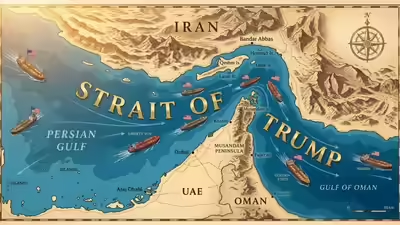
The post, shared on Wednesday, April 29, via Trump’s Truth Social platform, featured a digitally altered map in which the globally recognised maritime corridor was relabelled with the president’s name. Although there has been no formal policy announcement or diplomatic move to effect such a change, the symbolic gesture has drawn significant attention from political observers, maritime analysts, and global markets.
The Strait of Hormuz, which lies between Iran and Oman, is widely regarded as one of the most critical chokepoints in global energy logistics. It serves as the primary gateway for oil shipments from the Persian Gulf to international markets via the Gulf of Oman and the Arabian Sea. Estimates suggest that a substantial proportion of the world’s seaborne crude oil passes through this narrow passage daily, making it highly sensitive to geopolitical tensions.
Trump’s decision to amplify the post has been interpreted by many as a provocative signal, particularly against the backdrop of escalating tensions between the United States and Iran. The current standoff has seen increased U.S. naval activity in the region, including the interception of vessels suspected of transporting Iranian crude in violation of sanctions regimes.
While the renamed map carries no legal or diplomatic weight, analysts note that such symbolic actions can influence perceptions and potentially escalate already fragile geopolitical dynamics. International maritime conventions, governed by bodies such as the International Hydrographic Organization, do not recognise unilateral renaming of established international waterways, especially without multilateral agreement.
Nevertheless, the optics of the move have reverberated beyond diplomatic circles. Within hours of the post gaining traction, global oil markets showed signs of volatility. Traders reacted cautiously, pricing in the risk of further escalation in the Gulf region, where even minor disruptions can have outsized impacts on supply chains.
Energy analysts attribute the price movement not to the renaming itself, but to what it represents—a continuation of heightened rhetoric and strategic posturing between Washington and Tehran. The uncertainty surrounding ongoing nuclear negotiations and maritime security has already placed markets on edge, and the latest development has added another layer of unpredictability.
Trump had, in previous remarks, hinted at adopting alternative terminology when referring to the waterway, though such comments were largely dismissed at the time as rhetorical flourishes. However, the act of resharing a visual representation of the renamed strait has given those earlier suggestions renewed prominence.
Critics argue that the move undermines diplomatic norms and risks trivialising a region already fraught with tension. Some foreign policy experts warn that symbolic gestures, even when not backed by formal policy, can be interpreted as deliberate provocations by rival states.
Supporters of the former president, on the other hand, have framed the action as consistent with his unconventional communication style, often characterised by the use of social media to make bold, attention-grabbing statements. They argue that such tactics are designed to project strength and disrupt traditional diplomatic narratives.
Iranian officials have not issued an official response specifically addressing the renamed map, but state-affiliated media outlets have reportedly criticised the gesture as emblematic of what they describe as U.S. “provocation” in the region. The broader context of strained relations between the two countries continues to dominate diplomatic discourse, particularly around sanctions enforcement and freedom of navigation.
The U.S. Navy’s ongoing operations in and around the Strait of Hormuz remain a central point of contention. American forces have increased patrols and surveillance activities, citing the need to enforce international sanctions and ensure maritime security. Iran, in turn, has repeatedly condemned these actions as unlawful interference in its sovereign economic activities.
Maritime experts emphasise that the stability of the Strait of Hormuz is not merely a regional concern but a global one. Any disruption—whether through military confrontation, blockades, or even heightened rhetoric—can have cascading effects on energy prices, shipping insurance rates, and broader economic stability.
From a legal standpoint, the naming of international waterways is governed by long-established conventions that prioritise historical usage and international consensus. As such, any attempt—symbolic or otherwise—to rename the Strait of Hormuz unilaterally would carry no formal recognition within the global system.
However, in the realm of geopolitics, symbolism often carries weight beyond its legal standing. The reshared post has underscored the increasingly blurred lines between official policy, political messaging, and digital communication in shaping international relations.
As tensions persist, attention will remain focused on both diplomatic channels and informal signals emanating from key actors. Whether Trump’s latest move will translate into any tangible policy shift remains uncertain, but its immediate impact—fueling debate, market reactions, and geopolitical speculation—is already evident.
For now, the Strait of Hormuz retains its official name and status, but the controversy surrounding its symbolic rebranding highlights the fragility of the current geopolitical environment and the outsized role that rhetoric can play in shaping global perceptions and responses.