President William Ruto has stirred controversy after making pointed remarks about Nigeria’s economic conditions and the way its citizens speak English, in what appears to be a direct response to comments by Bola Ahmed Tinubu suggesting that Nigerians are faring better than citizens of some other African countries.
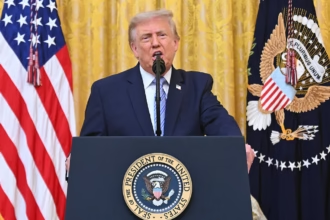
The exchange between the two leaders began after President Tinubu spoke during an official visit to Bayelsa State, where he commissioned a series of infrastructure projects and addressed growing public concerns about Nigeria’s economic situation. Amid widespread complaints over rising fuel prices and cost-of-living pressures, Tinubu urged Nigerians to remain optimistic, arguing that the country was still better positioned than some of its continental peers.
“It is very important that we are honest with our people,” Tinubu said. “Yes, I hear you from various angles of the economy. The fuel price is biting hard, but look around, let us thank God together that you are better off. Listen to them in Kenya and other African countries and what they are going through. We will not look back. We will continue to find ways to ameliorate the sufferings of the vulnerable.”
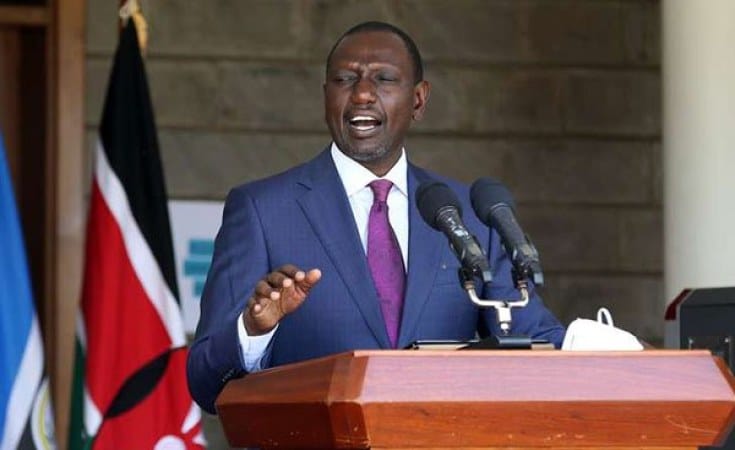
The remarks, which were intended to defend his administration’s economic policies, quickly drew attention beyond Nigeria’s borders. In a response that has since gone viral on social media, President Ruto rejected the comparison and offered a contrasting perspective on Kenya’s economic and human capital strengths.
In the video clip, Ruto highlighted what he described as Kenya’s educational achievements and linguistic proficiency, while also making a light-hearted but controversial jab at Nigerian English. “Our education is good. Our English is good. We speak the best English in the world,” he said. “If you listen to a Nigerian speak English, you’ll need a translator. We have the best human capital anywhere in the world.”
Although framed with humour, the comments were widely interpreted as a critique not only of Nigeria’s economic standing but also of its cultural and linguistic identity. Nigeria is home to a diverse linguistic landscape where English often blends with indigenous languages and Pidgin, creating distinct speech patterns that vary across regions. For many Nigerians, this linguistic diversity is seen as a reflection of cultural richness rather than a deficiency.
The exchange comes at a time when several African economies are facing mounting pressure due to global and domestic factors. Rising fuel prices, inflation, and currency instability have become common challenges across the continent, partly driven by international supply disruptions and geopolitical tensions affecting global energy markets, including concerns surrounding the strategic Strait of Hormuz.
Nigeria, despite being one of Africa’s largest oil producers, continues to grapple with structural economic challenges. These include persistent inflation, volatility in the naira, and longstanding issues with electricity generation and distribution. Power shortages, in particular, remain a major constraint on industrial productivity and economic growth.
Kenya, on the other hand, has positioned itself as a key regional hub for finance, technology, and innovation in East Africa. The country has made notable strides in digital finance and entrepreneurship, but it is not immune to economic pressures. Rising public debt, increased taxation, and cost-of-living concerns have also sparked public debate within Kenya.
The public reaction to the exchange between the two presidents has been swift and, in many cases, critical. On social media platforms, users from across Africa and the diaspora have weighed in, with many questioning the necessity and tone of the comparison.
Some commentators argued that the debate reflects a broader issue of intra-African rivalry that detracts from more pressing challenges facing the continent. A user identified as Bureau-39 wrote, “Let’s not drag the whole country into this issue between two politicians. Both countries speak good English—Kenya leans toward a clearer, more British-influenced style, while Nigeria mixes it with rich local flair and pidgin that can sound like its own dialect.”
Others questioned the relevance of comparing proficiency in a colonial language, with one user, Frank Bryant, asking, “Why should Africans be competing over who speaks the colonial masters’ language very well?” The comment reflects a longstanding critique of the continued prominence of colonial languages in defining standards of education and communication across African societies.
Additional reactions highlighted concerns about unity and perception among African nations. Some users pointed out that such exchanges risk reinforcing stereotypes and deepening divisions, while others called for greater focus on shared challenges such as economic development, governance, and regional cooperation.
The incident has also reignited discussions about identity and expression, particularly in relation to language. Nigerian English, often infused with local idioms and Pidgin, has evolved into a widely recognised variant that reflects the country’s multicultural character. Similarly, Kenyan English is shaped by its own linguistic influences, including Swahili and local languages, resulting in distinct patterns of speech.
For analysts, the controversy underscores the complex interplay between politics, identity, and public discourse in Africa’s digital age. Statements made by political leaders are now amplified rapidly across social media, where they are subject to interpretation, critique, and sometimes misrepresentation.
Beyond the immediate reactions, the exchange raises broader questions about leadership communication and the role of rhetoric in shaping public perception. While political leaders often use comparative narratives to highlight national achievements, such comparisons can become contentious when they appear to diminish other nations or cultures.
As both Nigeria and Kenya navigate their respective economic challenges, observers note that cooperation rather than competition may offer more constructive pathways forward. Both countries play significant roles in their regional blocs—Nigeria in West Africa and Kenya in East Africa—and share common interests in promoting economic stability, trade, and development across the continent.
Ultimately, the debate sparked by Ruto’s remarks reflects deeper conversations about pride, perception, and progress within Africa. While the comments may have been intended as a defence of Kenya’s achievements, they have also served as a reminder of the sensitivities involved in cross-national comparisons, particularly in a diverse and interconnected continent.
As reactions continue to unfold, the incident highlights the need for more measured discourse among leaders and citizens alike, especially at a time when collaboration is increasingly essential to addressing the shared challenges facing African nations.