The United States Department of State has unveiled plans to issue a limited-edition commemorative passport as part of activities marking America’s 250th anniversary, a move that is already generating attention due to its proposed inclusion of an image of Donald Trump. If implemented as outlined, the design would mark the first time a sitting U.S. president appears inside an official American passport.
According to officials familiar with the initiative, between 25,000 and 30,000 copies of the commemorative passport will be produced in the initial rollout. The special edition is expected to become available shortly before Independence Day, commonly observed on July 4, with distribution beginning at the Washington passport office. Applicants who process their passports in person at that location may receive the commemorative version by default, while standard passport booklets will remain accessible through other application channels nationwide.
The proposed design represents a notable departure from the longstanding conventions that have historically guided the visual identity of U.S. passports. Traditionally, American passports feature images of national landmarks, symbolic architecture, and iconic historical figures such as George Washington and Abraham Lincoln. These figures are typically included as part of a broader narrative celebrating the country’s founding principles and historical evolution, rather than contemporary political leadership.
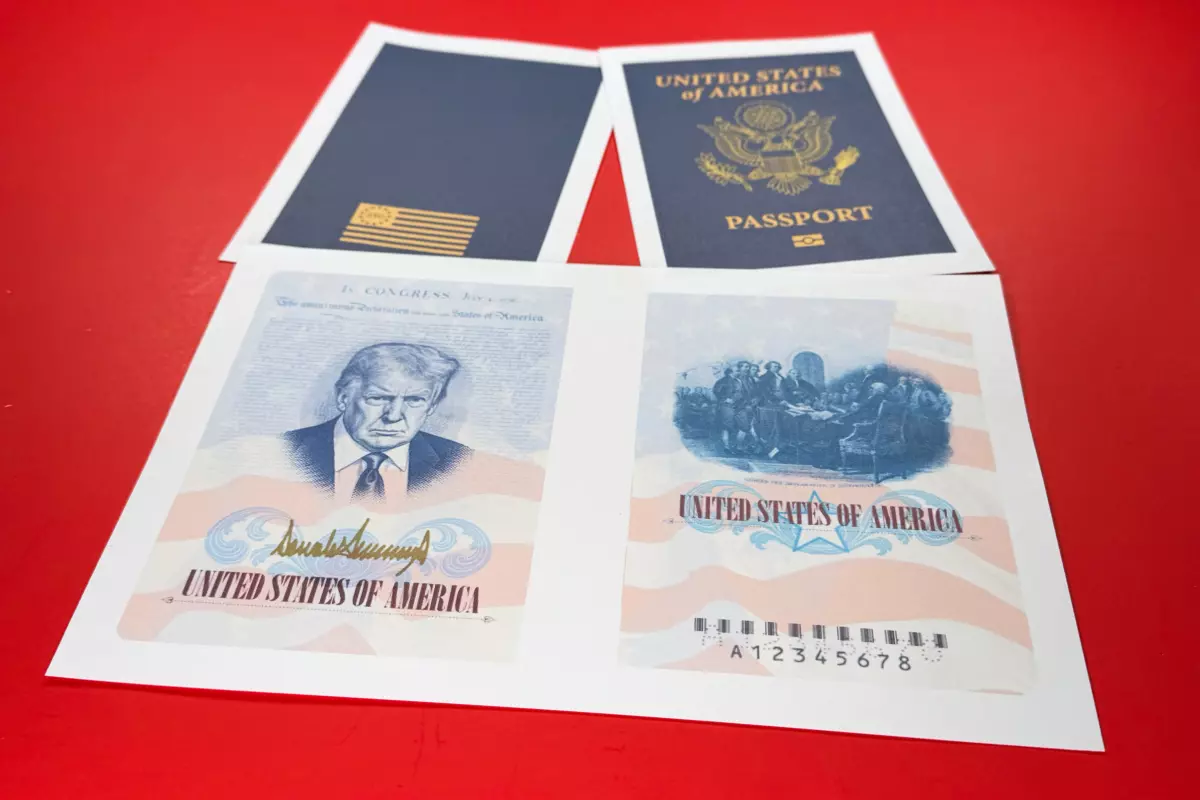
Under the new concept, the commemorative passport will incorporate a series of customised visual elements designed to reflect both the country’s heritage and its modern identity. Central to the design is the inclusion of Trump’s image on one of the interior pages, accompanied by a stylised gold rendering of his signature. The cover itself is also expected to deviate from the traditional dark blue format, featuring bold gold lettering and a redesigned layout intended to signal the significance of the 250th anniversary milestone.
Additional design features include a gold laminate American flag and a distinctive “250” emblem, both of which are meant to visually anchor the passport within the broader national celebrations planned for the anniversary. Officials say the document will retain all standard security features required for international travel, ensuring that the commemorative elements do not compromise its functionality or compliance with global passport standards.
A spokesperson for the State Department described the initiative as part of a wider effort to commemorate a historic moment in the nation’s history. According to the official, the design seeks to strike a balance between tradition and innovation, offering a modern reinterpretation of national symbols while maintaining the integrity of the passport as a secure identity document.
“The goal is to celebrate a significant milestone in a way that reflects both our heritage and our evolving national identity,” the spokesperson said, adding that the commemorative passport is intended to serve as both a functional document and a collectible item.
The announcement comes amid a series of broader discussions tied to the 250th anniversary, including proposals to feature Trump on commemorative currency and coins. While such initiatives are not unprecedented in the context of national anniversaries, the inclusion of a sitting president in official government-issued identification represents a significant shift from established practice.
Historically, U.S. policy and tradition have avoided incorporating living political figures into official symbols such as currency and passports. This convention has been rooted in a desire to maintain institutional neutrality and avoid the perception of political endorsement. As a result, the proposed passport design is likely to prompt debate among policymakers, historians, and the general public about the appropriateness of departing from these norms.
Supporters of the initiative may argue that the inclusion of a sitting president reflects the contemporary leadership associated with the milestone anniversary, framing it as a recognition of the current administration’s role in overseeing the commemorative period. Critics, however, are expected to raise concerns about precedent, arguing that such a move could blur the line between state symbolism and partisan politics.
The timing of the release, just ahead of Independence Day, underscores the symbolic significance of the initiative. The July 4 holiday commemorates the adoption of the Declaration of Independence in 1776 and is widely regarded as one of the most important dates in the American calendar. The 250th anniversary, often referred to as the “Semiquincentennial,” is expected to be marked by a wide range of events, exhibitions, and public programmes across the country.
Officials have indicated that the commemorative passport is only one component of a larger suite of initiatives designed to engage citizens and highlight the nation’s history. These efforts are expected to include educational campaigns, cultural events, and infrastructure projects aimed at celebrating the country’s legacy while also looking toward its future.
Despite the fanfare surrounding the announcement, questions remain about the long-term implications of the design choice. Analysts note that while limited-edition passports have been issued by various countries to mark special occasions, the inclusion of a current political leader is relatively uncommon and may set a new precedent for future administrations.
There are also practical considerations regarding the distribution and demand for the commemorative passports. With a relatively limited production run of up to 30,000 units, the documents could quickly become sought-after collector’s items, particularly among those interested in political memorabilia or historical artifacts. At the same time, the State Department has emphasised that standard passports will continue to be issued without interruption, ensuring that the commemorative version does not disrupt routine passport services.
As preparations for the 250th anniversary continue, the proposed passport design is likely to remain a focal point of public discussion. Whether viewed as a creative celebration of national identity or a controversial departure from tradition, the initiative underscores the broader tensions that often accompany efforts to reinterpret historical symbols in a modern context.
Ultimately, the success of the commemorative passport will depend not only on its design but also on how it is received by the American public. As the anniversary approaches, the debate surrounding the initiative may offer deeper insights into evolving attitudes toward national symbolism, political representation, and the ways in which history is commemorated in the United States.