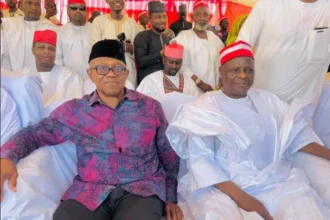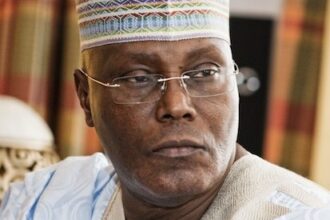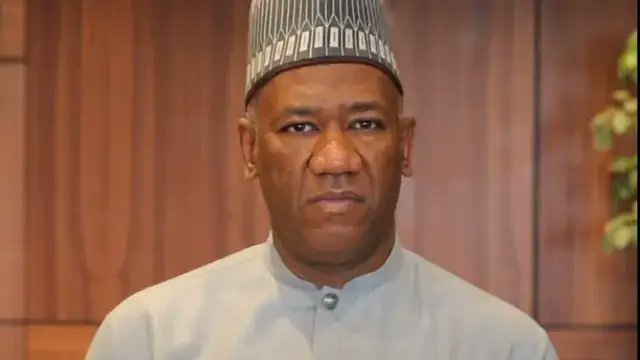
The 2023 vice-presidential candidate of the Labour Party, Yusuf Datti Baba-Ahmed, has formally announced his resignation from the party, marking a significant development in Nigeria’s evolving opposition politics. He also declared his intention to join the Peoples Redemption Party (PRP), signalling a strategic political realignment ahead of the 2027 general elections.
Baba-Ahmed made the announcement during an appearance on Politics Today on Channels Television, where he spoke candidly about the circumstances that led to his decision to exit the Labour Party. His departure comes amid ongoing tensions within opposition parties and increasing debate over the future direction of political alliances in the country.
Having contested the 2023 election alongside Peter Obi under the Labour Party platform, Baba-Ahmed was widely regarded as one of the prominent figures driving the party’s surge in popularity during that electoral cycle. However, he now argues that the party has significantly deviated from the ideals and principles that originally attracted him and many of its supporters.
According to him, internal disagreements and what he described as deliberate efforts to sideline him played a critical role in his decision. He alleged that certain individuals were strategically positioned within the party structure to undermine his influence and complicate his political engagement.
“They redeployed someone to come with a specific purpose, and because of the antecedents of the individual, to make life difficult, particularly for me,” Baba-Ahmed stated. “What the Labour Party stood for then is no longer what it is today.”
His remarks reflect broader concerns about internal cohesion within opposition parties in Nigeria, many of which have struggled with leadership disputes, factionalism, and ideological inconsistencies. Baba-Ahmed’s critique suggests that these internal dynamics have weakened the party’s ability to sustain the momentum it gained during the last election.
Beyond internal party issues, he also accused the ruling All Progressives Congress (APC) of deliberately undermining opposition parties. He claimed that the current administration has prioritised political dominance over governance, alleging that efforts to weaken rival parties have taken precedence over addressing key national challenges.
“We have had a government whose primary objective appears to be the destruction of other political parties,” he said. “Instead of focusing on insecurity, fixing the economy, and tackling corruption, what seems more important is dismantling opposition structures.”
While such claims remain contested within Nigeria’s political discourse, they underscore the deep mistrust that continues to define relations between ruling and opposition parties. Analysts note that allegations of political interference are not new, but they often intensify as election cycles approach.
Baba-Ahmed confirmed that his resignation from the Labour Party would take effect immediately, stating clearly that his next political destination is the Peoples Redemption Party. He described the PRP as a party with deep historical roots and ideological clarity, suggesting that it aligns more closely with his political vision.
“I’m leaving the Labour Party at midnight, and I’m joining the PRP,” he said. “PRP is the new destination. It is a party with history—about 75 years old—and it represents a legacy of progressive politics in Nigeria.”
The PRP, historically associated with the late Mallam Aminu Kano and known for its populist orientation, has in recent years played a relatively minor role in national politics. Baba-Ahmed’s entry into the party could potentially revitalise its national profile, especially if it succeeds in attracting other high-profile politicians seeking alternative platforms outside the dominant parties.
Looking ahead to the 2027 elections, Baba-Ahmed indicated that he would play an active role in shaping the PRP’s electoral strategy. He emphasised the need to present a credible and broadly acceptable candidate capable of appealing to diverse segments of the Nigerian electorate.
He suggested that the party might consider fielding what he described as “a genuine southern, possibly Christian candidate,” reflecting ongoing debates about power rotation, regional balance, and religious representation in Nigerian politics. These factors have historically influenced electoral outcomes and remain central to political negotiations ahead of major elections.
On the question of his own presidential ambition, Baba-Ahmed adopted a cautious tone. While he did not explicitly declare an intention to run for office, he also stopped short of ruling out the possibility. Instead, he framed his political journey in terms of personal achievements and broader contributions to national development.
“At 33, I was in the House of Representatives; at 41, I was in the Senate,” he noted. “I have established universities, contributed to healthcare infrastructure, and achieved a great deal professionally. Why do I have to be president or vice president?”
His remarks suggest a deliberate attempt to position himself as a statesman focused on impact rather than personal ambition, even as he remains an influential figure within Nigeria’s political space. Observers note that such positioning could provide strategic flexibility, allowing him to either pursue higher office or play a kingmaker role within his new party.
Baba-Ahmed’s exit from the Labour Party adds to a growing list of political realignments that have begun to shape the early contours of the 2027 election cycle. With opposition parties exploring coalition options, internal restructuring, and new alliances, his move to the PRP highlights the fluidity of Nigeria’s political environment.
For the Labour Party, his departure represents both a symbolic and strategic loss, given his visibility during the 2023 campaign. For the PRP, however, it offers an opportunity to reassert relevance and potentially reposition itself as a viable alternative within the opposition landscape.
As Nigeria gradually moves toward another election cycle, developments such as this are likely to intensify, with political actors recalibrating their strategies, forging new alliances, and redefining their platforms. Whether Baba-Ahmed’s move will significantly alter the balance of power remains to be seen, but it undeniably adds a new dimension to the unfolding political narrative.