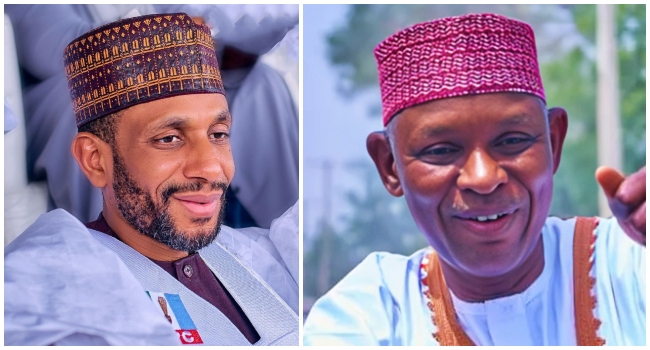
The Kano State House of Assembly has approved the nomination of Murtala Garo as the new Deputy Governor of the state, following the adoption of a report presented by its ad hoc screening committee during plenary on Monday.
The confirmation process, which was concluded without significant opposition, marks the final legislative step required for Garo’s appointment after his nomination by Abba Yusuf. The development fills the vacancy created by the resignation of former Deputy Governor Aminu Gwarzo in March 2026.
The report that paved the way for Garo’s confirmation was presented by the chairman of the 12-member screening committee, Bello Butubutua, who also serves as the Deputy Speaker of the House. The plenary session was presided over by the Speaker, Jibril Falgore.
In his presentation, Butubutua informed the Assembly that the committee had conducted a comprehensive screening exercise on the nominee and found him suitable for the office of Deputy Governor. He explained that the committee carefully evaluated Garo’s academic qualifications, professional track record, and overall public service experience in line with established legislative procedures.
According to him, the screening process was thorough and designed to ensure that the nominee met all constitutional and administrative requirements necessary for the role. He noted that Garo demonstrated competence, experience, and a clear understanding of governance issues during the exercise.
Following the presentation of the report, lawmakers deliberated briefly before unanimously adopting the committee’s recommendations, effectively confirming Garo’s appointment. The smooth passage of the nomination underscores the level of consensus within the Assembly regarding his suitability for the position.
Governor Yusuf had earlier transmitted Garo’s name to the House on April 22, requesting legislative approval in accordance with Section 191(3) of the 1999 Constitution of the Federal Republic of Nigeria. The provision empowers a state governor to nominate a replacement deputy governor in the event of a vacancy, subject to confirmation by the State House of Assembly.
The nomination came in response to the resignation of Gwarzo, which created a constitutional gap in the state’s executive structure. While the circumstances surrounding the resignation were not extensively debated during the confirmation process, the swift nomination and approval of a successor signal the government’s intent to maintain administrative continuity.
At 48, Garo is widely regarded as a seasoned political figure with significant experience in public administration. Over the years, he has held various positions in government, building a reputation as an administrator with a deep understanding of governance processes at both local and state levels.
Observers note that his appointment could strengthen the executive arm of government in Kano State, particularly at a time when effective coordination and policy implementation remain critical. His familiarity with the political landscape and governance structures is expected to complement the administration’s agenda and enhance service delivery.
The confirmation also reflects the constitutional balance between the executive and legislative arms of government, with the Assembly exercising its oversight role through the screening process. By subjecting the nominee to scrutiny before approval, lawmakers fulfilled their responsibility to ensure that only qualified individuals occupy key public offices.
Political analysts suggest that Garo’s emergence may have broader implications for governance in the state, especially in terms of political stability and administrative efficiency. As Deputy Governor, he will be expected to support the governor in policy formulation, implementation, and coordination of government activities.
His role will also involve representing the governor at official functions, engaging with stakeholders, and contributing to the overall governance framework of the state. Given his experience, expectations are high that he will bring both continuity and fresh perspective to the administration.
The swift confirmation process may also be interpreted as a sign of alignment between the executive and legislative branches in Kano State, which could facilitate smoother governance and reduce the likelihood of institutional friction.
With his confirmation now secured, Garo is set to be sworn in as Deputy Governor, officially assuming office and beginning his responsibilities within the state’s executive council. His tenure will be closely watched by political observers and residents alike, as they assess his contributions to governance and development in Kano State.
As the state moves forward, the focus will likely shift to how effectively the new deputy governor integrates into the administration and supports ongoing initiatives aimed at improving infrastructure, economic development, and public welfare.