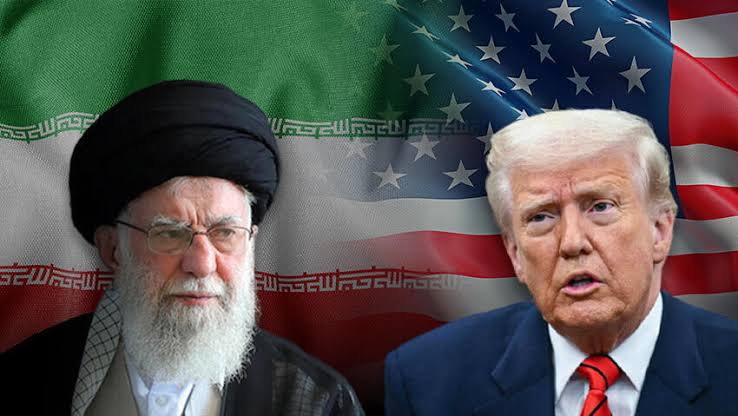
The administration of Donald Trump has intensified its economic pressure on Iran with the freezing of approximately $344 million in cryptocurrency assets allegedly linked to the Iranian government. The move represents a significant escalation in Washington’s financial strategy against Tehran, particularly at a time when diplomatic negotiations aimed at resolving regional tensions remain stalled and a fragile ceasefire continues to hold.
The development was confirmed by Scott Bessent, who disclosed that the United States Treasury had taken decisive steps to target digital financial networks associated with Iran. According to him, multiple cryptocurrency wallets believed to be connected to Iranian entities have been sanctioned as part of a broader effort to disrupt the country’s financial operations. He emphasized that the United States would continue to track and intercept funds that Iran is allegedly attempting to move beyond its borders to sustain its economic and strategic activities.
“We will follow the money that Tehran is desperately attempting to move outside of the country and target all financial lifelines tied to the regime,” Bessent stated, underscoring the administration’s commitment to tightening financial restrictions on Iran through both traditional and emerging channels.
The cryptocurrency firm Tether, which was directly involved in facilitating the transactions, also confirmed its role in freezing the funds. In a statement, the company said it had cooperated with U.S. authorities after receiving intelligence indicating that the funds were connected to illicit activities. The assets were reportedly held across two digital wallet addresses, both of which were flagged following investigations conducted by multiple U.S. agencies.
According to officials familiar with the matter, blockchain analysis revealed substantial links between the frozen assets and Iranian financial networks. These links reportedly included transactions involving Iranian cryptocurrency exchanges, as well as intermediary wallet addresses that interacted with accounts associated with the Central Bank of Iran. The findings strengthened suspicions that the funds were part of a broader strategy by Iranian actors to circumvent international sanctions.
Responding to the development, Paolo Ardoino reiterated the company’s stance against the misuse of digital currencies for unlawful purposes. He stressed that Tether does not tolerate illicit financial activity and acts swiftly when credible evidence is presented.
“USD₮ is not a safe haven for illicit activity. When there is credible linkage to sanctioned entities or criminal networks, we act immediately,” Ardoino said, signaling the growing alignment between private cryptocurrency platforms and government enforcement efforts.
The freezing of the funds highlights a broader shift in how sanctioned countries, including Iran, are increasingly turning to digital assets as an alternative to traditional banking systems. With access to global financial institutions heavily restricted, cryptocurrencies have emerged as a potential workaround, enabling cross-border transactions that are more difficult to trace and regulate. However, advances in blockchain analytics have also made it easier for authorities to track suspicious activity, leading to more frequent interventions such as this.
Data from Chainalysis indicates that Iran’s cryptocurrency holdings have grown substantially in recent years, reaching an estimated $7.8 billion in 2025. Reports suggest that a significant portion of these assets may be controlled by entities linked to the Islamic Revolutionary Guard Corps (IRGC), further raising concerns among Western governments about the use of digital currencies to finance state-linked operations.
Despite the scale of the freeze, some analysts have cautioned that its long-term impact may be limited. Daniel Tannebaum described the action as “meaningful” but noted that Iran has historically demonstrated resilience in adapting to sanctions. Over the years, the country has developed a range of strategies to mitigate economic restrictions, including the use of informal networks, third-party intermediaries, and alternative financial systems.
Tannebaum suggested that future efforts to curb Iran’s financial activities may need to focus more on third-party actors who facilitate transactions on its behalf. According to him, targeting these intermediaries could prove more effective in disrupting the networks that enable Iran to bypass sanctions.
The latest move comes against the backdrop of ongoing geopolitical tensions in the Middle East, where efforts to secure a lasting peace agreement have faced repeated setbacks. While the current ceasefire has helped to reduce immediate hostilities, uncertainty remains high, and both sides have indicated that they are prepared to escalate if negotiations fail.
For the United States, the use of financial tools such as cryptocurrency sanctions represents an increasingly important component of its broader foreign policy strategy. By targeting digital assets, Washington is seeking to close loopholes that have allowed sanctioned entities to operate outside the reach of conventional enforcement mechanisms.
At the same time, the involvement of private-sector actors like Tether underscores the evolving nature of global financial governance. As cryptocurrencies become more integrated into the global economy, collaboration between governments and technology companies is likely to play a critical role in shaping how these systems are regulated and monitored.
The freezing of the $344 million in cryptocurrency assets sends a clear signal that the United States is prepared to pursue Iran’s financial networks across all fronts, including the rapidly expanding digital economy. Whether this approach will significantly constrain Iran’s ability to navigate sanctions remains to be seen, but it marks a notable escalation in the ongoing economic contest between the two nations.
As the situation continues to evolve, attention will likely remain focused on how both sides adapt to these measures, and whether renewed diplomatic efforts can eventually ease tensions that have persisted despite years of negotiations and intermittent conflict.