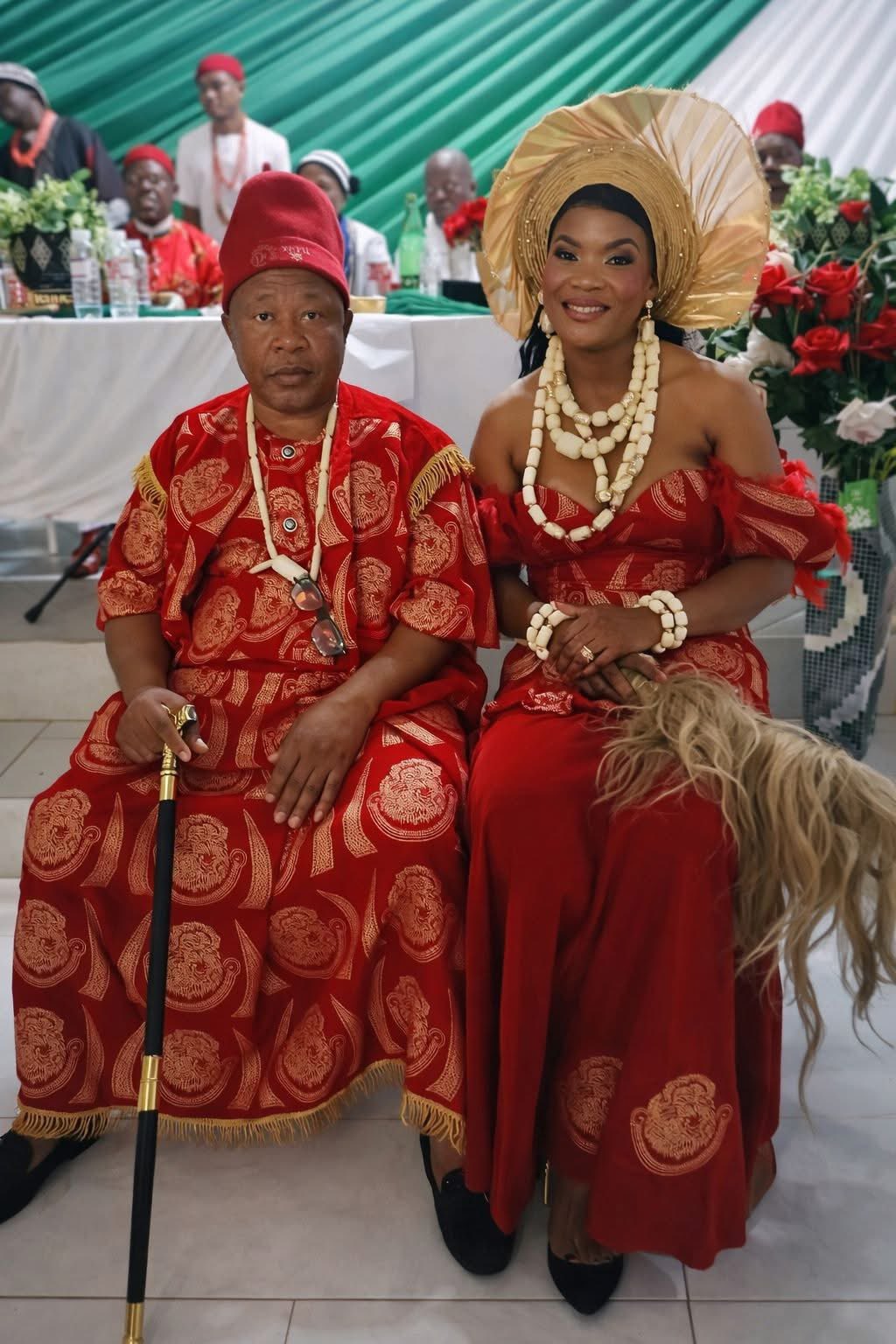
Tensions in South Africa’s Eastern Cape Province have spiralled into violence following protests against the controversial coronation of an Igbo traditional ruler, an incident that has reignited deep-seated concerns over immigration, identity, and local governance.
What began as a demonstration expressing discontent over the installation of a Nigerian traditional leader quickly escalated into unrest, with protesters setting vehicles ablaze, looting shops, and clashing with security forces. The situation has raised alarm among authorities and observers, who fear that the unrest could further inflame xenophobic sentiments in the region.
The protests were reportedly spearheaded by members of ActionSA, alongside some traditional leaders and community groups. Demonstrators argued that the coronation of an Igbo monarch within the province was an affront to South Africa’s sovereignty, constitutional framework, and established traditional leadership systems.
For many of the protesters, the issue went beyond a cultural event. It was framed as a challenge to the authority of local institutions and a perceived encroachment on indigenous structures of governance. Placards and chants during the protest reflected anger and suspicion, with participants demanding that authorities take immediate action.
Central to their demands was the call for the deportation of Nigerians allegedly connected to the coronation. Protest leaders warned that failure by the government to respond decisively could trigger further unrest, a warning that, unfortunately, soon proved prescient.
According to reports from South African Broadcasting Corporation, the protest took a violent turn in KuGompo City as tensions boiled over. Police units were deployed to the area in an attempt to disperse the growing crowd, but the situation deteriorated rapidly.
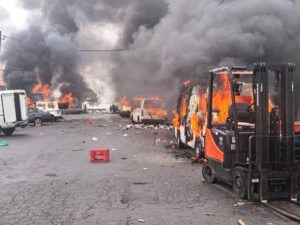
Angry demonstrators reportedly set multiple vehicles and buildings on fire, targeting properties believed to belong to foreign nationals. As law enforcement officers attempted to regain control, protesters moved to other locations, continuing their actions and spreading the unrest.
Eyewitness accounts and media reports painted a chaotic scene. Shops were looted, including a local butchery where individuals were seen carting away meat products amid the disorder. The violence appeared to be largely directed at businesses owned by foreigners, highlighting the underlying xenophobic undertones of the protest.
Further reports from eNCA indicated that the clashes resulted in injuries, with at least two individuals rushed to hospital for treatment. In one particularly troubling incident, a person was reportedly stabbed, allegedly during a confrontation involving business owners of Ethiopian origin.
The unrest has once again brought to the fore the fragile relationship between local communities and foreign nationals in South Africa, a country that has periodically witnessed outbreaks of xenophobic violence over the years. Many foreign-owned businesses, particularly those operated by African migrants, have often been at the centre of such tensions, accused by locals of taking economic opportunities and undercutting prices.
However, analysts note that the current crisis is distinct in that it combines economic grievances with questions of cultural identity and political legitimacy. The installation of an Igbo traditional ruler in South Africa has sparked debate over the boundaries of diaspora cultural expression and how it intersects with the legal and traditional frameworks of the host country.
South Africa’s Constitution recognises the role of traditional leaders within specific cultural and historical contexts. As such, the emergence of a foreign traditional authority within its territory raises complex legal and constitutional questions. Critics of the coronation argue that it undermines recognised local structures, while supporters may view it as a legitimate expression of cultural identity within a diverse society.
The incident has also placed authorities under pressure to respond decisively, both in restoring order and addressing the underlying issues. Security agencies have been working to contain the violence, but there are growing calls for broader engagement to prevent further escalation.
Community leaders and civil society organisations have urged restraint, warning that continued violence could have far-reaching consequences not only for foreign nationals but also for South Africa’s international image and internal cohesion. There are concerns that if not properly managed, the situation could trigger retaliatory actions or spread to other regions.
For Nigerians living in South Africa, the developments have heightened fears about safety and security. Many have called for diplomatic intervention and protection, while also appealing for calm and dialogue.
The Nigerian government is yet to issue a detailed response, but such incidents have historically prompted diplomatic engagements between the two countries, especially given their strong economic and political ties.
At a broader level, the crisis underscores the challenges facing multicultural societies in balancing diversity with social cohesion. While migration and diaspora communities contribute significantly to economic and cultural life, tensions can arise when issues of identity, governance, and economic competition intersect.
As the situation continues to unfold, the priority remains restoring peace and preventing further loss of lives and property. But beyond the immediate crisis, there is a pressing need for dialogue—one that addresses not just the events surrounding the coronation, but also the deeper concerns driving resentment and mistrust within communities.
Ultimately, the events in the Eastern Cape serve as a stark reminder of how quickly unresolved tensions can escalate into violence, and how critical it is for governments, community leaders, and citizens to work together in building inclusive societies where differences are managed through dialogue rather than confrontation.