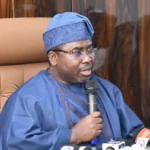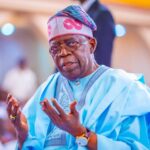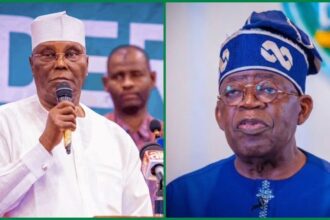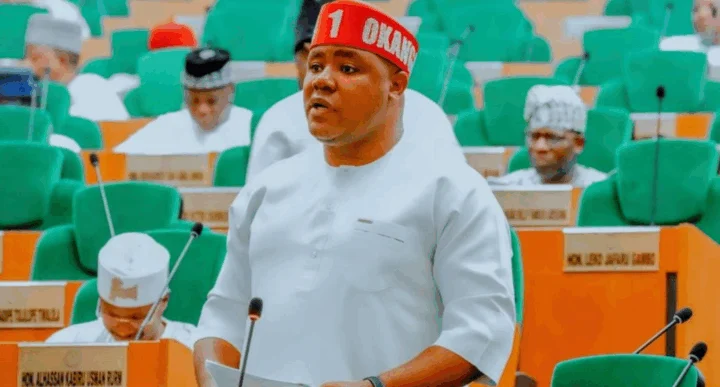
The Deputy Spokesman of the House of Representatives, Philip Agbese, has cautioned opposition politicians against what he described as attempts to damage Nigeria’s international reputation in pursuit of political advantage ahead of the 2027 general elections.
Agbese, a member of the House of Representatives from Benue State, also urged United States President Donald Trump and his administration to critically scrutinise what he described as politically motivated lobbying surrounding historical US law enforcement records relating to President Bola Tinubu.
The lawmaker made the remarks on Thursday, September 3, while speaking with journalists in Abuja on recent lobbying activities in Washington aimed at drawing the attention of officials in the Trump administration and members of the US Congress to allegations concerning the Nigerian President.
According to Agbese, political disagreements and opposition to government policies are legitimate elements of democracy, but such disagreements should not be pursued in ways that could have wider consequences for Nigeria and its citizens.
He argued that efforts to portray Nigeria negatively before foreign governments could affect not only the political fortunes of President Tinubu but also Nigerians who travel, study, work, conduct businesses or seek opportunities abroad.
“This has gone beyond politics. When desperate politicians begin to export their political battles and package Nigeria as a country whose leadership is allegedly built around criminality, they are not hurting President Tinubu alone,” Agbese said.
“They are damaging the image of every Nigerian who travels, studies, works, does business or seeks opportunities abroad.”
The lawmaker called on the Trump administration to examine the motives and credibility of individuals and organisations presenting themselves as advocates for Nigeria before acting on information provided through political lobbying.
He said the relationship between Nigeria and the United States should not be reduced to the political interests of individuals seeking to influence Washington against the Nigerian government.
“We call on President Trump and his administration to ignore elements whose new responsibility appears to be blackmailing the Federal Government of Nigeria and, by extension, the Nigerian people who are earnestly earning a living abroad,” he said.
‘US-Nigeria Relationship Bigger Than Political Ambitions’
Agbese maintained that Nigeria’s relationship with the United States was broader than the political ambitions of individuals or opposition groups.
He identified security, trade, investment and development as areas where both countries have shared interests and urged political actors not to undermine those relationships through campaigns focused on domestic political disputes.
“America and Nigeria have a relationship that is far bigger than the ambitions of desperate politicians. That relationship should be built around security, trade, investment, development and the mutual interests of both countries, not opposition-sponsored campaigns designed to influence Washington against Nigeria,” he said.
The lawmaker acknowledged the right of opposition parties and politicians to criticise the Tinubu administration, challenge government policies and seek electoral support from Nigerians.
However, he argued that such political activities should remain within democratic and constitutional boundaries and should not involve what he described as the unnecessary internationalisation of Nigeria’s domestic political disagreements.
Agbese also urged the Federal Government not to allow the controversy surrounding the historical US records to distract it from governance and its preparations for the 2027 elections.
He said political competition was an essential part of democracy but maintained that there should be limits to the manner in which politicians pursue their objectives.
“Political competition is legitimate, but there must be a line that every responsible politician must refuse to cross. You cannot spend your time telling the world that your own country is being led by criminals simply because you want to defeat the person in power,” he said.
Concerns Over Impact on Nigerians Abroad
The Deputy Spokesman said the internationalisation of political controversies could have consequences extending beyond President Tinubu and his administration.
He specifically cited the potential impact on Nigerian students seeking admission into foreign institutions, entrepreneurs seeking international partnerships, professionals applying for jobs and citizens travelling for business or other legitimate purposes.
“At some point, you must ask what happens to the Nigerian student seeking admission, the entrepreneur looking for an international partner, the professional applying for a job and the millions of Nigerians whose identity is tied to this country,” he said.
Agbese urged Nigerians involved in political campaigns to consider the possible long-term consequences of statements and allegations made before foreign governments and international institutions.
“We must stop treating Nigeria’s international reputation as collateral damage in our political contests. Whoever wins an election will still inherit the same country, and whoever loses will remain a Nigerian,” he said.
He further warned that negative perceptions of Nigeria could potentially affect business relationships, immigration decisions, foreign investment and how Nigerian citizens are treated in other countries.
“You cannot destroy the country’s reputation today and expect ordinary Nigerians to escape the consequences tomorrow. The damage will show up in business relationships, immigration decisions, investment opportunities and the treatment of our citizens abroad,” Agbese said.
Questions Over Historical Records
The lawmaker also questioned the relevance of decades-old documents arising from a civil forfeiture proceeding to discussions about Nigeria’s current political leadership, particularly as the issue has resurfaced in the context of preparations for the 2027 elections.
The controversy centres on calls for the release of historical United States law enforcement records relating to Tinubu.
Agbese argued that the use of old records in contemporary political campaigns should be carefully examined, particularly where the information is being presented in ways that could influence foreign perceptions of Nigeria and its leadership.
His comments came about 48 hours after the Presidency criticised reports and lobbying activities associated with efforts to obtain the release of the historical records involving the President.
The Presidency described the campaign as politically motivated and linked it to the intensifying political contest ahead of the 2027 general elections.
Presidency Raises Lobbying Allegations
Special Adviser to the President on Media and Public Communications, Sunday Dare, had outlined the Presidency’s position in a statement issued on Tuesday.
The statement, titled “Speculation as Classified Information: Atiku’s $1.2 million Lobbying Gamble Exposed,” criticised alleged lobbying activities in Washington concerning the historical records.
According to the Presidency, a Washington-based lobbying firm, Von Batten-Montague-York, L.C., was reportedly engaged by former Vice-President Atiku Abubakar in connection with efforts to secure the release of the records.
Dare accused the firm of presenting political claims as intelligence reports and attempting to create the impression that its submissions represented the position of the United States government.
The allegations have added another dimension to the growing political contest ahead of the 2027 elections, with the Tinubu administration and opposition figures increasingly trading accusations over the President’s past and the implications of historical US records.
The opposition’s efforts to draw attention to the records have been framed by government supporters as part of a broader political campaign, while critics of the administration argue that historical records concerning public officials should be subject to transparency and legitimate scrutiny.
The dispute is therefore likely to remain part of Nigeria’s political discourse as the country approaches the 2027 elections.
For Agbese, however, the central concern is that political competition should not come at the expense of Nigeria’s broader national interests.
He said the House of Representatives would continue to defend Nigeria’s interests while encouraging political actors to resolve their disagreements through the country’s democratic and judicial institutions.
As the 2027 political season gathers momentum, the controversy highlights the increasingly international dimension of Nigeria’s domestic politics, particularly where historical records, foreign lobbying and the reputation of public officials intersect with electoral competition.
The debate also underscores the delicate balance between legitimate political scrutiny and concerns about how allegations involving Nigeria’s leadership are presented before foreign governments and international institutions.