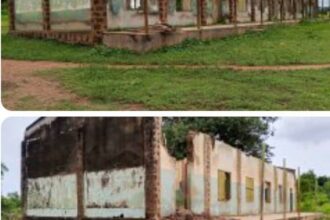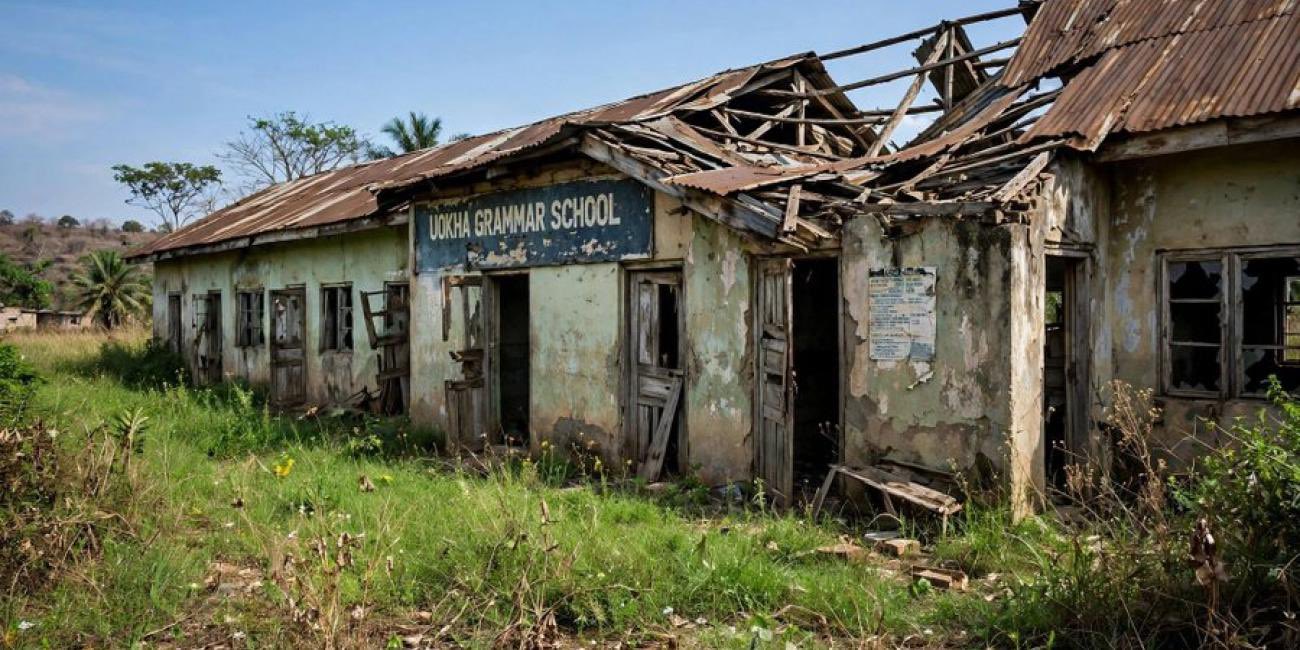
A report by civic accountability organisation MonITNG has highlighted the school’s deteriorating infrastructure, alleging that students are being forced to learn in classrooms with leaking roofs, broken ceilings, damaged windows and inadequate furniture.
The report comes despite the $75 million World Bank education intervention approved during the administration of former Governor Godwin Obaseki and more than ₦145 billion in Federal Account Allocation Committee (FAAC) funds reportedly received by Edo State between January and July 2026 under Governor Monday Okpebholo.
According to MonITNG, the school’s roof leaks whenever it rains, several ceilings have collapsed or become damaged, while some windows have been covered with wooden planks. The organisation also reported that some students sit or lie on bare floors during lessons because of the shortage of desks and chairs.
The school compound was also described as overgrown with bushes, with inadequate facilities creating an unconducive environment for teaching and learning.
MonITNG estimated that approximately 10,000 people depend on the institution, warning that the deteriorating condition of the community’s only secondary school threatens the educational opportunities of generations of children.
The organisation questioned how Edo State could celebrate educational reforms while pupils in rural communities continue to receive lessons in classrooms lacking basic infrastructure.
“How can Edo State boast of educational transformation when a community’s only secondary school has been abandoned to this extent?” the organisation queried.
The report also revisited the $75 million World Bank facility approved in 2020 to support education reforms under the Obaseki administration.
The intervention was associated with the Edo Basic Education Sector and Skills Transformation programme, designed to improve teaching and learning, strengthen teacher development and expand educational opportunities.
World Bank documents indicate that the programme covered a broad range of education reforms, including digital learning initiatives and teacher training. More than 16,000 teachers reportedly benefited from training under the project.
However, MonITNG argued that the reported achievements of the education programme should be assessed against the condition of public schools in underserved communities such as Uokha.
The organisation also questioned the current administration’s commitment to public education, citing approximately ₦145.25 billion in gross FAAC allocations reportedly received by Edo State between January and July 2026.
It called on Governor Okpebholo to explain what steps his administration was taking to improve public school infrastructure and ensure that rural communities benefit from government resources.
MonITNG demanded immediate rehabilitation of Uokha Grammar School, including the replacement of damaged roofs and ceilings, provision of desks and classroom furniture, installation of proper windows and improvement of sanitation facilities.
It also called for transparent disclosure of government spending on education and accountability for public resources allocated to the sector.
The organisation maintained that the children of Uokha were not demanding luxurious facilities but basic classroom infrastructure that would allow them to learn in a safe and conducive environment.
“Our children are not asking for luxury. They are asking for classrooms, desks and the opportunity to learn,” the organisation stated.
It urged the Edo State Ministry of Education and other relevant authorities to conduct an urgent assessment of the school and commence rehabilitation work.
While the cited state revenue figures do not establish how much was allocated to Uokha Grammar School, MonITNG insists that the condition of the institution deserves immediate attention and a transparent government response.
The organisation stressed that access to quality education should not depend on whether a child lives in an urban centre or a rural community.
“Uokha must not be forgotten. Education is a right, not a privilege reserved for children in better-served communities,” it added.