President Bola Ahmed Tinubu has provided a detailed explanation for his decision to meet victims of the recent attacks in Plateau State at the airport rather than visiting the affected communities directly, attributing the move to a combination of logistical limitations and security considerations.
In a statement released by his Special Adviser on Information and Strategy, Bayo Onanuga, the Presidency clarified that the President’s original schedule had to be significantly adjusted following urgent developments and competing state responsibilities.
According to the statement, President Tinubu had initially planned to host Mahamat Idriss Déby Itno at the Presidential Villa in Abuja and later proceed to Iperu in Ogun State for another engagement. However, these plans changed after he received a security briefing from Plateau State Governor Caleb Mutfwang on the escalating situation in the state.
Following the briefing, the President reportedly took the decision to suspend his trip to Ogun State in order to prioritize a visit to Plateau. The Presidency noted that arrangements for the trip to Jos were made overnight, with presidential logistics and security assets deployed on short notice to facilitate the visit.
Despite this adjustment, the President was unable to reschedule his meeting with the Chadian leader, which officials described as critical to regional security cooperation. The bilateral engagement, which focused on strengthening collaboration between Nigeria and Chad in addressing cross-border security threats, extended longer than anticipated and consequently delayed the President’s departure for Jos.
By the time Tinubu arrived in Plateau State, additional operational challenges had emerged. Chief among them were aviation limitations at the Jos airport, particularly the inability of the runway to support night operations due to the absence of necessary navigational infrastructure.
The Presidency explained that although the distance from the airport to the Jos metropolis is approximately 40 minutes by road, the timing of the President’s arrival made it impractical to undertake a round trip into the city, conduct an on-the-ground assessment, and return to the airport before nightfall.
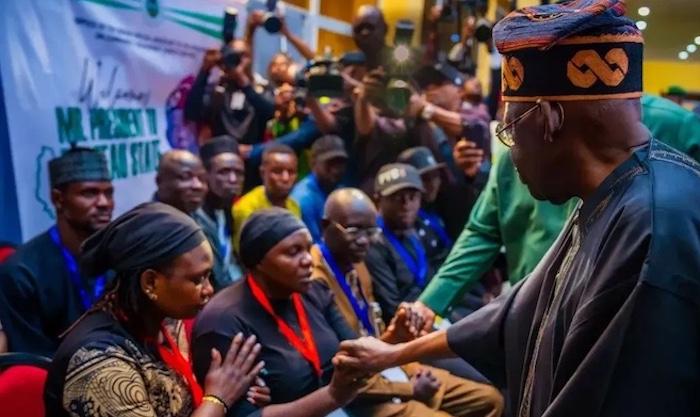
Given these constraints, security and logistics officials concluded that the most viable option was to bring representatives of the affected communities to a designated venue near the airport. This arrangement, the statement noted, allowed the President to engage directly with victims and community leaders within the limited time available while ensuring compliance with aviation safety protocols.
“State and federal officials decided to bring representatives of the affected communities to a hall adjoining the airport so the President could meet with them promptly while adhering to flight restrictions,” the statement explained.
The Presidency further disclosed that prior to the President’s visit, a high-level federal delegation had already been deployed to the epicentre of the violence in Rukuba. The team included the Minister of Defence, the Chief of Army Staff, and the Inspector General of Police, all of whom were tasked with assessing the situation on the ground and coordinating security responses.
In addition, the President had assigned senior aides, including his Senior Special Assistant on Community Engagement, to undertake preliminary work aimed at fostering dialogue and gathering firsthand information from affected communities.
Officials emphasized that Tinubu’s visit to Plateau State was not intended to be merely symbolic but was part of a broader strategy to address the root causes of the recurring violence that has plagued the region for decades.
According to the Presidency, the President’s primary objective was to engage key stakeholders—including victims, traditional leaders, and community representatives—in meaningful discussions aimed at finding sustainable solutions to the crisis.
During the meeting at the airport facility, Tinubu reportedly interacted with victims, offering condolences and listening to their accounts of the attacks. He also engaged with local leaders, assuring them of the Federal Government’s commitment to justice and the restoration of peace.
“He interacted with the victims, consoled them, and listened carefully to their concerns,” the statement said. “He also reassured community leaders that decisive action would be taken to end the cycle of violence.”
As part of the government’s response, the President announced plans to deploy advanced surveillance technology to enhance security in Plateau State. Specifically, he revealed that 5,000 artificial intelligence-enabled cameras would be installed to monitor key areas, improve intelligence gathering, and aid law enforcement agencies in identifying and apprehending perpetrators of violence.
The Presidency described this initiative as a significant step toward modernizing security operations and preventing future attacks.
Beyond immediate interventions, Tinubu also extended an invitation to community leaders to visit Abuja for further consultations. The proposed dialogue, officials said, is intended to deepen engagement and explore long-term strategies for peacebuilding and conflict resolution.
The meeting, which was broadcast live, was described by the Presidency as both solemn and reassuring, with many residents expressing renewed confidence in the government’s commitment to addressing their concerns.
Despite criticism from some quarters regarding the President’s decision not to visit the affected communities in person, the Presidency maintained that the objectives of the visit were achieved.
“President Tinubu’s visit to Jos was not merely symbolic. It was a strategic, high-level engagement aimed at bringing all stakeholders together to address the root causes of conflict and insecurity in the state,” the statement noted.
It further argued that the constraints faced during the visit were beyond the President’s control and that the alternative arrangement ensured that victims’ voices were heard without compromising safety or operational requirements.
Concluding the statement, the Presidency underscored a broader message on peacebuilding, emphasizing that lasting solutions must be inclusive and community-driven.
“President Tinubu made it clear that sustainable peace cannot be imposed from above but must be built in partnership with the people,” the statement said.
As Plateau State continues to grapple with recurring violence, the government’s approach—combining immediate security measures with long-term dialogue—will likely remain under close scrutiny in the weeks and months ahead.