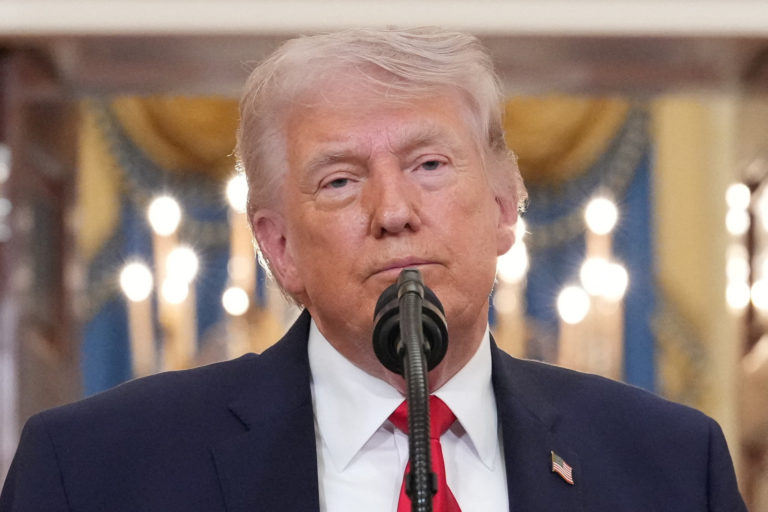
United States President Donald Trump has ignited fresh global controversy after issuing a profanity-laced warning to Iran over the continued closure of the Strait of Hormuz—a critical artery for the world’s energy supply.
In a fiery message posted on his Truth Social platform, Trump demanded that Iran immediately reopen the strategic waterway, using unusually harsh language that has drawn widespread attention and criticism. In the post, he warned Tehran of severe consequences if the blockade persists, declaring that the country would “be living in hell” if it failed to comply.
The statement, which included the now widely circulated phrase “you crazy bastards,” marks one of the most aggressive public remarks by the US president since the outbreak of the ongoing conflict between US-Israeli forces and Iran.
The Strait of Hormuz remains one of the most important maritime chokepoints in the world, handling roughly one-fifth of global oil shipments. Its closure has already triggered sharp volatility in global energy markets, with oil prices rising amid fears of prolonged disruption.
Iran’s decision to restrict access to the strait came in response to sustained military strikes by the United States and its allies, further escalating tensions in an already volatile region. Trump’s latest remarks appear to be part of a broader effort to pressure Tehran into reopening the route under threat of intensified military action.
In his post, Trump also outlined potential military targets, warning that US forces could strike Iran’s infrastructure—including power plants and bridges—if the strait is not reopened within a specified timeframe.
Trump’s reference to what he described as “Power Plant Day” and “Bridge Day” has raised alarm among international observers and legal experts. The implication that civilian infrastructure could be targeted has sparked concerns about potential violations of international law and the rules of armed conflict.
Analysts warn that attacks on non-military infrastructure could have devastating humanitarian consequences and may be considered war crimes under international conventions.
The rhetoric has also drawn criticism within the United States, where lawmakers and policy experts have questioned both the tone and substance of the president’s approach. Some have described the language as reckless and counterproductive, warning that it risks further destabilising the region.
Iranian officials have firmly rejected Trump’s demands, signaling that they are unlikely to yield to external pressure. In response to the ultimatum, authorities in Tehran insisted that the Strait of Hormuz would not return to normal operations under what they described as coercive conditions.
The country’s military establishment has also indicated readiness to escalate if attacked, raising fears of a broader regional conflict involving key Gulf states and international actors.
Despite Trump’s hardline stance, reports suggest that indirect communications between Washington and Tehran may still be ongoing, leaving a narrow window for diplomacy.
Trump’s comments have sparked intense reactions both domestically and internationally. Critics argue that the use of inflammatory language undermines diplomatic efforts and could embolden further hostilities.
Within the US, even some political allies have expressed unease, with prominent figures warning that such rhetoric risks dragging the country into a deeper and more unpredictable conflict. Globally, the remarks have heightened anxieties among US allies, particularly in Europe and the Middle East, where governments are already grappling with the economic and security fallout from the conflict.
The latest development comes as the war between the United States, Israel, and Iran approaches what officials describe as a decisive phase. Trump has maintained that military objectives are close to being achieved, even as hostilities continue across multiple fronts.
At the same time, the humanitarian toll continues to rise, with thousands of casualties reported and millions displaced across the region.
Energy markets remain on edge, with the fate of the Strait of Hormuz seen as a key determinant of global economic stability in the coming weeks.
Trump’s blunt warning underscores the fragile and unpredictable nature of the current geopolitical landscape. While the president has left the door open for negotiations, his aggressive rhetoric suggests that the United States is prepared to escalate if its demands are not met.
For now, the world watches closely as tensions mount around one of the most strategically vital waterways on the planet—where a single decision could have far-reaching consequences for global security, energy supply, and international diplomacy.