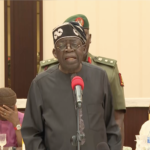
Nigeria’s Minister of Power, Adebayo Adelabu, has publicly apologised to Nigerians over the persistent electricity outages that have affected homes, businesses and institutions across the country in recent weeks.
Speaking at a press conference in Abuja on Tuesday, March 24, the minister acknowledged the growing frustration among citizens and admitted that the unstable power supply has caused significant hardship, particularly during the peak of the dry season when temperatures are at their highest.
“I want to apologise to Nigerians, officially now, coming from me as the Minister of Power, for this temporary issue that is leading to hardship being experienced, especially during this dry season, where there is so much heat everywhere,” Adelabu said.
In recent weeks, many parts of the country have experienced erratic supply, with some communities reporting extended blackouts. Electricity distribution companies (Discos) have attributed the drop in power generation to limited gas supply to thermal power plants — a recurring problem in Nigeria’s energy sector.
Adelabu explained that the surge in electricity demand for cooling systems during the dry season has further strained an already fragile system. With fans, air conditioners and refrigeration units running for longer hours due to intense heat, demand has outpaced available supply.
The minister did not downplay the broader economic consequences of the outages. He admitted that the situation has disrupted commercial activities and essential services.
“Businesses are being affected, schools have been affected, and industries have been affected,” he said. “It is not our wish to find ourselves in this situation, but it is due to some factors that are actually beyond our control.”
Small and medium-sized enterprises, which often rely on public electricity to reduce operating costs, have been particularly hard hit. Many have been forced to depend more heavily on generators, increasing expenses amid already challenging economic conditions.
Adelabu, however, assured Nigerians that the federal government is working urgently to stabilise the situation. According to him, engagements with gas suppliers have yielded commitments aimed at improving supply to thermal power plants.
He disclosed that repairs are ongoing on critical gas pipelines that have constrained fuel availability for electricity generation. Once these repairs are completed and supply normalises, generation capacity is expected to increase.
“I can tell you, with the committee that we have set up, and commitments from gas suppliers, and the timeline for repair of the gas pipelines, two weeks from now, we should start seeing improvements in supply,” the minister stated.
To address the long-standing challenge of gas supply shortfalls, Adelabu revealed that a special committee has been constituted to monitor compliance with domestic gas supply obligations. Over the years, power plants have struggled with inadequate gas allocation, as producers sometimes prioritise exports or other contractual commitments.
“We already have a committee that is working on this to track compliance with the domestic supply obligations of these gas companies to our power plants,” he said.
Industry analysts note that Nigeria’s heavy reliance on gas-fired thermal plants makes the electricity sector particularly vulnerable to disruptions in gas infrastructure. Pipeline vandalism, maintenance delays, and supply contract disputes have repeatedly hampered generation output.
While acknowledging that some of the issues are systemic and long-standing, Adelabu’s apology signals an attempt by the government to take responsibility and communicate transparently with the public.
For millions of Nigerians, reliable electricity remains a critical need — not only for comfort but for economic productivity and quality of life. As the country endures high temperatures and rising living costs, many will be watching closely to see whether the promised improvements materialise within the two-week timeframe outlined by the minister.
For now, the government’s message is one of reassurance: that the disruptions are temporary, that corrective measures are underway, and that stability in power supply is within reach.