A new economic study has revealed that approximately 63 per cent of Nigerians fell below the poverty line following the removal of petrol subsidy, highlighting the significant welfare impact of recent economic reforms implemented by the Federal Government.
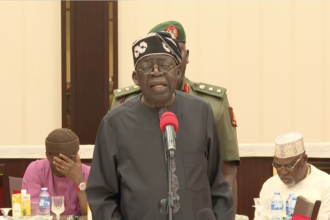
The findings were presented during a high-level stakeholders’ dialogue held in Abuja and organised by the policy think tank Agora Policy. The event, which focused on the theme “Sustaining and Deepening Economic Reforms in Nigeria,” brought together policymakers, economists, civil society leaders, and representatives of the private sector to evaluate the implications of the country’s ongoing reform agenda.
The research showed that the national poverty rate surged sharply after the subsidy removal policy was implemented. According to the study, the poverty headcount increased from a baseline level of about 49.8 per cent to nearly 63 per cent immediately after the policy took effect. Although the introduction of social protection programmes helped to reduce the impact slightly, the poverty rate remained significantly higher than it had been before the reform.
The study was presented by Dr. Mohammed Shuaibu, a senior lecturer in the Department of Economics at the University of Abuja. His analysis examined the economic and social consequences of key policy reforms introduced by the Federal Government, particularly the removal of petrol subsidy and the adjustment of electricity tariffs.
Nigeria’s petrol subsidy was officially removed when President Bola Ahmed Tinubu made the announcement during his inauguration speech on May 29, 2023. The policy marked a major shift in Nigeria’s fiscal strategy, ending a decades-long system in which the government subsidised the cost of fuel to keep pump prices artificially low.
According to Shuaibu, the immediate effect of the policy was a significant rise in prices across the economy. Fuel costs increased sharply, leading to higher transportation fares and rising costs of goods and services nationwide.
“After the subsidy removal, poverty increased from a baseline of about 50 per cent to 63 per cent,” Shuaibu explained while presenting the findings.
He noted that social protection interventions introduced by the government helped mitigate some of the negative effects but were not sufficient to fully reverse the welfare losses experienced by households.
“When social protection measures such as cash transfers were introduced, the poverty rate moderated to around 56.2 per cent,” he said.
Despite this improvement, the study found that millions of Nigerians remained worse off than they were prior to the reforms.
The analysis also showed that the economic shock was not evenly distributed across society. High-income households were largely shielded from the effects of the policy changes, while low-income households bore the greatest burden.
Among poorer households, the poverty rate increased dramatically following the removal of the subsidy, rising from around 50 per cent to about 63 per cent. At the same time, the depth of poverty also intensified.
The study revealed that the national poverty gap — a measure of how far poor households fall below the poverty line — widened substantially after the policy change. Before the subsidy removal, the poverty gap stood at approximately 31.6 per cent. After the reform, it increased to more than 45 per cent, indicating a deeper level of deprivation among vulnerable households.
Although social transfers helped reduce the poverty gap slightly, the improvement was limited due to delays in implementing intervention programmes and the relatively small scale of the assistance provided.
Beyond poverty statistics, the study also analysed how the reforms affected household consumption patterns across the country.
The findings showed that consumption declined across virtually all income groups following both the removal of petrol subsidy and the adjustment of electricity tariffs.
According to Shuaibu, rising energy and transportation costs significantly reduced the purchasing power of many households.
“Across the board, household consumption declined following both the subsidy removal and electricity tariff adjustments,” he said.
However, the impact was particularly severe among low-income households and those living in rural areas, where rising fuel prices made transportation and energy costs more difficult to manage.
Rural households reported cutting back on spending for essential items as rising costs strained already limited incomes. Urban low-income households also experienced similar pressures, although the effects were somewhat moderated in areas where government cash transfer programmes were implemented.
In addition to household welfare, the research examined the broader macroeconomic consequences of electricity tariff reforms introduced alongside the subsidy removal policy.
The study found that electricity tariff adjustments led to a modest increase in consumer prices. Initially, prices rose by about 0.26 per cent as a result of the tariff changes. When the cost of implementing social protection measures was factored into the economic model, the increase in consumer prices rose slightly to around 0.52 per cent.
Despite the inflationary effect, the electricity tariff reforms also produced a small positive impact on economic output.
According to the analysis, Nigeria’s real Gross Domestic Product recorded a slight increase of approximately 0.42 per cent under the reform scenario. However, when the cost of social protection programmes was incorporated into the model, the GDP growth effect moderated to about 0.21 per cent.
The reforms also contributed to modest improvements in firm-level investment, although these gains were partly offset by rising operational costs and the financial burden associated with implementing social safety net programmes.
In contrast, the removal of petrol subsidy had a more contractionary effect on economic activity.
Higher fuel prices triggered inflationary pressures across the economy, raising production and transportation costs for businesses and discouraging investment in some sectors.
The research also incorporated qualitative evidence obtained from focus group discussions conducted across Nigeria’s six geopolitical zones. Participants included both households and business owners, providing insights into how Nigerians were responding to the economic changes.
While many participants acknowledged that reforms were necessary to address Nigeria’s fiscal challenges, they criticised the speed and sequencing of the policies.
According to the study, many households said the reforms had quickly eroded their purchasing power and forced them to adopt survival strategies.
“Households adjusted to the shocks not through recovery but through sacrifice,” Shuaibu said.
Many respondents reported reducing consumption, cutting back on transportation, rationing electricity use, and borrowing money to meet basic needs. Some households said they had received little or no support from government intervention programmes designed to ease the transition.
Businesses reported facing similar challenges. Many firms said rising fuel and electricity costs had dramatically increased operating expenses.
Some companies were forced to raise prices, while others reduced staff numbers or shut down operations altogether. Several businesses reported switching to alternative energy sources to cope with rising electricity tariffs and fuel costs.
However, many business owners said government support programmes had either not reached them or were too limited to offset rising operational costs.
The study concluded that although the reforms were necessary to correct structural distortions within Nigeria’s economy, their implementation created significant short-term economic shocks.
Providing a monetary policy perspective during the dialogue, the Deputy Governor for Economic Policy at the Central Bank of Nigeria, Dr. Muhammad Abdullahi, said the reforms became unavoidable due to deep structural challenges facing the Nigerian economy.
According to him, Nigeria had been grappling with severe macroeconomic imbalances and declining revenues long before the reforms were introduced.
Abdullahi disclosed that Nigeria’s oil revenue had fallen dramatically over the past decade, declining from about $92 billion in 2012 to less than $2 billion in 2023.
He explained that the collapse in oil earnings placed enormous fiscal pressure on the government and made major policy adjustments unavoidable.
The CBN official also highlighted distortions within Nigeria’s foreign exchange market, including the existence of multiple exchange rate windows that encouraged arbitrage and weakened economic efficiency.
He said the fuel subsidy system and foreign exchange distortions together were estimated to have cost Nigeria about six per cent of its Gross Domestic Product.
Abdullahi also revealed that the central bank inherited a backlog of about $7 billion in foreign exchange obligations owed to businesses and investors. According to him, the apex bank had already cleared approximately $4.5 billion of the backlog to restore investor confidence.
Despite the challenges associated with the transition, Abdullahi said early signs suggested that the reforms were beginning to stabilise key macroeconomic indicators.
He noted that inflation had been declining steadily for about 19 months and that food inflation had reached its lowest level in approximately 13 years.
Nigeria, he said, was gradually moving toward single-digit inflation — a target the country has not achieved in more than a decade.
Other indicators also showed improvement, including foreign reserves and non-oil export performance.
According to Abdullahi, Nigeria’s net foreign reserves had risen significantly from around $800 million to about $32 billion, strengthening the country’s financial position and boosting investor confidence.
He also noted that non-oil exports had increased to about $6 billion last year, with the government aiming to double that figure to $12 billion in the near future.
Speaking at the event, the Director-General of the Lagos Chamber of Commerce and Industry, Dr. Chinyere Almona, said the reforms had corrected several long-standing distortions but had also placed considerable pressure on businesses.
She noted that removing petrol subsidy alone could save the government about $7.5 billion annually, funds that should be invested in infrastructure and human capital development.
“For the private sector, what we want to see is that the savings from the fuel subsidy removal are actually being used to fund infrastructure,” she said.
Almona added that although macroeconomic indicators such as foreign reserves and balance of payments had improved, many Nigerians had yet to feel the benefits of the reforms.
“The economy is improving at the macro level, but that improvement has not trickled down to the common man and many small businesses,” she said.
Participants at the dialogue therefore emphasised the importance of expanding social protection programmes and strengthening economic safety nets to ensure that vulnerable Nigerians are not left behind as reforms continue.