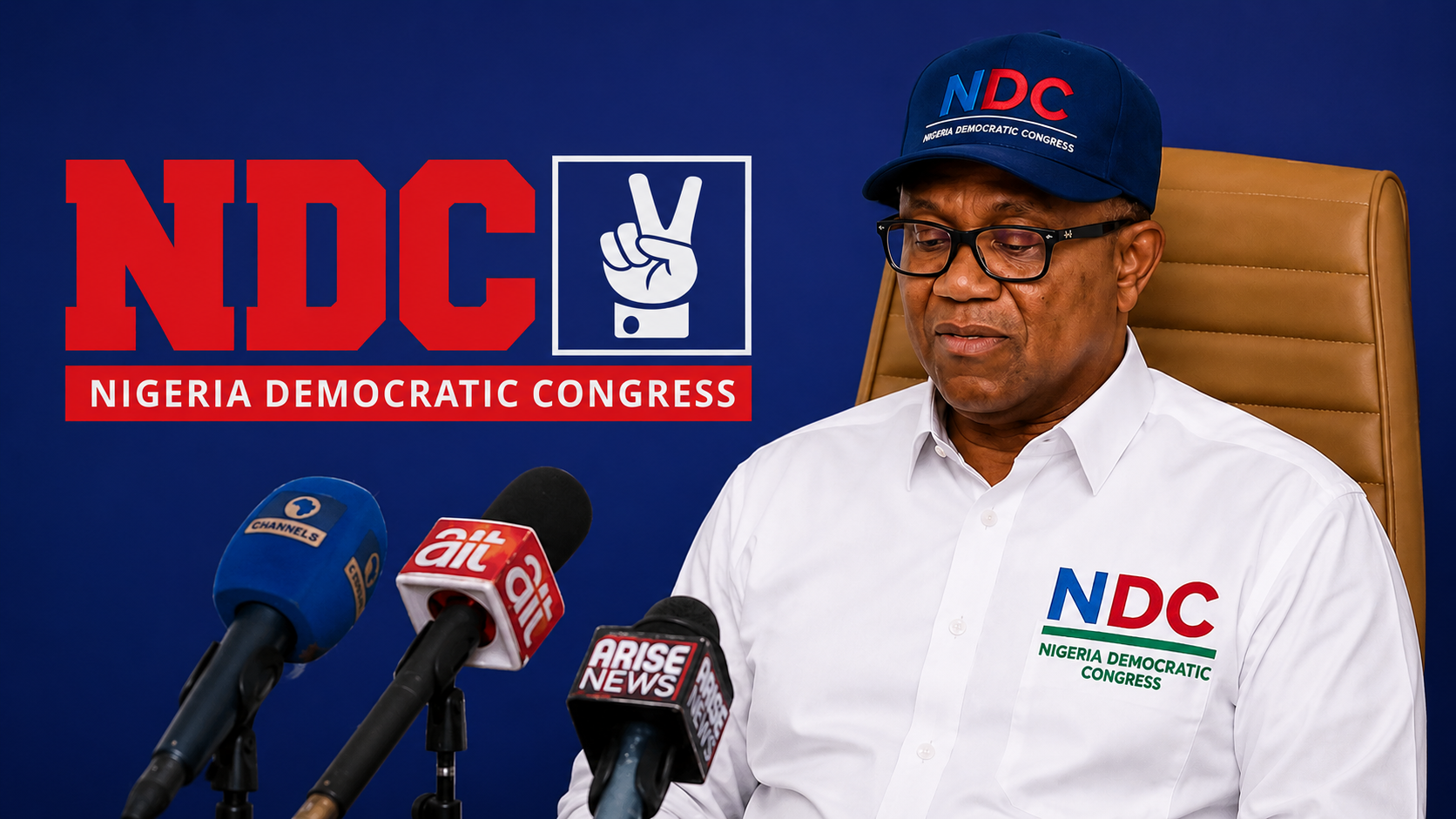
Instead, the NDC accused the ruling party and its supporters of orchestrating a sustained campaign of intimidation and violence against its members and supporters across the country.
In a statement, the NDC National Campaign Council described the allegations by APC spokesperson, Dele Alake, as an attempt to divert attention from what it called a pattern of political violence allegedly perpetrated by ruling party loyalists.
The opposition party further accused the APC of extending President Bola Tinubu’s alleged Lagos-style politics, characterised by political intimidation and the influence of street groups popularly associated with the term “agbero”, to other parts of the country.
The NDC said the accusations against it amounted to an attempt by those allegedly responsible for political violence to portray themselves as victims.
It maintained that its supporters had endured repeated attacks and intimidation over the past year, insisting that the APC should take responsibility for the conduct of its members rather than blame opposition parties.
To support its position, the NDC listed several incidents which it said demonstrated a pattern of hostility towards its candidates, members and campaign activities.
The party recalled an incident on July 18, 2025, when Edo State Governor Monday Okpebholo allegedly threatened its presidential candidate, Peter Obi, during a political rally in Uromi. According to the NDC, the governor warned Obi against entering Edo State without obtaining prior clearance.
The statement also referred to a viral video involving Senator Francis Adenigba Fadahunsi, who represents Osun East Senatorial District. The NDC alleged that the senator was seen addressing APC supporters in Yoruba in Ilesa and urging them to “seek out and kill” members of the rival Accord Party ahead of an election.
The opposition party questioned why, according to its account, no meaningful accountability had followed the alleged remarks.
The NDC further cited an attack on its campaign office in Enugu on October 10, 2026, claiming that armed hoodlums invaded the facility and fatally shot one of its members, Ifeanyi Christopher Nwolie.
It also alleged that hoodlums attacked a peaceful NDC town hall meeting in Oregun, Lagos, on November 12, 2026, leaving several supporters injured.
Another incident highlighted by the party involved its presidential candidate’s planned condolence visit to Yelewata in Benue State following the reported massacre of residents.
The NDC accused Governor Hyacinth Alia of deploying thugs to block and harass Obi and disrupt the visit. The party described the alleged obstruction as an attempt to prevent its candidate from expressing sympathy with victims and their families.
It also claimed that Obi and his campaign entourage had been repeatedly targeted by suspected ruling party supporters in Calabar, Delta and Edo states.
The statement further alleged that the campaign team of the NDC vice-presidential candidate, Alhaji Rabiu Musa Kwankwaso, was attacked in Kano while undertaking political activities.
The NDC argued that these incidents contradicted the APC’s call for peaceful campaigns and challenged Alake to direct his appeal for political restraint to the ruling party’s leadership.
In particular, the opposition party referred to past political statements attributed to President Tinubu, including his declaration that political power was not served “à la carte” and his instruction to supporters to “grab it, snatch it, and run away with it.”
It also accused the President of previously expressing a willingness to secure electoral victory by any means necessary and taking satisfaction in divisions within the opposition. The NDC cited these remarks as evidence of what it described as an unhealthy political culture.
The party further argued that the growing support for the NDC and its Obi-Kwankwaso presidential ticket was driven by public dissatisfaction with the APC administration rather than sponsored protests or deliberate attempts to disrupt campaign rallies.
According to the statement, economic hardship, hunger, multidimensional poverty and insecurity have increased public frustration with the government.
The NDC maintained that Nigerians were expressing genuine dissatisfaction with the administration and that the ruling party should not automatically interpret public disapproval at its rallies as organised opposition-sponsored disruption.
It said the party had no reason to recruit citizens to create unrest, arguing that many Nigerians were already struggling with the consequences of economic difficulties and insecurity.
The campaign council also sought to distinguish the NDC’s political approach from what it described as the APC’s reliance on intimidation and the mobilisation of vulnerable young people for political violence.
It said the NDC believed young Nigerians should be empowered through education, employment opportunities and meaningful participation in national development rather than recruited as political foot soldiers.
“Unlike the APC, whose playbook relies on voter suppression and exploiting vulnerable youths, the NDC’s movement is built on ideas and competence. We view youths as nation-builders deserving jobs and education, not foot soldiers for violence,” the statement said.
The NDC insisted that its campaign was based on policy ideas, competence and the desire for political change, rather than intimidation or violence.
The party’s response follows allegations by the APC Presidential Campaign Council that the ADC and NDC were sponsoring hoodlums, spreading misinformation and recruiting young people to disrupt its campaign activities ahead of the 2027 elections.
However, the NDC rejected those accusations and called on the ruling party to address allegations of attacks against opposition members and supporters.
The rival claims highlight growing tensions among political parties as preparations for the 2027 general elections intensify. Both sides have raised concerns about political violence, making the conduct of campaigns and the protection of candidates and supporters increasingly important issues in the run-up to the polls.