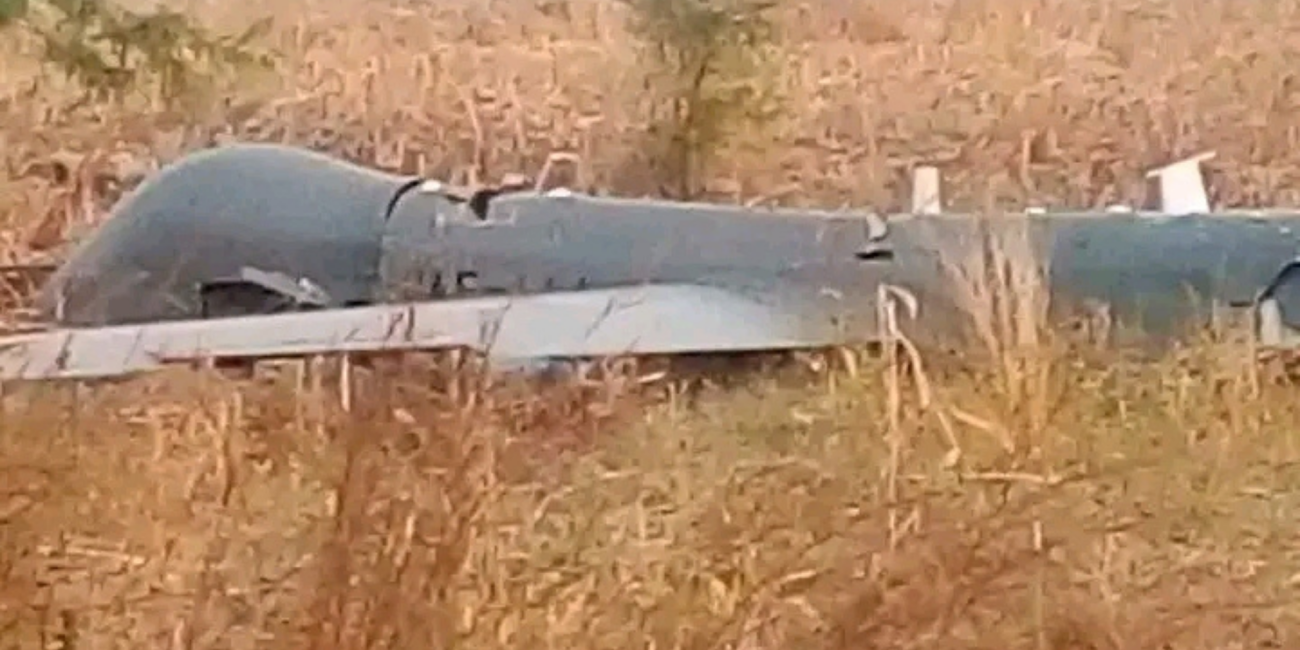
A military combat drone belonging to the Nigerian armed forces has crashed in the Kontagora forest area of Niger State, sparking renewed concerns over the conduct, safety, and effectiveness of aerial operations in Nigeria’s North Central region.
The incident, which reportedly occurred on Friday, has yet to be officially explained, as both the Nigerian military and the Niger State government have remained silent on the circumstances surrounding the crash. The lack of immediate clarification has fueled speculation and public concern, particularly given the growing reliance on unmanned aerial vehicles in counterinsurgency and internal security operations across the country.
SaharaReporters, which first broke the story, gathered that the unmanned combat aircraft went down in a forested area around Kontagora under conditions that remain unclear. A photograph obtained by the online media platform shows the drone lying wrecked on the forest floor, its structure visibly damaged but without signs of an explosion.
According to available information, the drone did not detonate upon impact, suggesting that it may not have been carrying live munitions at the time of the crash or that its safety mechanisms functioned as designed. However, no official confirmation has been provided to clarify whether the drone was armed, on a surveillance mission, or conducting a combat operation when it crashed.
As of the time of filing this report, SaharaReporters said it could not independently verify the location from which the Nigerian military drone was launched. It also remains unclear which arm of the military was operating the unmanned aircraft, or whether the crash was the result of technical failure, human error, adverse weather conditions, or hostile interference.
The silence from military authorities has drawn attention, especially given the sensitivity of drone operations and the strategic importance of such assets in Nigeria’s ongoing security challenges. Combat and surveillance drones have become an increasingly vital component of military operations against armed groups, bandits, and insurgents operating in remote and difficult terrains.
Niger State, which lies at the crossroads between the North Central and North West regions, has in recent years experienced escalating insecurity, including banditry, kidnapping, and attacks on rural communities. Forested areas around Kontagora have been identified by security agencies as potential hideouts for criminal groups, making aerial surveillance and strikes a key element of military strategy in the region.
The crash therefore raises questions not only about the technical reliability of military drones but also about operational coordination, intelligence gathering, and the overall effectiveness of air power in addressing security threats on the ground.
Neither the Defence Headquarters nor the Nigerian Air Force, which typically oversees drone operations, has released a statement acknowledging the incident or outlining steps being taken to investigate it. Similarly, the Niger State government has yet to issue any official response, leaving residents and observers without clarity on the implications of the crash.
The development comes amid heightened public scrutiny of military air operations following a series of controversial incidents involving airstrikes and foreign military activity in northern Nigeria.
Earlier, SaharaReporters had reported an unrelated but equally controversial incident in which men suspected to be herdsmen were seen handling and mocking what they claimed were fragments of a bomb dropped by the United States military on Christmas Day in Jabo community, Sokoto State.
In a video obtained by the online platform, the men, dressed in the style commonly associated with herdsmen, were seen sitting around a metallic fragment while speaking in Hausa. They appeared to be rolling, touching, and playing with the object in a casual manner, seemingly unconcerned about its potential danger.
The men were also heard openly mocking the United States and belittling the power of the American military, claiming that no US bomb or missile could ever successfully strike Nigerian soil. Their comments, delivered in a boastful and dismissive tone, suggested a mixture of bravado and disbelief regarding the reported airstrike.
The video shows the group laughing and joking as they gathered around the fragment, treating it as an object of curiosity rather than a potential explosive hazard. One of the individuals was heard urging others to demonstrate their bravery, while simultaneously praying that the object would not explode.
“Show your strength, my people. I am praying for you that this fragment will not explode by God’s grace,” one of the men said in the video.
Other voices in the recording were even more confrontational, directing insults at both local and foreign military forces. One speaker described the army as a disgrace and claimed that Nigerians were stronger than any armed force operating in the country.
“Army, you are a disgrace. We Nigerians supersede you. Nothing can defeat us except God’s wish,” another voice declared.
The men also made dismissive remarks about advanced weaponry, including nuclear arms, claiming such weapons would never work in Nigeria. One voice warned the American government to stay away, asserting that Nigerians were stronger than any foreign power.
While the claims made in the video could not be independently verified, the footage triggered widespread debate online and renewed attention to the complexities of military operations, public perception, and information warfare in conflict affected regions.
Against this backdrop, the reported crash of a Nigerian military combat drone in Kontagora forest has taken on added significance. Analysts note that unmanned aerial vehicles are meant to provide a technological edge, allowing for precision, intelligence driven operations with reduced risk to personnel. When such systems fail or crash, it raises concerns about maintenance standards, training, procurement processes, and operational oversight.
Security experts have also warned that crashed military equipment, if not promptly recovered, could pose risks if accessed by non state actors. Even unarmed drones may contain sensitive technology or data that could be exploited if they fall into the wrong hands.
Residents of communities near the crash site have reportedly expressed anxiety, particularly in the absence of official communication. Some have called on the authorities to provide timely and transparent information to prevent rumors and misinformation from spreading.
As Nigeria continues to grapple with multifaceted security threats, incidents such as this underscore the importance of accountability, clear communication, and robust investigation mechanisms within the military. Observers argue that acknowledging incidents and explaining corrective measures can strengthen public confidence rather than weaken it.
For now, questions remain unanswered. What caused the drone to crash? Was it on a combat or reconnaissance mission? Has the wreckage been secured, and is an investigation underway? Until official statements are issued, the incident will continue to generate speculation and concern.
The crash in Kontagora forest serves as a reminder of the high stakes involved in modern military operations and the urgent need for transparency and effectiveness in Nigeria’s ongoing efforts to restore security across its troubled regions.