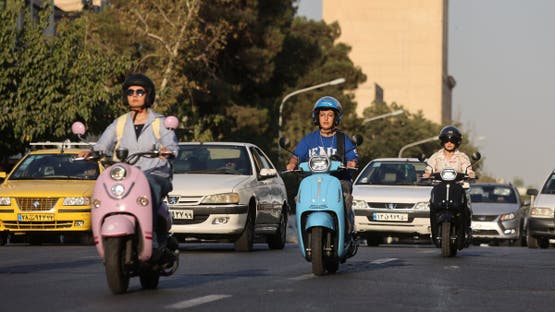
Women in Iran can now officially obtain licences to ride motorcycles, bringing an end to years of legal ambiguity that effectively barred them from legally operating two-wheeled vehicles despite the absence of an explicit ban in the law.
Local media reported that Iran’s First Vice President, Mohammad Reza Aref, has signed a new resolution clarifying the country’s traffic regulations and formally authorising the issuance of motorcycle licences to women. The measure, approved by Iran’s cabinet in late January, was designed to close a long-standing legal loophole that had allowed authorities to deny licences to female riders in practice.
According to the Ilna news agency, the resolution mandates traffic police to provide practical riding lessons for female applicants, organise official examinations under direct police supervision, and issue motorcycle driving licences to women who meet the requirements.
Although Iranian law never explicitly prohibited women from riding motorcycles or scooters, enforcement agencies had for years refused to grant licences to women. As a result, female riders were forced to operate in a legal grey area, often facing penalties or legal consequences simply for riding. In some cases, women involved in road accidents were held legally responsible even when they were the victims, because they lacked official licences.
The policy shift comes at a politically sensitive moment, following a wave of nationwide protests that erupted across Iran last month. Initially driven by economic hardship, the demonstrations quickly evolved into broader anti-government protests, drawing attention to long-standing grievances over political repression and social restrictions.
The Iranian government has acknowledged that more than 3,000 people died during the unrest, claiming that most of the fatalities were security personnel and bystanders. However, human rights organisations dispute the official figures, arguing that the true death toll is significantly higher and could run into the tens of thousands.
Women’s rights have been at the centre of public debate in Iran since the 1979 Islamic Revolution, which introduced strict social and legal restrictions on women’s behaviour, dress and public presence. Mandatory dress codes have long posed particular challenges for women who ride motorcycles, as riders are required to wear headscarves and modest, loose-fitting clothing in public.
Despite these restrictions, the number of women riding motorcycles in Iran has increased noticeably in recent years, especially in major cities. Many women have openly defied social norms and enforcement practices, riding without licences as a form of quiet resistance and practical necessity.
The trend accelerated after the death of Mahsa Amini in 2022. Amini, a young Iranian woman, died after being arrested by the morality police for alleged violations of Iran’s dress code. Her death triggered widespread protests led largely by women, demanding greater personal freedoms and an end to restrictive policies.
While the new licensing policy does not address broader issues surrounding women’s rights in Iran, activists say it represents a significant symbolic shift. By formally recognising women as legal motorcycle riders, the government has taken a step—however limited—toward acknowledging women’s presence in public spaces and addressing discriminatory enforcement practices.
It remains unclear how quickly the policy will be implemented nationwide or whether women will face additional barriers at the local level. Nonetheless, for many Iranian women who have long ridden in defiance of unofficial bans, the move marks an important change in both law and public life.