A crucial meeting of the Conference Committee of the Senate and House of Representatives on the Electoral Act (Repeal and Re-enactment) Bill, 2026, was abruptly shifted to late Monday night after members of the House delegation failed to formally convene ahead of Tuesday’s plenary, triggering fresh uncertainty over the fate of key electoral reforms.
The unexpected delay occurred against the backdrop of heightened political tension within the National Assembly, as lawmakers grapple with proposed amendments to Nigeria’s electoral framework with just 368 days to the February 20, 2027 general elections. The Independent National Electoral Commission (INEC) is under mounting pressure to guarantee seamless, transparent and legally defensible electronic transmission of results, a matter that has become central to public debate on electoral credibility.
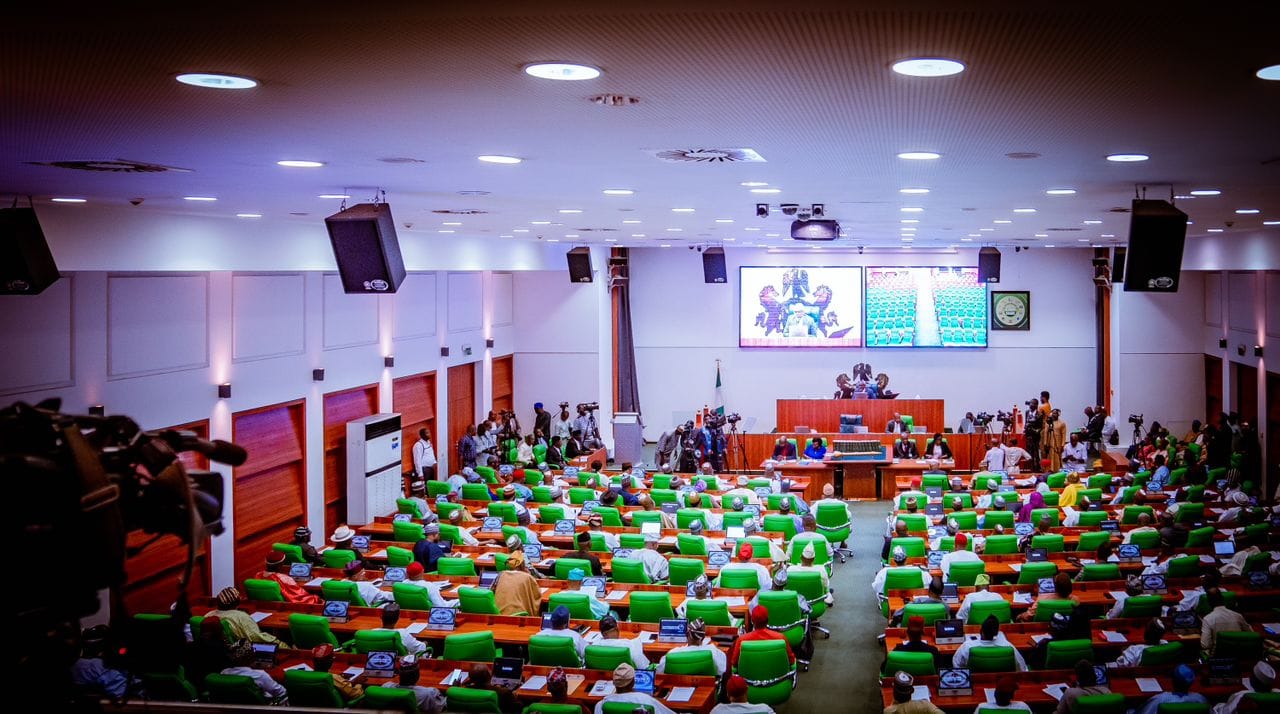
The drama unfolded during an emergency plenary session convened to deliberate on outstanding electoral matters. Proceedings began under visibly strained conditions, with lawmakers acutely aware of the political and constitutional stakes attached to the proposed repeal and re-enactment of the Electoral Act.
Outside the National Assembly complex in Abuja, civil society groups and political activists staged demonstrations, calling on lawmakers to make real-time electronic transmission of election results mandatory in the amended legislation. Protesters carried placards and chanted slogans demanding stronger legal safeguards to prevent manipulation of vote collation processes in future elections.
Inside the House chamber, tension escalated when Hon. Francis Waive moved a motion for rescission of the Electoral Act (Amendment) Bill. The motion sought to reopen deliberations on specific provisions, enabling the House to reconsider contentious clauses before harmonisation with the Senate’s version of the bill.
The motion was seconded by Hon. Bayo Balogun, Chairman of the Committee on Electoral Matters, who argued that certain aspects of the proposed law required further clarification to ensure alignment with constitutional standards and technological realities.
However, the atmosphere in the chamber quickly turned volatile when the Speaker put the motion to a voice vote. Lawmakers were audibly heard shouting “Nay” in opposition. Despite the apparent volume of dissent, the Speaker ruled in favour of the “Ayes,” declaring the motion carried.
The ruling sparked immediate uproar. Several members protested loudly, some rising from their seats in visible agitation. A number of lawmakers challenged the Speaker’s decision, arguing that the outcome of the voice vote had been misrepresented. The disagreement threw proceedings into disarray, with heated exchanges echoing across the chamber.
Amid the escalating tension, the House leadership moved to quell the disorder by announcing an executive session. Lawmakers retreated behind closed doors to deliberate on the matter away from public scrutiny. As of press time, the outcome of the executive session and its implications for the final text of the Electoral Act (Repeal and Re-enactment) Bill remain unclear.
The Conference Committee, composed of members from both the Senate and the House of Representatives, is tasked with harmonising differences between versions of the bill passed by each chamber. The committee’s work is critical to producing a unified document for final passage and presidential assent.
The abrupt postponement of its scheduled meeting has raised concerns among political observers about potential delays in concluding the legislative process. With less than a year to the next general elections, INEC requires sufficient lead time to implement any new legal provisions, particularly those relating to technology deployment and results transmission.
The 2023 general elections were marred by controversies surrounding the electronic transmission of results and the performance of the Bimodal Voter Accreditation System (BVAS). Critics have argued that ambiguities in the law allowed discretionary interpretations, thereby undermining public confidence in the process.
In response, electoral reform advocates have insisted that the 2026 repeal and re-enactment exercise must remove all ambiguities and clearly mandate real-time electronic transmission of results from polling units to central servers. They argue that codifying such provisions in unequivocal terms would enhance transparency and reduce post-election litigation.
Lawmakers supporting the rescission motion reportedly contend that technical and legal refinements are necessary to ensure the legislation is both constitutionally sound and practically implementable. Opponents, however, fear that reopening deliberations at this stage could weaken key transparency safeguards or delay critical reforms.
Political analysts note that the legislative turbulence reflects broader national anxieties about electoral integrity. With Nigeria’s democratic trajectory often shaped by the credibility of its elections, the stakes surrounding the Electoral Act amendment are exceptionally high.
INEC officials have previously indicated that clear statutory backing is essential for deploying advanced electoral technologies at scale. Any uncertainty in the legal framework, they warn, could complicate procurement, training and systems testing ahead of the 2027 polls.
The protests outside the National Assembly underscore the intensity of public interest in the matter. Civil society groups have vowed to sustain pressure on lawmakers to ensure that the amended law strengthens, rather than dilutes, transparency mechanisms.
As the Conference Committee reconvenes later Monday night, attention will focus on whether lawmakers can resolve internal disagreements and present a harmonised bill that commands broad support. The final outcome will not only shape the operational blueprint for the 2027 elections but may also influence public confidence in Nigeria’s democratic institutions.
For now, the legislative process remains in flux, with unresolved tensions both within the chamber and among the wider electorate. Whether the closed-door deliberations will produce consensus or deepen divisions is a question that may define the next phase of Nigeria’s electoral reform journey.