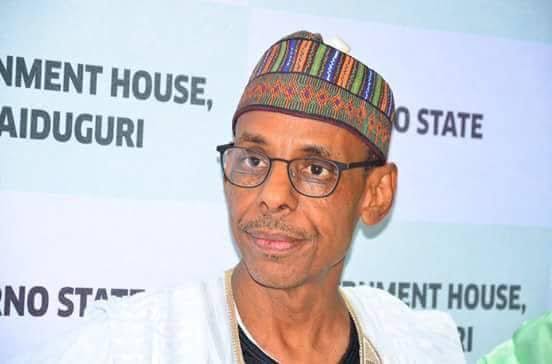
Former Special Adviser to President Bola Tinubu on Political Matters, Hakeem Baba-Ahmed, has delivered a sobering assessment of the country’s current state, arguing that Nigeria is facing more severe challenges now than it did when the administration took office in 2023.
Speaking during an interview on Trust TV, Baba-Ahmed reflected on the nation’s trajectory over the past three years, focusing particularly on the economy and the worsening security situation. His remarks add to a growing chorus of voices expressing concern over the direction of governance and the impact of policy decisions on ordinary Nigerians.
According to Baba-Ahmed, the country’s security landscape has deteriorated in both scope and intensity. He said the pattern of violence has become more complex and its consequences more devastating for communities across the federation.
“We are in deeper trouble than when this administration came in,” he stated during the interview. “Violence has become more severe than anticipated. Three years into the presidency, we are witnessing an escalation in both the pattern and impact of violence on citizens.”
His comments come at a time when various parts of the country continue to grapple with insecurity, including insurgency in the North-East, banditry and kidnapping in the North-West and North-Central, and communal conflicts in other regions. Baba-Ahmed suggested that despite early assurances from the government, the situation has not improved in a way that reflects the scale of promises made during the 2023 campaign season.
When President Bola Tinubu assumed office in May 2023, his administration pledged to confront insecurity head-on, revive the economy, and restore public confidence in governance. The campaign rhetoric emphasized decisive leadership, security sector reforms, and economic restructuring aimed at reducing hardship.
However, Baba-Ahmed argued that many Nigerians today feel those commitments have yet to translate into tangible improvements in their daily lives. He pointed out that citizens are still dealing with high levels of inflation, rising costs of living, and persistent security threats that undermine stability and economic activity.
“This was a government that promised to end insecurity, improve lives, and create better conditions for Nigerians,” he said. “The reality today suggests that these goals have not yet been achieved.”
Beyond security, Baba-Ahmed’s critique implicitly touches on the broader economic strain facing households and businesses. Since 2023, policy changes including fuel subsidy removal and currency reforms have triggered significant economic adjustments. While government officials maintain that these reforms are necessary for long-term stability, many Nigerians continue to struggle with their short-term consequences.
For Baba-Ahmed, the interplay between economic hardship and insecurity is particularly troubling. He suggested that economic distress can exacerbate instability, as unemployed or disillusioned youths may become more vulnerable to recruitment by criminal or extremist groups.
The former presidential adviser also questioned what he described as the optics and timing of certain government actions. He referenced a recent official trip by the President and other senior officials to the United Kingdom, which he argued occurred at a sensitive moment.
According to him, the trip came shortly after a deadly attack in Borno State — an incident he described as one of the most severe in recent times. While he did not question the legality or necessity of international engagements, he implied that the timing may have conveyed the wrong message to citizens mourning fresh casualties.
In his view, leadership during periods of heightened insecurity requires visible presence, empathy, and reassurance. “Such developments,” he suggested, “highlight the growing concerns over governance priorities amid ongoing security challenges.”
Baba-Ahmed’s remarks underscore a broader debate within Nigeria’s political and civil society space about how best to measure the administration’s performance three years into its tenure. Supporters of the government argue that complex structural problems cannot be solved overnight and that reforms often involve difficult transitional phases. They point to efforts to modernize security architecture, attract foreign investment, and stabilize public finances.
Critics, however, contend that the pace of improvement has been too slow and that the human cost of ongoing insecurity remains unacceptably high. For many communities affected by attacks, kidnappings, and displacement, statistical reassurances offer little comfort.
Baba-Ahmed did not present a detailed alternative roadmap during the interview, but his comments reflect a sense of urgency. By stating that the country is “in deeper trouble” than it was at the start of the administration, he framed the current moment as a critical juncture requiring renewed focus and recalibration.
Political analysts note that public perception often hinges not only on measurable outcomes but also on communication and responsiveness. In times of crisis, citizens look for clear messaging, decisive action, and consistent engagement from leaders.
As Nigeria moves further into the current presidential term, assessments like Baba-Ahmed’s are likely to fuel ongoing conversations about governance, accountability, and national priorities. The coming months may prove decisive in shaping public opinion, especially if security trends either improve or worsen.
For now, his remarks serve as a pointed reminder that expectations remain high and that many Nigerians are watching closely to see whether promised transformations will materialize. The question, as framed by Baba-Ahmed, is not only whether reforms are underway, but whether they are producing the safety, stability, and improved living conditions that were pledged at the outset of the administration.