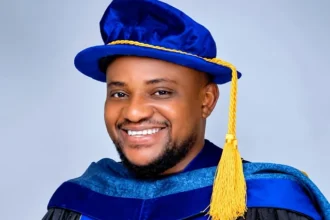
Professor Anthony Kila, Pro-Chancellor of Michael and Cecilia Ibru University, Delta State, has rejected reports describing him as a “fake professor”, dismissing the characterisation as inaccurate, misleading and damaging to his reputation and professional standing.
Kila, in a statement responding to a publication dated October 3, 2026, maintained that he was a professor and stood by the academic and professional credentials supporting his use of the title.
“For the avoidance of doubt, I am a professor, and I stand by the title and the professional and academic credentials on which it is based,” he said.
He argued that the report questioning his professorial status was based on what he described as an incomplete understanding of the origin, nature and institutional basis of his professorship.
According to him, the issue should be examined against the relevant facts and supporting documentation rather than through what he considered an inaccurate characterisation of his credentials.
Kila said he was prepared to make documents relating to his professorial status available for scrutiny, insisting that the matter should be determined on the basis of evidence.
He also objected to the description “fake professor”, arguing that presenting the phrase as a factual conclusion had serious implications for his reputation.
“I am baffled by the level of attention directed at me,” Kila said, noting that he neither occupied political office nor was seeking one and was not a government official.
Kila, who is also Director of the Commonwealth Institute of Advanced and Professional Studies, said he recognised the responsibility of the media to scrutinise the credentials of individuals who occupy positions of public or professional responsibility.
However, he stressed that such scrutiny should be conducted fairly and within the proper context of the facts involved.
He thanked colleagues, friends, students and members of the public who contacted him following the publication to express their confidence in his academic and professional credentials.
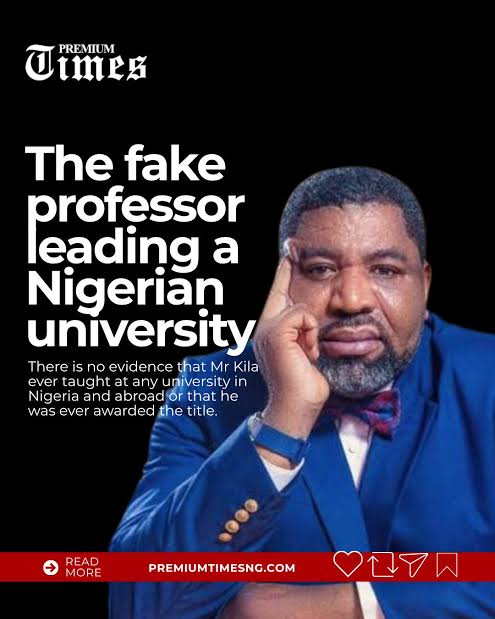
The controversy followed a report by PREMIUM TIMES which alleged that Kila had for years presented himself publicly as a professor and as a “Jean Monnet Professor of Strategy and Development”.
The publication reported that its investigation found no evidence that a recognised university had awarded Kila the academic rank of professor.
The report reportedly questioned the basis on which Kila used the professorial title and examined his association with the European Centre for Advanced and Professional Studies, which he identified as the institution responsible for awarding his professorship.
Responding to the issue, Kila reportedly told PREMIUM TIMES that the European Centre for Advanced and Professional Studies, which he said was based in Cambridge, United Kingdom, awarded him the professorship in 2016.
His latest statement reiterates that position and challenges the interpretation of his professorial credentials in the report.
Kila’s response centres on the distinction between the institutional basis of the title he uses and the interpretation of that title as an academic rank conferred by a conventional university.
He maintained that the relevant documentation would provide the necessary context for understanding his professorial status.
The controversy has therefore shifted attention to the institutional authority and documentation underlying the title, with Kila insisting that the matter should be resolved through evidence rather than descriptions he considers defamatory or misleading.
As Pro-Chancellor of Michael and Cecilia Ibru University and Director of the Commonwealth Institute of Advanced and Professional Studies, Kila said his professional record should be assessed on the basis of verifiable facts and documentation.
He also defended the legitimacy of scrutiny into his credentials but maintained that responsible journalism requires accuracy, fairness and adequate understanding of the subject under investigation.
The development comes amid renewed public attention to the use of academic titles in Nigeria and the need for institutions and individuals to clearly establish the qualifications and appointments associated with such designations.
While the report that triggered the controversy questioned the basis of Kila’s professorial title, Kila has firmly rejected the “fake professor” description and challenged those questioning his credentials to consider the documentation supporting his position.
He said he remained confident in his academic and professional standing and was prepared to provide relevant documents to clarify the circumstances surrounding his professorial title.
If you want, I can also produce a more investigative 1,000-word version that gives greater prominence to the PREMIUM TIMES findings and Kila’s rebuttal.