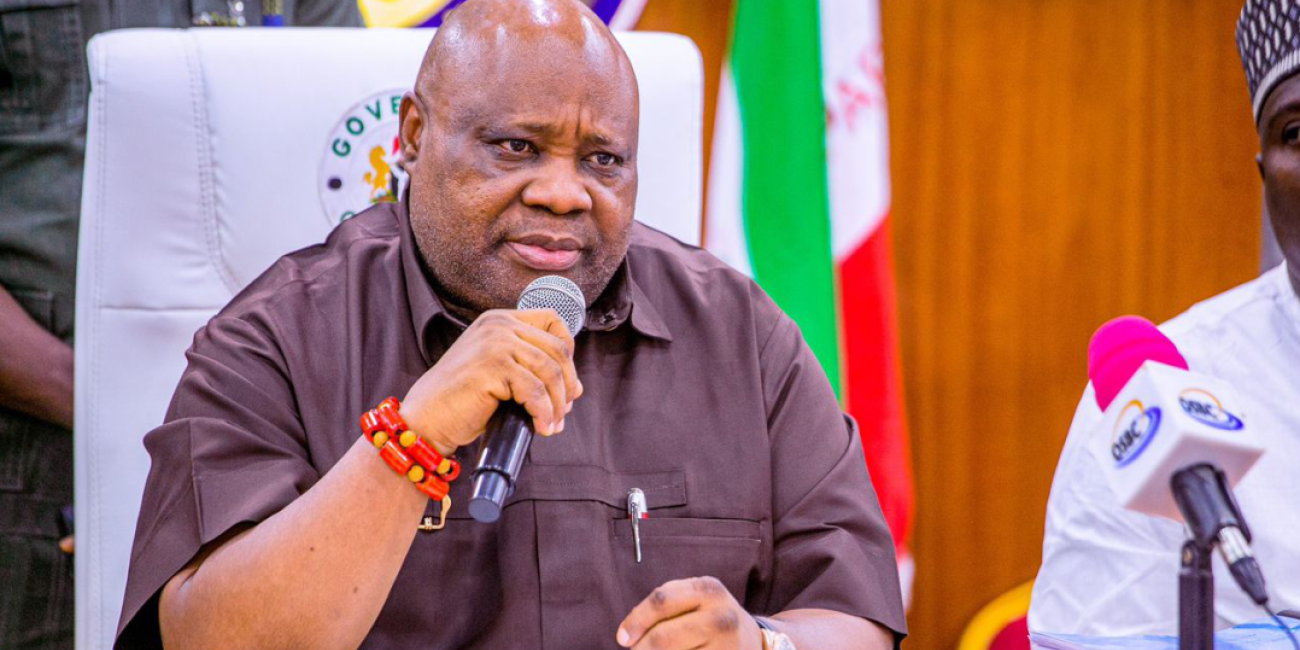
Osun State Governor, Senator Ademola Nurudeen Adeleke, has formally announced his defection from the Peoples Democratic Party (PDP) to the Accord Party, marking a dramatic turn in the political landscape of the state and potentially reshaping alignments ahead of forthcoming elections. The development was confirmed on Tuesday evening, following days of speculation and political tension within the Osun chapter of the PDP.
Governor Adeleke’s exit comes after months of intensifying internal strife within the PDP, particularly at the national leadership level. In a resignation letter dated November 4, 2025, and addressed to the PDP Chairman of Ward 2, Sagba Abogunde in Ede North Local Government Area, the governor cited the lingering crisis at the apex of the party structure as the principal reason for his departure.
“Due to the current crisis within the national leadership of the People’s Democratic Party (PDP), I hereby resign my membership of the People’s Democratic Party with immediate effect,” Adeleke wrote. The letter, which has since circulated widely across political circles and online platforms, underscores the deepening fractures within the PDP and highlights the governor’s dissatisfaction with the direction of the party’s leadership.
Related posts:
- Governor Fubara Dumps PDP for APC in Major Political Realignment in Rivers State
- Governor Soludo signs peace accord, commits to peaceful electoral process
- Backlash Over Interaction With Adeleke at Ooni’s Event ‘Needless Controversy’ – First Lady Oluremi Tinubu
- Breaking: PDP suspends National Secretary, three others for anti-party activities
Adeleke, who first rose to national prominence after winning a Senate seat representing Osun West Senatorial District in 2017, acknowledged the pivotal role the PDP played in his political growth. In the same letter, he expressed gratitude for the support he received during his political ascent.
“I thank the People’s Democratic Party for the opportunities given to me for my elections as a Senator (represented Osun West) and as Governor of Osun State under the People’s Democratic Party,” he stated, signalling an amicable closure to a political chapter that defined his early career.
The governor’s defection was officially confirmed during a broadcast monitored by SaharaReporters on Tuesday evening, where Adeleke declared the Accord Party as his new political platform. His choice of Accord, a relatively smaller but growing political party, has generated significant interest among political analysts and stakeholders across the South-West.
Prior to the announcement, SaharaReporters had reported early indications of his impending move, citing sources privy to ongoing consultations within the governor’s camp. These sources noted that Adeleke had become increasingly uncomfortable with internal manoeuvrings within the PDP, including issues related to leadership tussles, factionalism, and disagreements over party direction.
The governor’s defection to Accord Party represents a high-stakes political gamble, given the PDP’s solid grassroots structure in Osun and its long-standing influence across the South-West geopolitical zone. Yet, supporters of Adeleke believe that the move positions him strategically toward establishing a more independent political base, free from what some describe as the “constant national interference” that has undermined the stability of state chapters across the PDP.
Adeleke’s relationship with the PDP leadership had been increasingly strained in recent months. Political observers point to unresolved disputes over internal party elections, the composition of the National Working Committee, and competing ambitions within the party that have created rifts across state chapters. These conflicts, analysts say, contributed significantly to his decision to exit the party that brought him to political prominence.
His decision to join the Accord Party has been received with mixed reactions. Supporters across Osun State have celebrated the move as a step toward “political liberation” and autonomy, arguing that the governor’s popularity and grassroots connection will bolster the profile of the Accord Party ahead of upcoming electoral cycles. Others, however, have expressed concerns that the move could weaken opposition cohesion in Osun, potentially benefiting rival political forces.
Within PDP circles, Adeleke’s defection has triggered anxiety and introspection. Party insiders fear that his exit, coming from one of the party’s strongholds, could embolden other influential figures to re-evaluate their allegiance. Moreover, the governor’s wide support base, especially among youth and cultural communities, may shift loyalties toward Accord, altering existing electoral calculations.
It remains to be seen how the Accord Party will integrate Adeleke into its structure and political machinery. The party has historically positioned itself as a moderate and inclusive platform, but with Adeleke’s entry, it may experience an unprecedented surge in membership and political activity. Political experts predict that Accord may now attempt to reposition itself as a major political force in Osun State, leveraging Adeleke’s influence, his administrative incumbency, and his family’s well-established political brand.
Governor Adeleke’s defection also arrives at a delicate moment in Osun politics, with speculations mounting about alignments ahead of future elections. Parties across the state are recalibrating their strategies, anticipating new configurations of alliances and rivalries. Many analysts believe that this development could significantly affect the political balance in the state, especially if Adeleke’s allies begin to follow him into his new party.
As a sitting governor switching political platforms, Adeleke becomes one of the most prominent officeholders to ditch the PDP in recent years, further complicating the party’s already strained national cohesion. His departure could intensify calls within the PDP for a comprehensive reform of its leadership structure and crisis-management approach.
Meanwhile, observers continue to monitor developments within the Accord Party, particularly how it plans to leverage this momentum. The governor’s entry into the party may energize its base and attract new stakeholders, but it also raises questions about how the party will manage the newfound political weight and expectations placed upon it.
Governor Ademola Adeleke’s move marks a pivotal moment in Osun State’s political evolution. Whether this shift will strengthen his political fortunes or introduce new challenges remains to be seen. What is clear, however, is that the state is entering a new phase of political realignment—one that will reshape the contours of Osun’s political future for years to come.