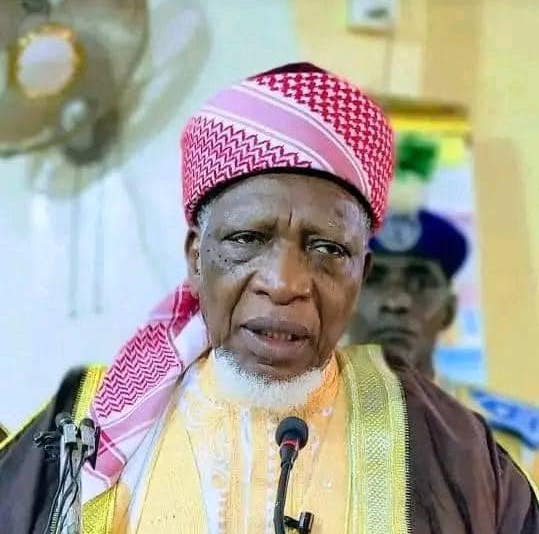
The Chairman of Izalatil Bid’a Wa’ikamatis Sunnah (JIBWIS), Sheikh Sani Yahaya Jingir, has denied allegations that he harbours hatred or prejudice against Christians, describing the claims as false and insisting that his recent comments were taken out of context.
The Islamic cleric made the clarification while speaking at a one-day national symposium in Jos, Plateau State, organised around the theme, “Enhanced Political Participation and Social Justice as a Panacea for Unity and Development in Nigeria.”
Jingir had come under criticism following remarks he made at a mass wedding ceremony organised by the Kano State Government for 1,500 couples. Some of his comments were interpreted by critics as divisive and capable of deepening religious tensions between Muslims and Christians.
However, addressing participants at the symposium, the JIBWIS leader rejected the interpretation of his comments, saying his position had never been one of hostility towards Christians or people of other faiths.
“A lot of people are saying I dislike Christians. I didn’t say I dislike Christians—it is a lie. My remarks were misinterpreted,” Jingir said.
He explained that Islamic teachings emphasise justice, fairness and peaceful relations with people of different religious backgrounds, stressing that leadership in Islam does not permit discrimination or oppression based on faith.
According to him, Muslims are required to treat non-Muslims with fairness and respect, just as they are expected to treat fellow Muslims.
“Leadership in Islam is not about cheating people of different faiths. Islam teaches us to share love with people of different faiths or sects,” he said.
Jingir further argued that religious identity should not be used as a justification for denying citizens their rights or treating them unfairly. He maintained that justice should remain the guiding principle of leadership regardless of whether those affected are Muslims or Christians.
The cleric said Muslims would be held accountable for any acts of injustice committed against people of other faiths, highlighting what he described as the example set by Prophet Muhammad in his interactions with people from different religious backgrounds.
He therefore urged Nigerians to promote peaceful coexistence and resist actions or rhetoric capable of aggravating religious divisions.
His comments come amid persistent concerns over religious and ethnic tensions in different parts of Nigeria, where political competition, insecurity and social grievances have sometimes intersected with religious identities.
Jingir also directed his appeal at political leaders, urging President Bola Ahmed Tinubu, state governors and other public office holders to govern with fairness and ensure that citizens are not discriminated against because of their religious or political affiliations.
“I call on President Bola Ahmed Tinubu not to cheat non-Muslims and Muslims alike. I also call on you not to cheat those who are not in the same political party with you. You should lead with justice and fairness to all Nigerians,” he said.
The JIBWIS chairman emphasised that political leadership should be based on equity and accountability rather than partisan interests.
He argued that elected officials have a responsibility to protect the interests of all citizens, including those who did not vote for them or belong to their political parties.
According to him, democracy guarantees citizens the freedom to support candidates of their choice, and political differences should not become grounds for discrimination or persecution.
“Everyone has the right to vote for whoever he feels is okay with him to vote for during an election,” Jingir said.
His statement effectively linked religious tolerance with democratic participation, suggesting that both principles are necessary for building a stable and inclusive society.
The cleric also called for greater national unity, warning that Nigeria could not achieve meaningful development if insecurity, division and mutual suspicion continued to undermine social cohesion.
He maintained that sustainable development requires an environment in which citizens can live peacefully, participate freely in political processes and have confidence that government institutions will treat them fairly.
Jingir’s clarification is likely to attract attention given the sensitivity surrounding religious comments by prominent clerics in Nigeria. With Muslims and Christians constituting the country’s two largest religious communities, statements by influential religious leaders can have significant implications for public discourse and social relations.
By insisting that his remarks were misinterpreted, Jingir sought to distance himself from allegations of religious intolerance while reinforcing his stated position that justice and fairness should apply to all Nigerians.
He also urged citizens and political leaders to avoid actions that could deepen divisions, stressing that the country’s challenges require cooperation across religious, ethnic and political boundaries.
Ultimately, Jingir’s message at the Jos symposium centred on justice, political freedom and peaceful coexistence. While defending himself against accusations of anti-Christian sentiment, he called on leaders to ensure that no Nigerian is disadvantaged because of faith or political affiliation.
He argued that Nigeria’s future depends on the ability of its citizens and leaders to overcome religious and political divisions and build a society founded on fairness, mutual respect and equal treatment.
For Jingir, national development cannot be separated from peace and unity. He therefore urged Nigerians to embrace tolerance and political participation while encouraging those in authority to govern all citizens with equity, regardless of their religious or political identity.