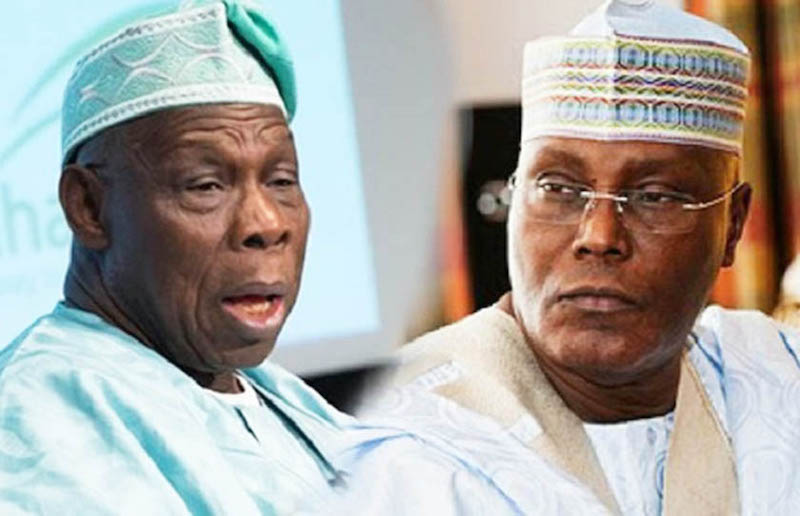
The presidential candidate of the African Democratic Congress (ADC), Atiku Abubakar, has dismissed the political relevance of former President Olusegun Obasanjo, declaring that the former Nigerian leader has no significant electoral value.
Atiku made the remark while speaking with journalists on Wednesday, August 19, 2026, as political activities intensify ahead of the 2027 general elections.
The former Vice President and Obasanjo have had a strained political relationship for years, dating back to their time in government and becoming more pronounced after leaving office in 2007 following two terms in power.
Atiku served as Vice President under Obasanjo between 1999 and 2007, but the relationship between the two men deteriorated significantly over political disagreements, particularly surrounding Obasanjo’s controversial attempt to secure a third presidential term.
Atiku has previously stated that he opposed the move because he believed it violated the Nigerian Constitution and threatened the country’s democratic system.
Despite their history, Atiku said he was not concerned about Obasanjo’s decision not to endorse him ahead of the 2027 presidential election.
He questioned the former president’s ability to influence electoral outcomes, arguing that Obasanjo had not demonstrated significant electoral strength in his own political base.
“In 1999, he could not even win his own state or the Southwest; it was Arewa that made him President. He possesses no electoral value,” Atiku said.
The statement represents a direct dismissal of the political weight often attributed to Obasanjo, who remains an influential elder statesman and has continued to comment on national political issues since leaving office.
Obasanjo was elected president in 1999 after Nigeria returned to civilian rule, winning the election on the platform of the Peoples Democratic Party. He was re-elected in 2003 and completed his second term in 2007.
Atiku, who was his vice president throughout the eight years, later became a leading political opponent of the former president.
Their relationship became particularly strained during the second term of the Obasanjo administration, when Atiku opposed efforts to amend the Constitution to allow the then president to seek an additional term.
Atiku has consistently maintained that his opposition to the proposal was motivated by the need to protect Nigeria’s democratic institutions and constitutional order.
More than a decade later, the political rivalry between the two men remains evident, with Atiku now seeking the presidency on the ADC platform.
The ADC candidate’s latest comments come as political parties and presidential aspirants begin preparations for the 2027 election, with opposition forces seeking to challenge the ruling All Progressives Congress (APC).
Atiku also used the opportunity to highlight his record of promoting young Nigerians during his time as Vice President.
He said that during his tenure in government, he gave opportunities to many young Nigerians to participate in public administration and national leadership.
According to him, some of those individuals who benefited from such opportunities have since risen to occupy important positions across the country, including governors, ministers and senior public servants.
He said his approach to youth inclusion would continue if he is elected president in 2027.
Atiku argued that Nigeria needs a new generation of leaders who can contribute fresh ideas and energy to governance while benefiting from the experience of established political figures.
He said young Nigerians should not be treated merely as supporters during election campaigns but should be given meaningful opportunities to serve and lead.
The former Vice President is expected to make youth empowerment and political inclusion central components of his campaign as he seeks to build support ahead of the 2027 presidential contest.
His remarks also come amid increasing political realignments, with several opposition politicians exploring alliances and new platforms as the country moves towards another major electoral contest.
The ADC, which has positioned itself as an opposition platform, is expected to intensify its mobilisation across the country as the election approaches.
Atiku’s dismissal of Obasanjo’s electoral influence could further fuel discussions about the role of former presidents and elder statesmen in determining political outcomes.
Although former leaders often possess considerable public recognition and networks built over years in government, their ability to translate that influence into votes remains a subject of debate.
For Atiku, however, the focus appears to be on appealing directly to voters, particularly young Nigerians who make up a significant portion of the country’s electorate.
He has continued to promote his experience in national government while promising to create greater opportunities for younger citizens to participate in governance.
As the 2027 election approaches, Atiku’s comments suggest that he does not intend to rely on endorsements from influential political figures who are not directly aligned with his campaign.
Instead, he is presenting his record and political experience as the basis for his appeal to the electorate.
The former Vice President’s assessment of Obasanjo is likely to generate further debate within Nigeria’s political circles, given the historical significance of their relationship and Obasanjo’s continued prominence in national affairs.
With political activities gathering momentum, both established parties and emerging opposition platforms are expected to intensify efforts to secure endorsements, build alliances and mobilise voters ahead of the 2027 presidential election.