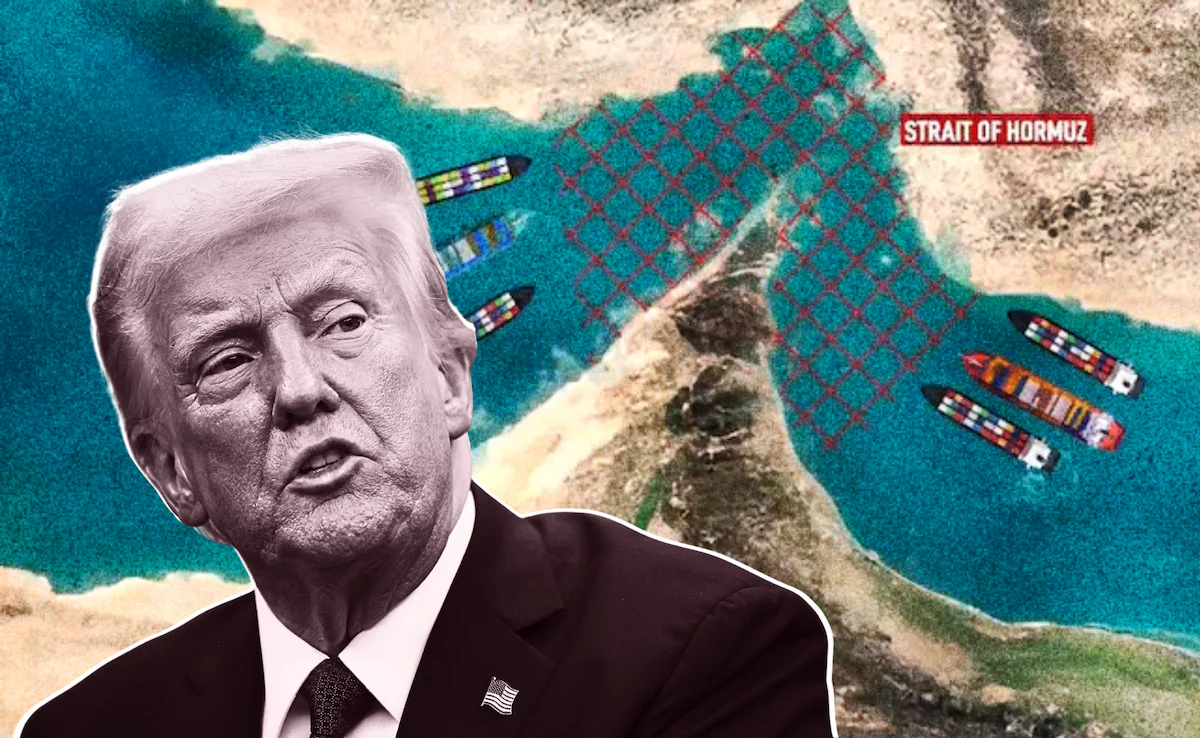
US President Donald Trump has said he intends to declare the strategically important Strait of Hormuz a territory of the United States after what he described as the eventual defeat of Iran.
Trump made the statement on Friday during a political rally at a police academy in New York State, where he addressed supporters and members of the law enforcement community.
Speaking about the ongoing conflict with Iran and the standoff over the crucial waterway, Trump said the United States would soon take a dramatic step concerning the strait.
“After we finish defeating Iran, which is being very badly defeated — pretty soon I’ll be declaring the Hormuz Strait a territory of the United States,” Trump said, drawing a reaction from the crowd.
“It’s true,” he added.
The comments represent an extraordinary escalation in the rhetoric surrounding the Strait of Hormuz, one of the world’s most strategically important maritime routes.
The waterway connects the Persian Gulf with the Gulf of Oman and the Arabian Sea and serves as a major transit route for global energy supplies. Any prolonged disruption to shipping through the strait could have significant consequences for international oil markets, global trade and energy security.
Trump, together with Israel, launched military action against Iran on February 28, with Washington and Tel Aviv citing concerns over Iran’s nuclear programme and broader security considerations. Trump has also indicated that the campaign was intended to weaken Iran’s government and encourage opposition to the country’s leadership.
Iran subsequently responded with attacks and measures aimed at restricting maritime traffic through the Strait of Hormuz.
The confrontation has created a tense standoff between Tehran and Washington over control of the waterway.
Iran has effectively restricted access to large sections of the strait, particularly for civilian and commercial vessels, while the US Navy has maintained a blockade of Iranian ports as part of Washington’s campaign to weaken Iran’s economy.
Trump told supporters that the United States currently exercises effective control over shipping through the strategic passage.
“We have the blockade. No ships get through unless we want them to,” he said.
The comments come amid heightened international concern over the impact of the conflict on global energy supplies.
The Strait of Hormuz is critical to the international energy market because a substantial share of the world’s crude oil and liquefied natural gas shipments traditionally passes through the narrow waterway.
Any prolonged interruption could push up energy prices, increase transportation costs and intensify inflationary pressures in economies that depend heavily on imported oil and gas.
Trump’s proposed declaration that the strait would become US territory is also likely to raise significant legal and geopolitical questions.
The waterway is bordered by Iran and Oman, and its waters are subject to international maritime law. A unilateral US claim over the strait would therefore have major implications for sovereignty, freedom of navigation and relations with countries in the Gulf region.
Iran has repeatedly rejected US claims of control over the waterway and has maintained that it has the right to regulate access in response to the conflict and international sanctions.
The United States, however, has insisted on maintaining freedom of navigation and has deployed naval forces to the region to protect its interests and enforce its pressure campaign against Tehran.
Trump’s latest remarks suggest that Washington’s position could go beyond ensuring access for commercial shipping if the conflict continues.
The US president has repeatedly adopted an aggressive tone toward Iran since the outbreak of hostilities, while also indicating that he does not necessarily intend to deploy American ground forces for a prolonged occupation.
The future of the Strait of Hormuz has consequently become one of the central issues in the wider confrontation.
With the conflict showing no clear signs of an immediate resolution, governments and energy markets around the world are closely monitoring developments in the waterway.
Trump’s declaration at the New York rally is likely to generate further international debate over the future status of the strait and the extent of US ambitions in the region.
For now, the waterway remains at the centre of the confrontation between Washington and Tehran, with its security and accessibility carrying consequences far beyond the Middle East.