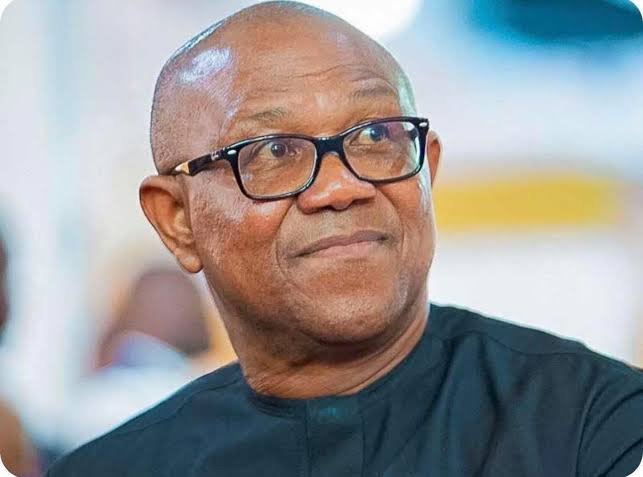
Former Labour Party presidential candidate, Peter Obi, has urged Nigeria’s political leaders to reassess their priorities, arguing that the country’s worsening security and economic challenges demand urgent attention rather than an excessive focus on politics.
In a statement titled “What Truly Should Be Our Priority Now as Leaders of a Nation?”, Obi reflected on his experience while completing his nomination forms for the Independent National Electoral Commission (INEC), saying some of the questions contained in the forms prompted him to examine the quality of leadership currently being offered to Nigerians.
According to him, one particular question on the nomination form, which asks whether an aspirant has ever been adjudged a lunatic or declared to be of unsound mind, led him to reflect on whether the actions of Nigeria’s political leaders truly demonstrate the judgment and responsibility expected of those entrusted with governing the country.
“While completing my INEC nomination form yesterday, Section E, Question 1 caught my attention,” Obi stated.
“It asks: ‘Have you ever been adjudged a lunatic or been declared a person of unsound mind?’ The answer is either Yes or No.”
He said the question inspired a deeper reflection about governance and national priorities.
“That question got me thinking: Can we, as the political leaders of today’s Nigeria, truly say we are exhibiting the characteristics of a sound mind?” he asked.
The former Anambra State governor argued that the realities confronting ordinary Nigerians should naturally command the full attention of political leaders instead of early electioneering activities and partisan competition.
He pointed to the persistent wave of insecurity across the country, including kidnappings, attacks on communities and the inability of many Nigerians to travel safely on major highways.
Obi also highlighted the worsening economic situation, noting that millions of citizens remain uncertain about where their next meal will come from amid rising food prices, inflation and declining purchasing power.
According to him, these pressing national problems should take precedence over political calculations and electoral contests.
“When Nigerians, including children and security personnel, are being abducted into the bushes, citizens cannot travel safely on our highways, several million Nigerians are uncertain where their next meal will come from, and several billions are being siphoned frivolously through non-existent agencies and projects, should politics really be our primary preoccupation?” he asked.
Obi maintained that responsible leadership requires recognising such challenges as national emergencies deserving immediate and coordinated responses.
He argued that a government acting in the national interest would mobilise all relevant institutions and stakeholders to confront the country’s most urgent problems without delay.
According to him, security agencies, experts, community leaders and other critical stakeholders should be brought together to develop practical solutions capable of restoring safety, stability and public confidence.
“A sound-minded leadership would have declared these existential challenges a national emergency and immediately mobilised all relevant institutions, security agencies, experts, community leaders and other critical stakeholders to confront them with urgency and resolve,” he said.
The former presidential candidate stressed that Nigeria has reached a point where the country’s survival, security and economic stability should outweigh every other political consideration.
He insisted that this is a period requiring bold leadership, decisive action and genuine commitment to solving national problems rather than pursuing partisan advantage.
“At a moment like this, the survival, security and stability of Nigeria must take precedence over every other consideration,” Obi stated.
“This is a time for decisive action, not political calculation or the pursuit of partisan advantage.”
Beyond the issue of governance, Obi also called for greater transparency in Nigeria’s electoral process.
He said another question contained in the INEC nomination form prompted him to reflect on the importance of accountability among public office seekers.
According to him, the form asks candidates whether they have ever presented forged academic certificates to the electoral commission.
“Further in the same Section E, Question 6, was: ‘Have you ever presented a forged certificate to INEC?’ Again, the answer is either Yes or No,” he noted.
Obi argued that the existence of such a question raises an important issue about public confidence in Nigeria’s elections and the credibility of those seeking public office.
To strengthen trust in the electoral process, he proposed that INEC should publish the academic qualifications and other credentials submitted by every candidate contesting elective positions.
According to him, making such documents publicly accessible would promote openness, discourage the submission of false information and enhance citizens’ confidence in the integrity of elections.
“Why shouldn’t INEC, in the interest of ensuring that our leaders are exemplary in following the rules and to strengthen public confidence in our electoral process, publish the academic certificates and credentials submitted by every candidate seeking elective office?” he asked.
Obi maintained that transparency remains one of the essential pillars of democratic governance, arguing that openness helps build public trust and strengthens accountability.
He concluded by urging Nigerian leaders to move beyond politics as usual and embrace a style of leadership rooted in competence, integrity and service to the people.
“Transparency strengthens democracy and builds public trust,” he said.
“Nigeria’s problems are too serious for politics as usual. It is time for leadership defined by competence, character, capacity, compassion and commitment to service.”
His remarks come as political activities ahead of the 2027 general elections continue to gather momentum, even as many Nigerians continue to express concern over the country’s economic challenges, rising insecurity and the need for more effective governance.