Alleged international fraudster, Osondu Victor Igwilo, popularly known as “Ezeego King of the Boys,” has reportedly been extradited from Nigeria to the United States to face multiple criminal charges linked to an alleged multi-million-dollar international fraud and money laundering operation.
Sources familiar with the development disclosed that Igwilo was transferred to U.S. authorities on Monday after being moved from the Kuje Custodial Centre in Abuja, where he had been held pending the conclusion of extradition proceedings.
According to sources who spoke on the matter, the suspected fraud kingpin departed Nigeria on Monday afternoon under tight security arrangements.
“Today, Osondu Victor Igwilo, also known as Ezeego King of the Boys, was extradited to the United States from Kuje prison,” a source familiar with the process reportedly disclosed.
The extradition marks a significant development in a case that has attracted attention both in Nigeria and abroad due to the scale of the alleged fraud and the international dimensions of the investigation.
Beyond the allegations that led to his extradition, sources also made claims regarding Igwilo’s influence while in custody at the Kuje Correctional Centre.
According to one source, the suspect allegedly wielded substantial influence within the prison environment and maintained close relationships with certain individuals at the facility.
The source alleged that Igwilo exercised considerable control over activities within the prison yard and was regarded as a powerful figure among inmates.
“He decided almost everything that happened in the prison yard. He controlled the yard and decided for many of the officers in charge at the Kuje facility, which is marred by a high level of corruption and illicit dealings,” the source claimed.
These allegations have not been independently verified, and prison authorities have not publicly responded to the claims.
The source further alleged that another inmate identified as Shettima reportedly collected more than N200 million from Igwilo under the pretext of helping him avoid extradition to the United States.
According to the source, the inmate allegedly promised to influence the legal and administrative processes surrounding the extradition proceedings.
“I even confirmed that Shettima, another inmate who just came out after serving his jail term, duped Ezego of over N200 million to stop the extradition process,” the source alleged.
No official confirmation has been provided regarding these claims, and the individuals mentioned have not publicly commented on the allegations.
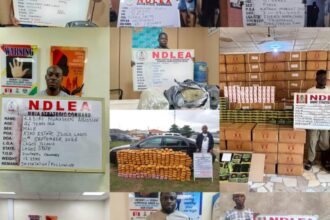
Igwilo first came into the national spotlight in March 2022 when operatives of the Economic and Financial Crimes Commission (EFCC) arrested him during a raid conducted in the Sangotedo area of Lagos State.
The anti-graft agency announced at the time that the operation led to the arrest of Igwilo and three other suspects identified as Okafor Nnamdi Chris, Nwodu Uchenna Emmanuel, and John Anazo Achukwu.
According to the EFCC, the suspects were linked to a sophisticated fraud network allegedly involved in financial crimes spanning multiple jurisdictions.
The commission alleged that the group was involved in fraud, money laundering, and identity theft schemes with a combined value estimated at approximately $100 million.
Investigators described Igwilo as the alleged leader of a network of individuals known in financial crime investigations as “catchers.”
Within fraud investigations, a catcher is typically described as an intermediary allegedly used to receive, transfer, withdraw, or conceal proceeds derived from fraudulent activities.
Authorities believe such individuals often serve as critical links between the principal perpetrators of financial crimes and the movement of illicit funds through banking systems.
The EFCC alleged that Igwilo coordinated a network of these intermediaries as part of a broader international fraud syndicate.
According to investigators, members of the network allegedly participated in advance-fee fraud schemes targeting victims both within and outside the United States.
Advance-fee fraud generally involves convincing victims to make upfront payments in exchange for promised financial rewards, investments, loans, contracts, or business opportunities that ultimately do not exist.
The anti-corruption agency claimed that victims were lured through false promises of investment financing and other financial opportunities.
Investigators further alleged that members of the syndicate impersonated officials of financial institutions, particularly those based in the United States, using both online communications and face-to-face interactions to gain the confidence of victims.
The allegations against Igwilo also attracted the attention of American law enforcement agencies years before his arrest in Nigeria.
According to previous disclosures by the EFCC, the suspect had reportedly been on the watchlist of the United States Federal Bureau of Investigation (FBI) since 2018.
That same year, prosecutors in the United States formally charged him in connection with an alleged international fraud conspiracy.
According to the U.S. Attorney’s Office for the Southern District of Texas, Igwilo was accused of masterminding an elaborate advance-fee fraud operation that targeted victims across several countries.
American investigators alleged that the scheme involved phishing emails, fraudulent investment proposals, forged documentation, and sophisticated impersonation tactics designed to deceive unsuspecting victims.
Authorities claimed that some of the fraudulent communications falsely represented opportunities associated with BB&T Corporation, a U.S.-based financial institution.
Victims were allegedly persuaded that substantial investment funding or financial assistance had been approved for them.
However, before receiving the promised funds, they were instructed to make advance payments to cover processing fees, taxes, administrative costs, or other purported expenses.
Investigators alleged that the promised investments never materialised and that victims suffered substantial financial losses as a result.
To reinforce the credibility of the operation, U.S. authorities claimed that individuals recruited by the network allegedly posed as bank representatives and met victims in person.
The suspects were also accused of using forged documents, counterfeit certifications, and fake U.S. government seals to create the appearance of legitimacy.
According to American prosecutors, funds obtained through the alleged scheme were transferred through a network of bank accounts within the United States before being laundered through associates and eventually moved to Nigeria.
Investigators further alleged that portions of the proceeds were used to acquire luxury assets, including high-end vehicles such as Mercedes-Benz and Range Rover models.
Some of these vehicles were reportedly shipped from the United States to Nigeria as part of efforts to conceal the origin of the funds.
The charges filed against Igwilo in the United States include conspiracy to commit wire fraud, conspiracy to commit money laundering, and aggravated identity theft.
At the time the charges were announced, U.S. authorities described him as a fugitive who had evaded arrest while continuing to operate outside their jurisdiction.
With his reported extradition now completed, Igwilo is expected to face prosecution before a U.S. federal court, where he will have the opportunity to respond to the allegations brought against him.
The case is likely to attract significant international attention as prosecutors seek to establish the full extent of the alleged fraud network and recover assets believed to be linked to the operation.
For now, the extradition represents a major milestone in the long-running investigation and highlights the growing cooperation between Nigerian and international law enforcement agencies in tackling transnational financial crimes.