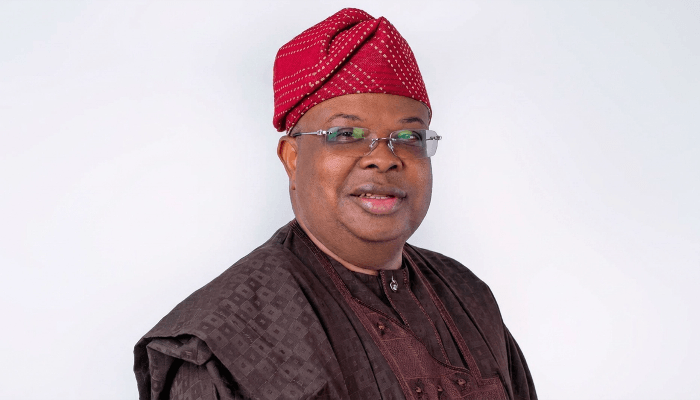
Joseph Olasunkanmi Tegbe has cautioned that addressing Nigeria’s chronic electricity challenges will require bold, transparent, and sometimes difficult reforms, stressing that there are no quick or easy solutions to the country’s long-standing power sector crisis.
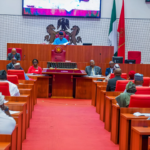
Tegbe made this position clear during his screening before the Senate Committee of the Whole on Wednesday, where he engaged lawmakers on his vision for transforming the electricity sector. His remarks come amid growing public frustration over unreliable power supply, estimated billing, and the broader inefficiencies that have plagued the industry for decades.
In his presentation, Tegbe emphasized the need for a decisive break from past practices, which he said have consistently failed to deliver meaningful progress. He told senators that any serious reform effort must be grounded in realism and accountability, rather than promises that cannot be fulfilled.
“We will not do things the way we used to do before. I will not promise what I cannot deliver,” he said, signaling a pragmatic approach to the challenges ahead.
Tegbe, who was appointed in 2025 by Bola Ahmed Tinubu as Director General of the Nigeria-China Strategic Partnership, described the electricity sector as a critical pillar of national development. According to him, stable and reliable power supply is essential not only for economic growth but also for restoring public confidence in governance.
He noted that despite numerous reforms over the years—including privatization efforts and policy adjustments—the sector has yet to achieve the level of efficiency and reliability expected by Nigerians. This, he argued, underscores the need for a fundamentally different approach that prioritizes transparency, measurable outcomes, and institutional discipline.
If confirmed for the role under consideration, Tegbe outlined a set of priorities that he believes could begin to reverse the sector’s decline. Chief among these is improving power distribution, which he identified as one of the weakest links in the electricity value chain. He noted that inefficiencies at the distribution level often undermine gains made in generation and transmission.
Another major focus area, according to Tegbe, is the urgent need to close Nigeria’s persistent metering gap. Millions of electricity consumers across the country remain unmetered, leading to widespread reliance on estimated billing—a practice that has fueled public dissatisfaction and eroded trust in distribution companies.
“We must close the metering gap and ensure Nigerians can track performance through a transparent public dashboard,” he said. “The sector must be properly structured, and the people deserve to see real improvement.”
Tegbe’s proposal for a public performance dashboard reflects his broader emphasis on transparency. He argued that making sector data accessible to the public would enhance accountability, enable consumers to monitor service delivery, and create pressure for improved performance across the value chain.
In addition to addressing distribution and metering challenges, Tegbe highlighted the importance of decentralizing electricity generation. He called for greater involvement of sub-national governments, suggesting that states should be empowered and encouraged to generate their own power independently.
Such a move, he explained, would help reduce the burden on the national grid, which has struggled to meet the country’s growing energy demands. By diversifying sources of generation and allowing states to develop localized solutions, Nigeria could achieve a more resilient and efficient power system.
“The role of states is critical,” Tegbe noted. “Encouraging them to participate actively in electricity generation will not only improve supply but also stimulate local economic development.”
He also stressed the importance of setting clear, time-bound targets for reform implementation. According to him, measurable milestones are essential for evaluating progress and ensuring that reform efforts do not become another cycle of unfulfilled promises.
“We will come with clear milestones,” he said. “If results are not visible in three months, they won’t be in six.”
This emphasis on short-term accountability reflects a broader commitment to results-driven governance. Tegbe suggested that early indicators of progress—such as improved distribution efficiency or increased metering—would be critical in building public confidence and sustaining momentum for deeper reforms.
His remarks were received with interest by lawmakers, many of whom have repeatedly raised concerns about the performance of the power sector and its impact on economic productivity. Nigeria’s electricity challenges have long been identified as a major constraint on industrial growth, small business development, and overall quality of life.
Tegbe’s stance suggests a willingness to confront these issues head-on, even if it requires politically difficult decisions. By rejecting the notion of quick fixes and emphasizing structural reform, he has positioned himself as an advocate for a more disciplined and transparent approach to sector governance.
As the screening process continues, his proposals are likely to be closely scrutinized, particularly in light of past reform efforts that failed to deliver lasting change. However, his focus on accountability, decentralization, and measurable outcomes offers a framework that could, if effectively implemented, begin to address some of the sector’s most persistent challenges.
Ultimately, Tegbe’s message to the Senate and the Nigerian public is clear: meaningful transformation of the electricity sector will take time, courage, and a commitment to doing things differently. Whether that vision translates into tangible results will depend on execution, political will, and sustained oversight.