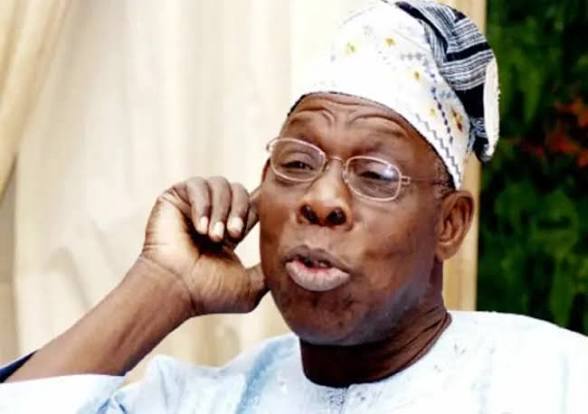
Former President Olusegun Obasanjo has once again cast doubt on the viability of Nigeria’s state-owned refineries, insisting they are structurally incapable of functioning effectively despite ongoing rehabilitation efforts and plans to secure technical partners.
Speaking during a televised interview on Sony Irabor Live, Obasanjo argued that Nigeria’s long-standing dependence on government-managed refineries has proven unsuccessful, stressing that the country must adopt more sustainable, private-sector-driven models if it hopes to achieve efficiency in its oil and gas sector.
His remarks come at a time when the Nigerian National Petroleum Company Limited (NNPCL) is actively seeking technical partners to operate the Port Harcourt, Warri, and Kaduna refineries. The move is part of broader efforts to revive domestic refining capacity and reduce Nigeria’s reliance on imported petroleum products.
Obasanjo, however, remains unconvinced that such efforts will yield meaningful results. Drawing from his experience in office, he reiterated that public-private partnerships (PPPs) remain the most viable model for large-scale infrastructure projects in Nigeria, citing the success of the Nigeria Liquefied Natural Gas (NLNG) project as a benchmark.
“One of the key lessons I learned is that public-private partnerships work,” he said. “The NLNG is a clear example where the private sector holds majority ownership while the government retains a minority stake. That structure has ensured efficiency and sustainability.”
He contrasted this with what he described as repeated government failures in managing critical national assets, including the railways, the national shipping line, and the refineries themselves.
According to the former president, attempts during his administration to attract credible international operators to manage Nigeria’s refineries were unsuccessful. He disclosed that he personally approached Shell, one of the world’s leading energy companies, offering it equity participation and operational control of the refineries.
“I asked Shell to take 10 per cent equity and run the refineries for us. They declined. I then told them to forget equity and simply manage the refineries. They still refused,” Obasanjo said.
He added that he later sought a candid explanation from a senior Shell executive, who outlined several structural and operational concerns that made the refineries unattractive.
According to Obasanjo, the executive explained that oil companies derive most of their profits from upstream operations such as exploration and production, rather than downstream refining, which often yields lower returns. In addition, Nigeria’s refineries were considered too small compared to global standards, where facilities typically process between 250,000 and 300,000 barrels per day.
He further noted that poor maintenance practices and the involvement of unqualified personnel had degraded the facilities over time. The issue of corruption was also cited as a major deterrent for international investors.
“The refineries are not properly maintained. We rely on quacks and amateurs. There is also too much corruption surrounding their operations, and reputable companies do not want to be associated with that,” he said.
Obasanjo went on to recount what he described as a missed opportunity during his tenure, when billionaire industrialist Aliko Dangote offered $750 million to acquire a 51 per cent stake in two of the refineries.
“I saw it as a miracle. I encouraged him to proceed, and the payment was made,” he said.
However, the transaction was later reversed by his successor, Umaru Musa Yar’Adua, following pressure from the NNPC at the time. Obasanjo expressed frustration over the decision, arguing that it undermined a potentially transformative reform.
“I met with Yar’Adua and explained why we took that decision. He admitted he understood but said he faced pressure. I told him that if those refineries were sold later, they would fetch far less, possibly even as scrap,” he added.
The former president also criticised the scale of financial resources that have reportedly been invested in the refineries over the years without commensurate results. He cited estimates suggesting that as much as $16 billion has been spent on rehabilitation efforts.
He compared this figure to the cost of building the Dangote Refinery, which is widely regarded as Africa’s largest refinery and was constructed at a cost of approximately $20 billion.
“It is troubling that nearly the same amount has been spent on facilities that are still not functional, while a new, world-class refinery has been built with similar resources,” Obasanjo said.
Recent developments appear to lend some credence to his concerns. In November 2025, NNPCL announced a target of June 2026 to finalise the selection of technical partners for the refineries. The initiative followed earlier attempts to rehabilitate the Port Harcourt and Warri refineries, which were briefly reopened in 2024 but later shut down again due to operational inefficiencies.
The current Group Chief Executive Officer of NNPCL, Bayo Ojulari, has acknowledged that the refineries are operating below international standards, making their products uncompetitive in the global market.
Ojulari’s assessment aligns with longstanding criticisms from industry experts who argue that Nigeria’s refining sector suffers from systemic inefficiencies, outdated infrastructure, and weak governance frameworks.
Meanwhile, Dangote himself has previously stated that his decision to build a private refinery was influenced by the collapse of the earlier privatisation deal. He has also expressed scepticism about the future of government-owned refineries, suggesting they may never achieve optimal performance.
Despite these concerns, the federal government continues to pursue a strategy aimed at reviving the facilities through partnerships with private operators. Officials maintain that restoring domestic refining capacity is critical to reducing import dependence, stabilising fuel supply, and strengthening Nigeria’s energy security.
However, Obasanjo’s renewed intervention is likely to reignite debate over the best approach to reforming the sector. His comments underscore a broader policy dilemma: whether to persist with state-led rehabilitation efforts or to fully embrace privatisation and private-sector management.
As Nigeria grapples with rising energy demands and economic pressures, the future of its refineries remains a critical issue. Whether the government’s current strategy will succeed—or validate Obasanjo’s long-held scepticism—remains to be seen.