The Minister of the Federal Capital Territory, Nyesom Wike, has revealed that Bola Ahmed Tinubu has approved the allocation of land in Abuja to Ambassadors and High Commissioners-designate, in a move aimed at strengthening Nigeria’s diplomatic architecture and deepening engagement between the country and the international community.
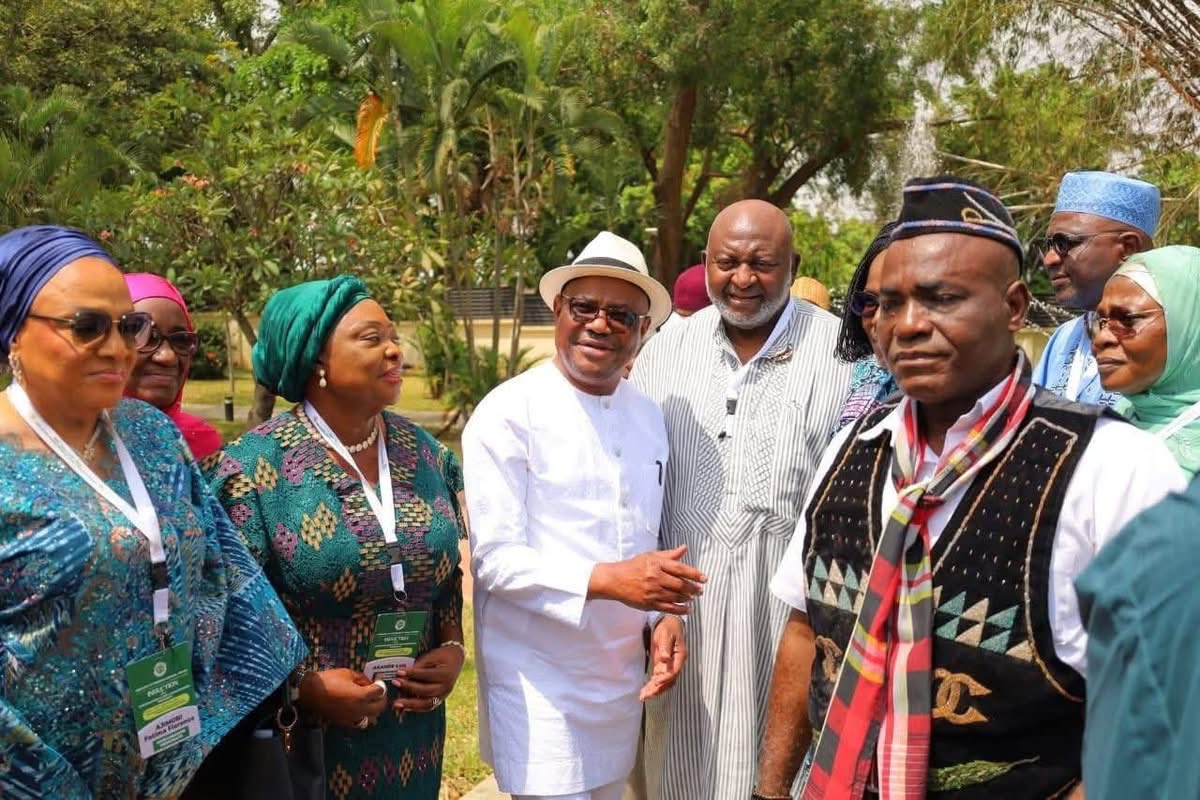
Wike made the disclosure on Tuesday during a courtesy visit by a delegation of ambassadors-designate led by Dunoma Umar Ahmed, the Permanent Secretary of the Ministry of Foreign Affairs. The meeting, which took place at the minister’s official residence in Life Camp, Abuja, formed part of an induction programme designed to prepare the envoys for their upcoming diplomatic assignments.
Addressing the diplomats, Wike explained that the President’s decision to allocate land to them was informed by the need to provide Nigerian representatives abroad with a sense of permanence and belonging within the nation’s capital. He noted that many diplomats, upon returning to Nigeria for official engagements or consultations, often lack personal accommodation in Abuja, a situation the initiative seeks to address.
“The President believes that most of you do not have a place in Abuja,” Wike said. “He wants to encourage you to build something here—a place you can call your own whenever you return for briefings or official duties. Before you leave today, each of you should collect the necessary forms to apply for land allocation.”
According to the minister, the policy is not only a welfare initiative but also a strategic effort to strengthen institutional ties between Nigeria’s diplomatic corps and the Federal Capital Territory. By ensuring that ambassadors and high commissioners maintain a physical presence in Abuja, the government hopes to foster closer interaction between foreign missions and domestic institutions.
Wike further emphasised the symbolic role of diplomats as representatives of Nigeria on the global stage, urging them to project a positive image of the country in their respective postings. He reminded the envoys that their conduct, communication, and effectiveness would shape how Nigeria is perceived internationally.
“You are, in essence, the mirror of this country,” he said. “The way the world sees you is the way it will see Nigeria. You must carry that responsibility with seriousness and pride.”
He charged the diplomats to actively promote the policy direction and development agenda of President Tinubu’s administration, particularly in the area of economic diplomacy. Wike noted that the President has undertaken multiple international engagements aimed at attracting investment and forging strategic partnerships, adding that it is now the responsibility of Nigeria’s envoys to consolidate those gains.
“Mr. President has travelled extensively to attract investment and partnerships,” he stated. “Your role is to reinforce those efforts by building confidence in Nigeria as a viable destination for investment.”
The minister also addressed concerns in some quarters about Nigeria’s political trajectory, dismissing claims that the country is drifting toward a one-party state. He reaffirmed Nigeria’s commitment to democratic principles and urged the diplomats to communicate this position clearly in their host countries.
“Nigeria remains a multi-party democracy,” Wike said. “There is no plan to turn the country into a one-party system. You must make this clear wherever you serve.”
Turning to developments within the Federal Capital Territory, Wike highlighted ongoing infrastructure projects and urban renewal initiatives across Abuja’s six area councils—Abaji, Abuja Municipal Area Council (AMAC), Bwari, Gwagwalada, Kuje, and Kwali. He said these efforts are part of a broader strategy to position Abuja as a modern, globally competitive capital city.
According to him, improvements in road networks, public services, and urban planning are already transforming the city’s landscape and enhancing its appeal to investors and international partners. He called on the ambassadors to leverage these developments in promoting Abuja as a destination for business and cooperation.
Wike also identified key sectors within the FCT that require increased investment, particularly agriculture and waste management. He noted that despite the availability of vast arable land in areas such as Gwagwalada and Kwali, agricultural investment in the territory remains relatively low.
“There is enormous potential in agriculture within the FCT, but it is still largely untapped,” he said. “We need your support to attract investors who can help unlock these opportunities and contribute to food security and economic growth.”
In addition, the minister disclosed that the FCT Administration is exploring partnerships with countries such as Saudi Arabia and Egypt to boost development in critical sectors. He also announced plans for engagement with the European Commission to deepen cooperation in areas of mutual interest, including infrastructure development and environmental sustainability.
Expressing optimism about the country’s future, Wike said he believes Nigeria is on a path toward greater stability and progress. “I remain confident that by 2027, Nigeria will be more peaceful, more united, and stronger as a nation,” he stated.
Earlier in his remarks, Ambassador Ahmed explained that the visit was part of a structured orientation programme aimed at equipping the ambassadors-designate with a deeper understanding of Nigeria’s domestic environment, particularly the strategic importance of Abuja in the country’s foreign relations.
He described the Federal Capital Territory as the administrative and diplomatic hub of Nigeria, noting that its development and global image play a crucial role in shaping international perceptions of the country. According to him, the effectiveness of Nigeria’s foreign policy is closely linked to the strength and appeal of its capital city.
“Our ambassadors and high commissioners have been entrusted with representing Nigeria at a pivotal moment in our national development,” Ahmed said. “They are expected to promote economic diplomacy, attract investment, and project Nigeria positively on the global stage.”
He commended the ongoing transformation of Abuja under Wike’s leadership, particularly in areas such as infrastructure development, urban management, and service delivery. Ahmed noted that these improvements not only enhance the quality of life for residents but also strengthen Nigeria’s standing in the international community.
The permanent secretary also called for closer collaboration between Nigeria’s foreign missions and the FCT Administration, stressing the need for a coordinated approach to investment promotion, cultural exchange, and urban development initiatives.
According to him, aligning Nigeria’s foreign policy objectives with domestic development priorities is essential for achieving sustainable growth and enhancing the country’s global competitiveness. He added that Abuja’s evolution into a world-class capital city would serve as a powerful tool in advancing Nigeria’s diplomatic and economic interests.
The meeting underscored the growing emphasis on economic diplomacy and institutional synergy in Nigeria’s foreign policy framework. With the allocation of land to ambassadors-designate and renewed focus on investment promotion, the government appears to be taking deliberate steps to strengthen both the structural and strategic dimensions of its international engagement.