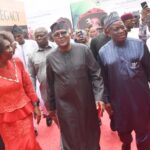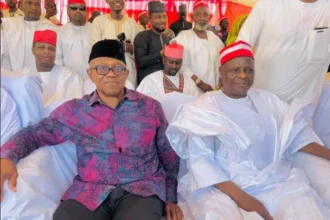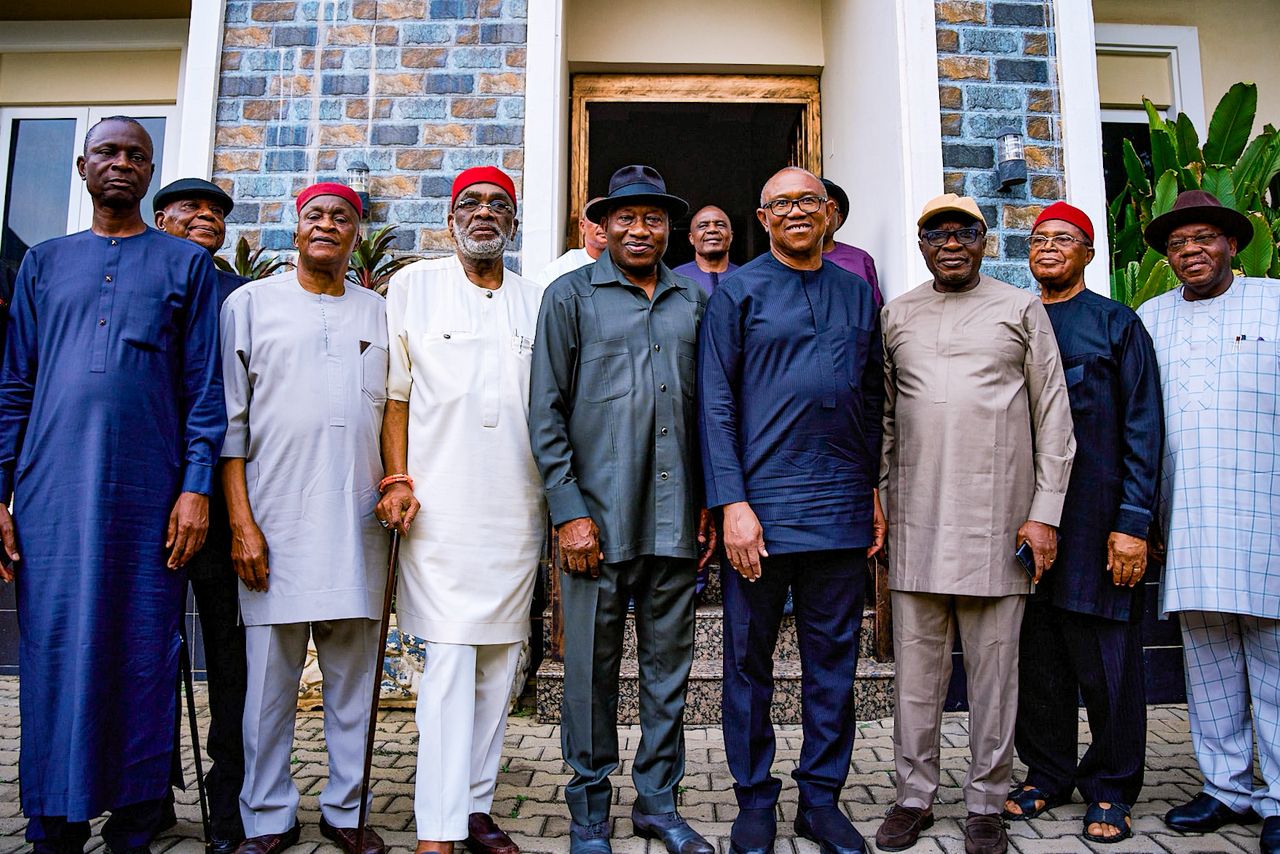
Former presidential candidate of the Labour Party, Peter Obi, has described his recent closed-door meeting with former President Goodluck Jonathan as a constructive and forward-looking engagement centred on Nigeria’s future.
Obi, who led a delegation comprising South-East political leaders and close associates to Jonathan’s residence, said the meeting forms part of a broader and ongoing consultation process with influential stakeholders across the country as preparations gradually build toward the 2027 general elections.
Speaking after the meeting, Obi disclosed that the discussions were extensive, candid, and focused on the urgent need to address Nigeria’s deepening challenges. In a post shared on his official X (formerly Twitter) account, he emphasised that the engagement was anchored on charting a new course for the country, particularly in areas critical to national stability and development.
“Our discussions were frank, thoughtful, and anchored on the urgent need to reposition Nigeria on the path of unity, security, stability, productivity, and inclusive governance,” Obi stated.
The meeting comes at a time when Nigeria continues to grapple with multiple pressures, including economic strain, rising cost of living, security concerns, and institutional challenges. Against this backdrop, Obi stressed the importance of building consensus among leaders across political and regional divides, arguing that the country’s problems can no longer be addressed through fragmented or partisan approaches.
According to him, the scale and complexity of Nigeria’s current situation demand a collective response driven by shared responsibility and national interest rather than narrow political calculations. He noted that leaders must rise above sectional considerations and work collaboratively to restore public confidence in governance.
Obi also used the opportunity to outline the leadership qualities he believes are essential for navigating Nigeria through its present difficulties. He argued that the country requires a new kind of leadership—one rooted in competence, integrity, and empathy—rather than personal ambition or political expediency.
“Nigeria today requires leadership that is guided not by personal ambition, but by competence, character, capacity, and compassion,” he said. “Governance is not about sharing what is left, but about creating what is needed.”
This emphasis on value-based leadership reflects Obi’s consistent messaging on governance, which prioritises accountability, efficiency, and service delivery. He reiterated that the role of government should extend beyond resource distribution to actively creating opportunities, building institutions, and driving economic growth.
Central to his vision is a proposed shift in Nigeria’s economic model. Obi argued that the country must move away from a consumption-driven economy toward one that prioritises production and value creation. He pointed out that Nigeria possesses vast human and natural resources, which, if effectively harnessed, could transform the nation’s economic fortunes.
He stressed that a production-oriented economy would not only generate employment but also strengthen local industries, reduce dependence on imports, and improve overall economic resilience. Such a transformation, he noted, would require deliberate policies, investment in critical sectors, and a strong commitment to innovation and entrepreneurship.
Obi’s comments also touched on the broader implications of governance for ordinary Nigerians. He framed the discussion around the lived realities of citizens, highlighting the struggles faced by families, businesses, and young people across the country.
Looking ahead to the 2027 general elections, Obi described the upcoming polls as a defining moment in Nigeria’s history—one that goes beyond routine political competition. He argued that the elections present an opportunity for a fundamental reset of the country’s direction.
“The 2027 elections must not just be seen as another political exercise, but as a critical opportunity to reset the trajectory of our country,” he said.
He elaborated that the stakes are particularly high for key segments of the population, including children, entrepreneurs, and vulnerable citizens. According to him, the outcome of the elections will have far-reaching consequences for education, economic opportunities, and national security.
“It must be about the Nigerian child who deserves quality education, the struggling entrepreneur who needs a conducive environment to thrive, and the millions of citizens who simply desire a secure and functional nation,” Obi added.
The former Anambra State governor has, in recent months, intensified consultations with political leaders, traditional rulers, and civil society actors across different regions. Observers see these engagements as part of a strategic effort to build alliances and shape a coherent political agenda ahead of the next electoral cycle.
While details of the meeting with Jonathan were not fully disclosed, the choice of the former president as a key stakeholder underscores the importance of experience and institutional memory in ongoing political discussions. Jonathan, who served as Nigeria’s president from 2010 to 2015, remains a significant figure in the country’s political landscape and is often regarded as a voice of moderation and stability.
The interaction between both leaders also reflects a broader trend of increased political consultations across party lines, as various actors position themselves for the evolving dynamics of the 2027 elections. With Nigeria’s political environment becoming increasingly fluid, such engagements are likely to play a critical role in shaping alliances and policy directions.
For Obi, however, the emphasis remains on substance over politics. His remarks suggest a deliberate attempt to frame the national conversation around governance outcomes rather than electoral strategies alone. By focusing on issues such as unity, productivity, and inclusive governance, he is positioning his message within a broader narrative of national renewal.
As the political landscape gradually shifts toward the next election cycle, the outcome of these consultations—and the ideas they generate—may prove decisive in determining the direction Nigeria takes in the coming years.