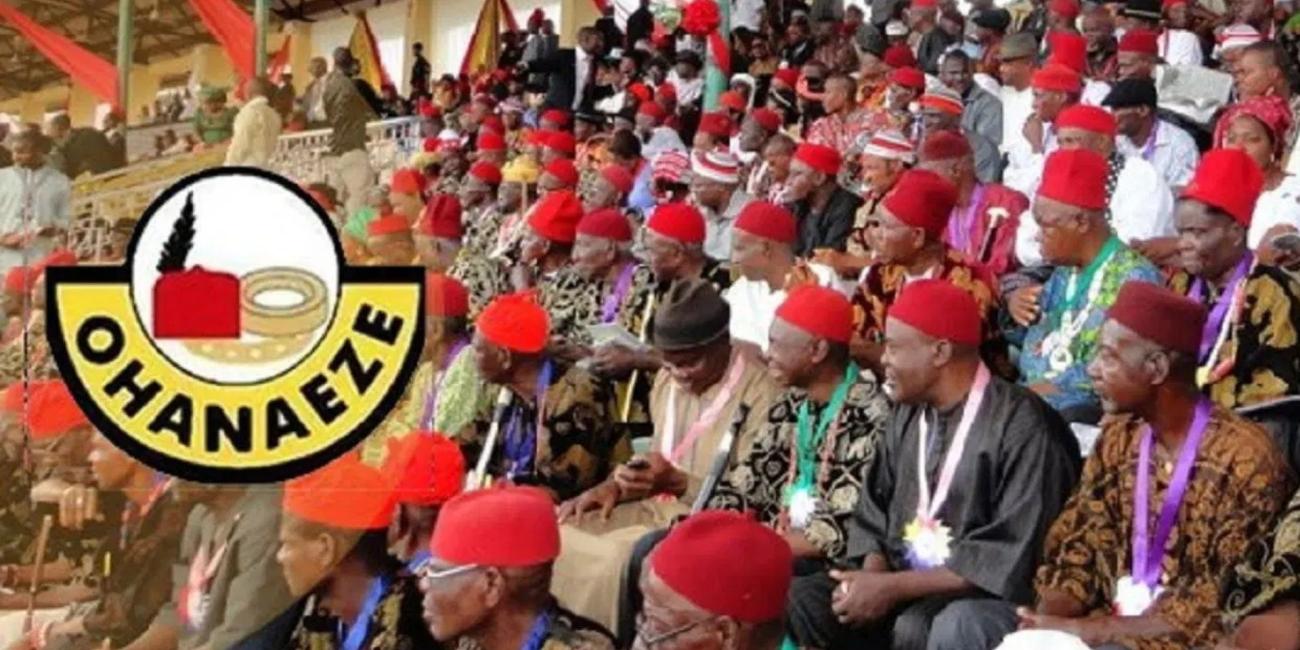
The President of the Ohanaeze Youth Council, Igboayaka O. Igboayaka, has delivered a forceful political message ahead of Nigeria’s 2027 general elections, urging widespread voter mobilisation across the Southeast and warning against apathy among eligible voters.
In a strongly worded press statement released on Saturday, Igboayaka declared that any Igbo person who fails to obtain a Permanent Voter Card (PVC) should be regarded as working against the collective interest of the region. He framed voter registration not merely as a civic duty but as a strategic necessity for political relevance and empowerment.
The youth leader called for what he described as a “ballot revolution,” signalling a planned shift in the political landscape of the Southeast. According to him, the region must prepare for a decisive electoral moment aimed at unseating what he characterised as a long-standing class of underperforming and self-serving political actors who have dominated governance since Nigeria’s return to democratic rule in 1999.
Igboayaka emphasised that the forthcoming elections would mark a departure from previous patterns, insisting that there would be “no going back” on the resolve to use the ballot box as a tool for systemic change. He portrayed the 2027 polls as a turning point that would redefine political accountability and leadership standards across Igboland.
Central to his argument was the issue of voter registration. He expressed concern over what he described as low participation levels in the Southeast, especially when compared to the region’s population strength. He claimed that Ndigbo constitute a significant proportion of Nigeria’s population and should be able to translate that demographic weight into tangible political influence.
He warned that failure to register for a PVC effectively weakens the region’s bargaining power and undermines its economic and political future. In his view, voter apathy amounts to complicity in the continued marginalisation of the Southeast.
“It is imperative that Ndigbo take proactive steps to register for a Permanent Voter Card at the nearest office of the Independent National Electoral Commission,” he said, stressing that readiness for the 2027 elections must begin with full participation in the voter registration process.
Igboayaka’s statement also included sharp criticism of the Southeast political establishment. He accused political leaders who have held power since 1999 of mismanaging public resources and failing to deliver meaningful development to the region. According to him, the continued recycling of the same individuals in public office has entrenched what he described as a cycle of stagnation and “political servitude.”
In one of the most controversial aspects of his address, he signalled a sweeping political reset, warning that most current officeholders—ranging from governors and senators to members of the House of Representatives and state assemblies—could face electoral defeat if they seek re-election.
He described this anticipated shift as a “compulsory comprehensive retirement from politics,” suggesting that voters are increasingly disillusioned with existing leadership and are ready to usher in a new generation of public officials.
While his remarks were broadly critical, Igboayaka made limited exceptions, commending the efforts of a few federal lawmakers whom he identified as having demonstrated a measure of effectiveness. However, he expressed dissatisfaction with the performance of several prominent leaders in the region, arguing that their records do not justify continued tenure in office.
He warned that politicians who intend to contest in 2027 must prepare to face a more informed and assertive electorate, one that is willing to hold leaders accountable at the polls.
“The Southeast will witness a fresh political dispensation,” he stated, adding that the emergence of new leaders would reflect the aspirations of a more politically conscious population.
Beyond political actors, Igboayaka also directed his appeal to families and communities. He called on parents and guardians to ensure that all eligible individuals, particularly those who have reached the age of 18, are registered to vote. He described voter registration as a collective responsibility that requires active encouragement at the grassroots level.
In addition, he claimed that preparations were already underway to safeguard the integrity of the 2027 elections in the region. According to him, there exists a “robust arrangement” to counter attempts at electoral manipulation, although he did not provide specific details.
His comments included a stern warning to political actors who might consider engaging in electoral malpractice. He suggested that any attempt to rig or alter election results would be met with strong resistance, underscoring the seriousness of the movement he seeks to mobilise.
Igboayaka further revealed that the 2027 election campaign in the Southeast would be symbolically referred to as “Egwu Surugede,” a term he described as representing a principle of reciprocal justice—an “eye for an eye” response to electoral misconduct.
While the tone of his statement reflects growing political tension and heightened expectations ahead of the elections, it also highlights broader issues of governance, representation, and civic engagement within the region.
Observers note that such rhetoric underscores the increasing role of youth-led movements in shaping Nigeria’s political discourse, particularly as the country approaches another critical electoral cycle.
As preparations for 2027 gradually intensify, the call for increased voter participation and accountability is likely to resonate across various segments of society. Whether this translates into tangible political transformation remains to be seen, but the message from the Ohanaeze Youth Council leadership signals a clear intent to challenge the status quo and redefine the region’s political trajectory.