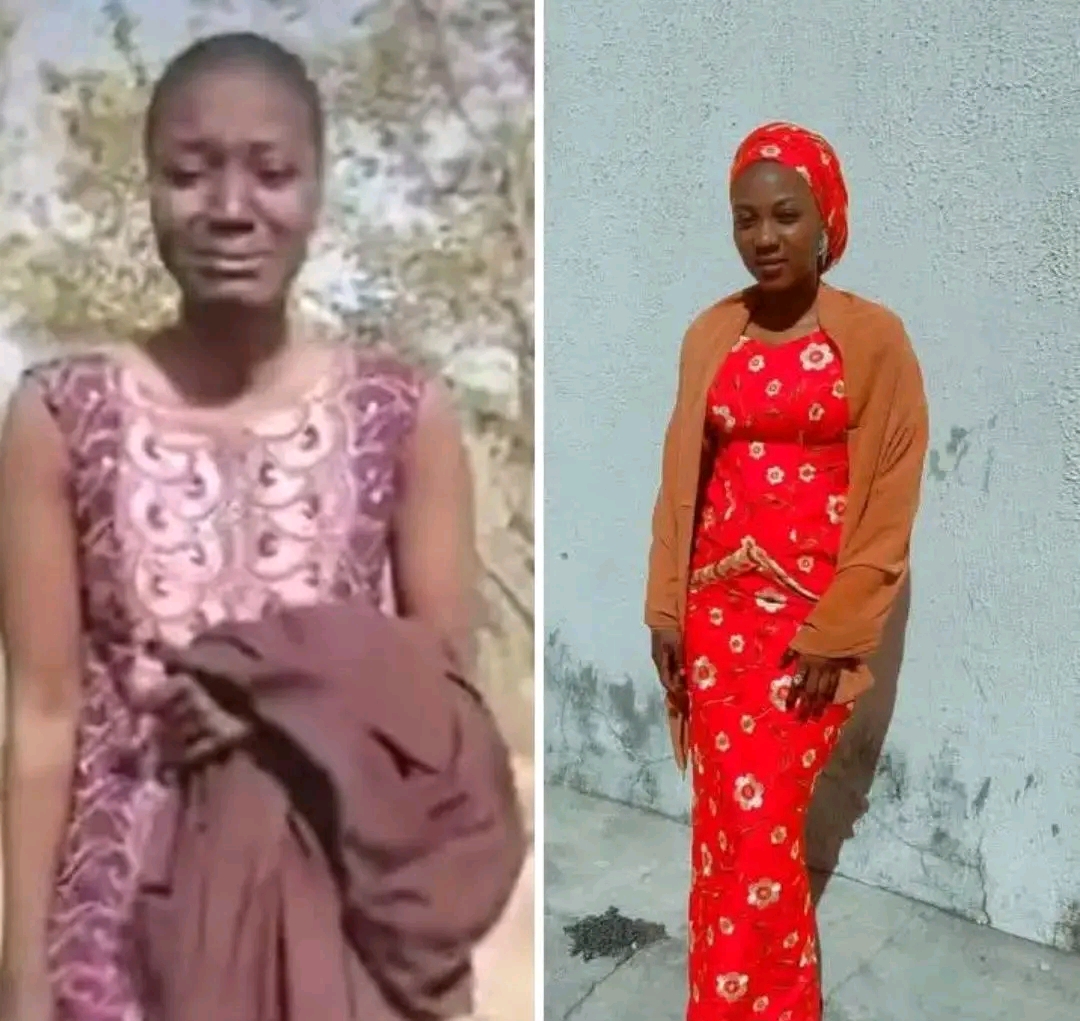
A young student identified as Maryam has regained her freedom after spending several months in captivity following her abduction by armed bandits while travelling to continue her education.
Maryam’s ordeal began when she was reportedly intercepted by attackers while on a journey from Zamfara State to Sokoto State, where she had intended to resume her studies. The journey, which should have marked a step forward in her academic pursuit, instead turned into a traumatic experience when the vehicle she was travelling in was ambushed and she was taken to an undisclosed location.
Her release was confirmed on Wednesday by social media personality D English Alhaji, who shared the news via his online platforms. In his announcement, he revealed that Maryam had been safely recovered and was no longer in the custody of her captors.
“We have Maryam with us now. Thank you, Nigerians. Maryam is finally free,” he wrote, expressing relief and gratitude over her return.
The announcement was accompanied by a video showing the young student shortly after her release. In the footage, Maryam appeared visibly weak and exhausted as she sat inside a vehicle being transported for urgent medical evaluation. According to the information shared, she was being taken to a hospital for proper assessment and treatment following the physical and emotional toll of her prolonged captivity.
Despite her fragile condition, Maryam took a moment to express heartfelt appreciation to Nigerians who had shown concern for her plight during the months she was missing. In the video, she thanked members of the public for their prayers, encouragement, and solidarity, noting that their support played a crucial role in sustaining her hope throughout the ordeal.
Her words reflected both relief and resilience, as she acknowledged the emotional strength she drew from knowing that people across the country were rooting for her safe return. For many observers, her gratitude underscored the importance of collective empathy in times of national distress.
While details surrounding the circumstances of her release remain unclear, including whether any ransom was paid or if security operatives were involved, her freedom has been widely welcomed as a rare piece of good news in a security environment often marked by grim developments.
Maryam’s experience is emblematic of a broader pattern of insecurity affecting several parts of Nigeria, particularly in the northern region. In recent years, incidents of banditry and mass abductions have increased significantly, with criminal groups targeting vulnerable individuals and communities.
States such as Katsina State, Kebbi State, and Kwara State—alongside Zamfara and Sokoto—have witnessed persistent attacks by heavily armed groups commonly referred to as bandits. These groups operate with relative impunity in some areas, carrying out kidnappings for ransom and launching assaults on both rural and semi-urban communities.
Residents in these regions have repeatedly raised alarms over the deteriorating security situation, highlighting the frequency of attacks on villages, highways, and public spaces. Travellers, in particular, have become frequent targets, with many abductions occurring along major roadways where security presence is limited.
Educational institutions have also not been spared. Students, teachers, and school staff have increasingly become targets of kidnapping operations, disrupting academic activities and instilling fear among families seeking to educate their children. Maryam’s case, involving a student travelling to pursue her education, illustrates the vulnerability of young Nigerians in such an environment.
In addition to schools and highways, places of worship have also been targeted, further deepening concerns about public safety. The cumulative effect of these incidents has been a growing sense of insecurity among citizens, many of whom now approach routine activities with heightened caution.
Security experts have attributed the persistence of banditry to a combination of factors, including weak law enforcement presence in remote areas, socio-economic challenges, and the proliferation of small arms. While government authorities have launched various military and policing operations to address the threat, the impact has been uneven, with some regions continuing to experience frequent attacks.
For victims and their families, the consequences are often devastating. Prolonged captivity can lead to severe physical and psychological trauma, as well as financial hardship for families forced to negotiate for their loved ones’ release. In many cases, victims return home in need of medical care and long-term rehabilitation.
Maryam’s return, therefore, marks not only the end of a personal ordeal but also the beginning of a recovery process that may take time and support. Her immediate transfer to a medical facility highlights the importance of addressing both the physical and emotional effects of such experiences.
Her story has also reignited calls for more effective and sustained efforts to tackle insecurity across the country. Many Nigerians have urged authorities to strengthen security infrastructure, improve intelligence gathering, and enhance coordination among security agencies to prevent future incidents.
At the same time, civil society organisations and community leaders have emphasised the need for a holistic approach that addresses the root causes of insecurity, including poverty, unemployment, and lack of access to education.
For now, Maryam’s safe return offers a moment of relief and hope amid an otherwise challenging security landscape. Her resilience and gratitude serve as a reminder of the human dimension of the crisis—one that goes beyond statistics and headlines to touch the lives of individuals and families across the nation.
As she begins the process of healing and reintegration, her story stands as both a testament to survival and a call to action for a safer and more secure society.