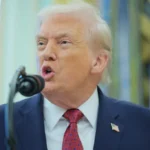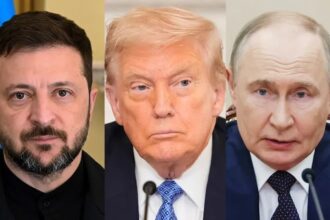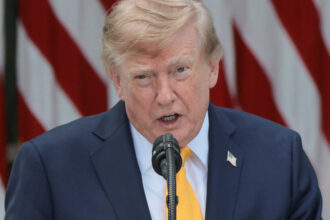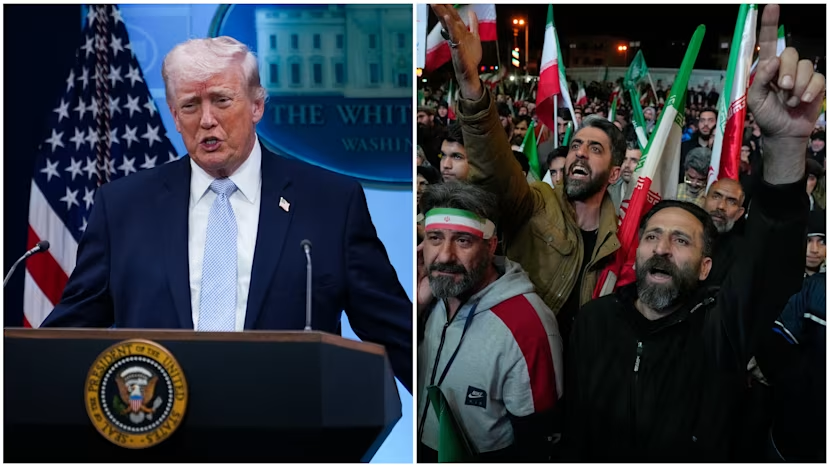
Former U.S. President Donald Trump has agreed to suspend the “destructive force” he had earlier threatened against Iran, announcing a temporary two-week ceasefire aimed at reopening the strategically vital Strait of Hormuz. The move is being viewed as a significant, though fragile, step toward de-escalating tensions in a region that has witnessed heightened conflict in recent weeks.
In a statement posted on Truth Social, Trump described the ceasefire as a “big day for World Peace,” signalling optimism that the agreement could mark the beginning of broader diplomatic engagement. He added that the United States would play a role in facilitating the smooth passage of vessels through the Strait of Hormuz, a maritime corridor through which approximately one-fifth of the world’s oil supply is transported daily.
The waterway, a critical artery for global energy markets, has been largely inaccessible for nearly a month due to escalating hostilities. Its disruption has raised international concerns over energy security, shipping stability, and broader economic implications. The ceasefire announcement came just ahead of a deadline previously set by Trump for Iran, intensifying the significance of the development.
According to Trump, Iran had earlier submitted what he described as a “workable” 10-point peace proposal intended to bring an end to the conflict. However, in a later remark, he appeared to cast doubt on the same proposal, referring to it as fraudulent without offering further clarification. This apparent contradiction has added to the uncertainty surrounding the agreement and the underlying negotiations.
Trump revealed that the decision to suspend military action followed consultations with key regional actors, including Shehbaz Sharif and Asim Munir. Both leaders reportedly urged restraint and advocated for a diplomatic resolution, contingent on Iran’s commitment to immediately reopen the Strait of Hormuz in a safe and controlled manner.
On the Israeli front, Prime Minister Benjamin Netanyahu confirmed that Israel had accepted the ceasefire proposal. However, he clarified that the agreement would not extend to ongoing military engagements involving Hezbollah in Lebanon. This position introduces a significant limitation to the scope of the ceasefire and raises concerns about the potential for continued instability in the region.
Pakistan, which played a mediating role in facilitating the agreement, appeared to take a broader view of the ceasefire’s intended scope. Officials in Islamabad indicated that the truce should encompass all active theatres of conflict, including Lebanon, thereby contradicting Israel’s interpretation. This divergence highlights the complexity of aligning multiple stakeholders with differing strategic priorities.
The United Kingdom has also responded positively to the development. Prime Minister Keir Starmer welcomed the ceasefire announcement and indicated plans to travel to the Middle East to support its implementation. His visit is also expected to include engagements with British troops stationed in the region, underscoring the UK’s continued involvement in regional security matters.
From Tehran, Iran’s Supreme National Security Council confirmed its acceptance of the temporary ceasefire, signalling a willingness to engage in further diplomatic discussions. The council indicated that negotiations with the United States could take place in Islamabad, reflecting Pakistan’s emerging role as a mediator in the crisis.
Iran’s Foreign Minister, Abbas Araghchi, stated that the Strait of Hormuz would be reopened for the duration of the ceasefire, albeit under Iranian military supervision. This condition suggests that while access to the waterway may resume, it will remain subject to strict oversight, potentially affecting the pace and volume of maritime traffic.
Despite this commitment, uncertainty persists over whether Iran will fully lift restrictions on the strait. Reports indicate that both Iran and Oman may introduce transit fees for vessels passing through the corridor. In Iran’s case, such revenues are reportedly intended to support post-conflict reconstruction efforts, adding an economic dimension to the evolving situation.
Beyond the immediate ceasefire, Iran is said to have outlined broader conditions for a permanent resolution to the conflict. These reportedly include the withdrawal of U.S. forces from the region, the lifting of economic sanctions, and the release of frozen Iranian assets held abroad. These demands are likely to form key points of contention in any forthcoming negotiations, given longstanding disagreements between Iran and Western powers.
However, even as diplomatic efforts appear to gain momentum, developments on the ground suggest that the situation remains volatile. Reports of fresh attacks across Israel, Iran, and parts of the Gulf region emerged early Wednesday, casting doubt on the immediate effectiveness of the ceasefire. These incidents highlight the challenges of enforcing such agreements in a highly fragmented conflict environment.
Adding to the complexity is confusion surrounding the details of Iran’s proposed peace plan. Discrepancies have reportedly been identified between the Farsi and English versions of the document. Notably, the Farsi version is said to include a clause recognising Iran’s right to continue uranium enrichment as part of its nuclear programme—a provision absent from the English translation.
This divergence has significant implications for negotiations, as both the United States and Israel have consistently demanded a complete cessation of Iran’s nuclear activities. The inclusion or exclusion of such a clause could therefore become a critical sticking point in discussions aimed at achieving a lasting settlement.
In sum, while the announcement of a two-week ceasefire represents a potential turning point, it is accompanied by considerable uncertainty. Diverging interpretations among key stakeholders, unresolved strategic disagreements, and ongoing hostilities all point to a fragile and evolving situation.
The reopening of the Strait of Hormuz, even on a temporary basis, may provide some relief to global energy markets and shipping networks. However, the durability of the ceasefire and the prospects for a comprehensive peace agreement will depend on sustained diplomatic engagement, mutual concessions, and the ability of all parties to adhere to agreed terms.
As events continue to unfold, the international community will be closely watching whether this temporary pause in hostilities can be transformed into a more enduring pathway toward stability in the Middle East.