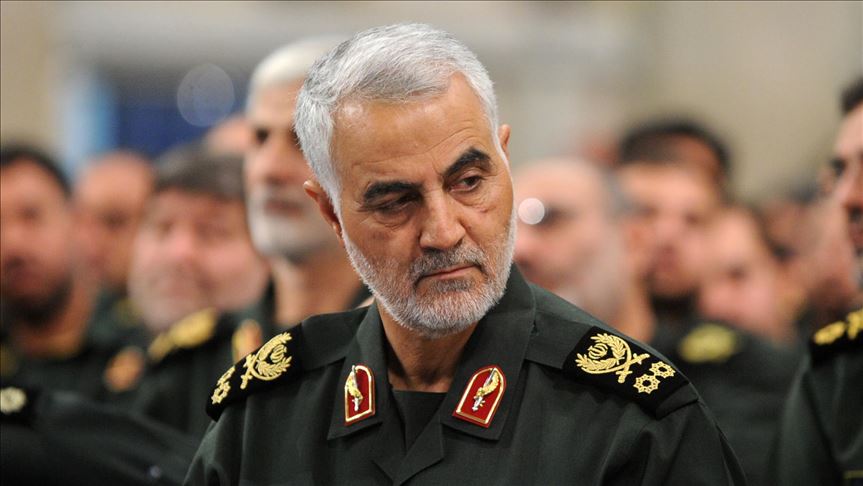
The United States government has taken a firm step in its ongoing efforts to address national security concerns by revoking the lawful permanent resident status of two relatives of slain Iranian military figure Qasem Soleimani. The decision, announced by the United States Department of State, was based on allegations that the individuals maintained ties to and expressed support for the Iranian government while residing in the United States.
According to the official statement, U.S. Secretary of State Marco Rubio ordered the termination of the residency status of Hamideh Soleimani Afshar—identified as Soleimani’s niece—and her daughter. Following the directive, both individuals were taken into custody by federal authorities and are currently being held by U.S. Immigration and Customs Enforcement (ICE) pending further immigration proceedings.
The State Department alleged that Soleimani Afshar had been an “outspoken supporter” of the Iranian government during her time in the United States. Officials claimed that she used social media and other platforms to promote narratives aligned with the Iranian state, raising concerns about her activities and affiliations.
In its statement, the department outlined a series of allegations, asserting that she had publicly celebrated attacks against U.S. military personnel and installations in the Middle East. She was also accused of praising Iran’s leadership, endorsing the country’s political ideology, and referring to the United States in derogatory terms often associated with official Iranian rhetoric.
“While living in the United States, she promoted Iranian regime propaganda, celebrated attacks against American soldiers and military facilities in the Middle East, praised the Iranian leadership, and voiced strong support for the Iranian Revolutionary Guard Corps,” the statement said.
Authorities further alleged that despite these activities, Soleimani Afshar maintained a comfortable lifestyle in Los Angeles, where she resided prior to her arrest. The government suggested that this contrast between her living conditions and her political expressions contributed to concerns about the appropriateness of her continued presence in the country as a lawful permanent resident.
In addition to revoking the residency status of Soleimani Afshar and her daughter, U.S. officials also announced that her husband has been barred from entering the United States. The move forms part of a broader policy approach aimed at restricting access to individuals perceived to be aligned with governments or groups considered hostile to U.S. interests.
The action against Soleimani’s relatives was not an isolated case. The State Department disclosed that earlier in the month, Secretary Rubio had taken similar steps against other individuals with alleged links to influential figures within the Iranian political establishment.
Among them was Fatemeh Ardeshir-Larijani, the daughter of Ali Larijani, a former Secretary of Iran’s Supreme National Security Council. Her legal status in the United States was also terminated, along with that of her husband, Seyed Kalantar Motamedi.
According to the statement, both individuals had already departed the United States at the time the decision was implemented and have since been barred from re-entering the country.
U.S. authorities emphasized that these measures are part of a broader effort to ensure that individuals residing in or seeking entry into the country do not pose a threat to national security or act in ways that undermine U.S. interests.
The State Department also acknowledged the role of other federal agencies in carrying out the enforcement actions, particularly the Department of Homeland Security and ICE, which were involved in the arrest and detention process.
Officials reiterated that lawful permanent residency in the United States is a privilege that comes with certain expectations, including adherence to the country’s laws and values. They stressed that individuals found to be supporting hostile foreign governments or engaging in activities deemed contrary to U.S. national interests could face serious consequences, including the loss of their immigration status.
“The administration will not allow the United States to serve as a safe haven for individuals who support anti-American regimes or promote violence against our citizens and military personnel,” the statement concluded.
The development reflects the continued tension between Washington and Tehran, particularly in the aftermath of the 2020 killing of Qasem Soleimani, a senior commander of Iran’s Islamic Revolutionary Guard Corps. His death marked a significant escalation in relations between the two countries and has continued to shape U.S. policy toward individuals and entities linked to Iran.
While the affected individuals have yet to publicly respond to the allegations, the case has drawn attention to the broader implications of political expression, immigration status, and national security considerations in the United States.
As proceedings continue, the outcome of the case may further define the boundaries of acceptable conduct for foreign nationals residing in the country, particularly in relation to expressions of support for governments or organizations viewed as adversarial to U.S. interests.
For now, the U.S. government’s position remains clear: individuals with perceived ties to hostile regimes will face heightened scrutiny, and where necessary, decisive action to protect national security.