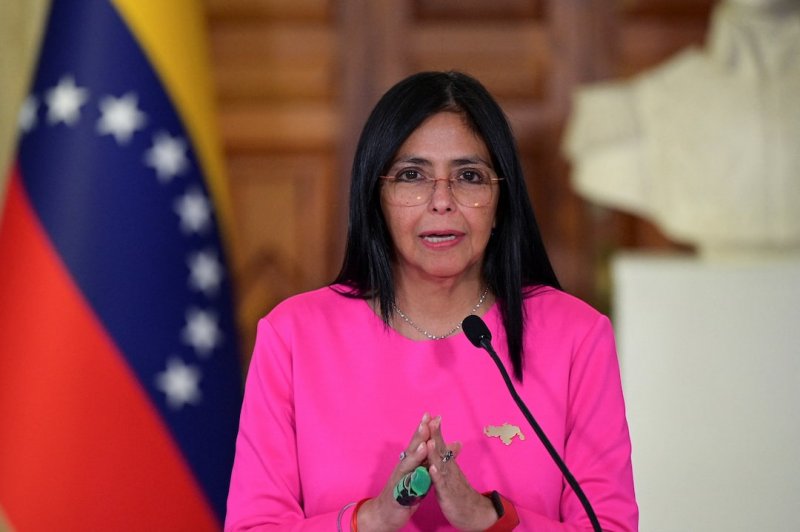
In a significant and unexpected turn in international relations, the United States has lifted sanctions on Delcy Rodríguez, signaling a new chapter in its engagement with Venezuela after years of strained ties and economic restrictions.
The decision, announced on Wednesday, April 1, marks a clear shift in Washington’s posture toward Caracas. Rodríguez, who assumed leadership following the dramatic removal of former president Nicolás Maduro in a January military operation, has now been formally recognized by the United States as a legitimate authority in the country.
Her removal from the U.S. Treasury’s sanctions list is more than a symbolic gesture—it effectively allows her government to engage directly with American businesses, access financial systems, and participate in international economic activities that had long been restricted.
For Rodríguez, the move represents both validation and opportunity. Responding to the development, she described it as a positive step toward rebuilding trust and cooperation between the two nations. She expressed optimism that the easing of restrictions on her personally could pave the way for broader relief affecting Venezuela as a whole.
“We trust that this progress will allow for the lifting of the sanctions currently in force against our country,” she said, adding that improved relations could lead to meaningful collaboration that benefits both nations.
The warming of relations did not happen overnight. It follows a dramatic sequence of events that reshaped Venezuela’s political landscape earlier in the year. On January 3, U.S. forces carried out a military operation in Caracas that resulted in the capture of Maduro and his wife, Cilia Flores. Both were subsequently taken to New York, where they now face drug trafficking charges—allegations they have denied.
The operation, which Venezuelan authorities say led to roughly 100 deaths, marked a turning point in U.S.–Venezuela relations and effectively removed a long-standing obstacle to diplomatic engagement. In the aftermath, Rodríguez, who had previously served as vice president under Maduro, stepped into leadership and began repositioning the country on the global stage.
Once considered part of Maduro’s inner circle and sanctioned in 2018 for her role in his administration, Rodríguez has since recalibrated her political stance. She has worked closely with the administration of Donald Trump, signaling a willingness to cooperate on economic reforms and international partnerships.
A key component of this new alignment has been Venezuela’s energy sector. Under Rodríguez’s leadership, the country has begun opening its vast oil and mineral resources to foreign investment, particularly from U.S. companies. This shift reflects both economic necessity and strategic diplomacy, as Venezuela seeks to revive its struggling economy while rebuilding international confidence.
The United States, for its part, appears to be pursuing a pragmatic approach. By lifting sanctions and recognizing Rodríguez’s government, Washington is creating space for economic engagement and influence, particularly in a region long marked by geopolitical tension.
Diplomatic ties between the two nations are already showing signs of revival. In a symbolic but important move, the U.S. Embassy in Caracas has resumed operations after being closed for seven years—a development widely seen as a signal of renewed diplomatic commitment.
Despite these positive steps, the situation remains complex. Rodríguez is still navigating internal political pressures, especially from figures associated with the previous administration. While she has reportedly dismissed some key officials, including Defence Minister Vladimir Padrino López, she continues to rely on the support of influential allies such as Diosdado Cabello, who remains a powerful figure within the ruling establishment.
Balancing these internal dynamics with external expectations from Washington is no small task. On one hand, Rodríguez must demonstrate enough independence and reform to maintain U.S. support. On the other, she must avoid alienating domestic allies who are critical to her political survival.
Analysts say this delicate balancing act will define the success or failure of her leadership in the coming months.
Meanwhile, the broader implications of the sanctions lift are beginning to unfold. American companies are already exploring opportunities in Venezuela, particularly in the oil sector, which had been largely cut off from U.S. markets for years.
There is also growing discussion about Venezuela regaining control over overseas assets and re-entering global financial systems—developments that could significantly alter the country’s economic trajectory.
However, not everyone is convinced that the shift represents a clear path forward. Critics warn that while the lifting of sanctions may bring short-term economic benefits, it does not automatically resolve deeper issues related to governance, transparency, and democratic legitimacy.
Rodríguez herself remains a controversial figure. Her previous association with Maduro’s government continues to raise questions about continuity and accountability, even as she positions herself as a reform-minded leader willing to engage with the international community.
Still, for many observers, the current moment represents a rare opening—an opportunity to reset relations after years of hostility and missed opportunities.
Whether this new phase will lead to lasting stability and development remains uncertain. What is clear, however, is that the decision by the United States to lift sanctions on Delcy Rodríguez has fundamentally altered the diplomatic landscape, setting the stage for a new and evolving relationship between Washington and Caracas.
As both nations cautiously move forward, the world will be watching closely to see whether this fragile rapprochement can translate into meaningful progress for the people of Venezuela.