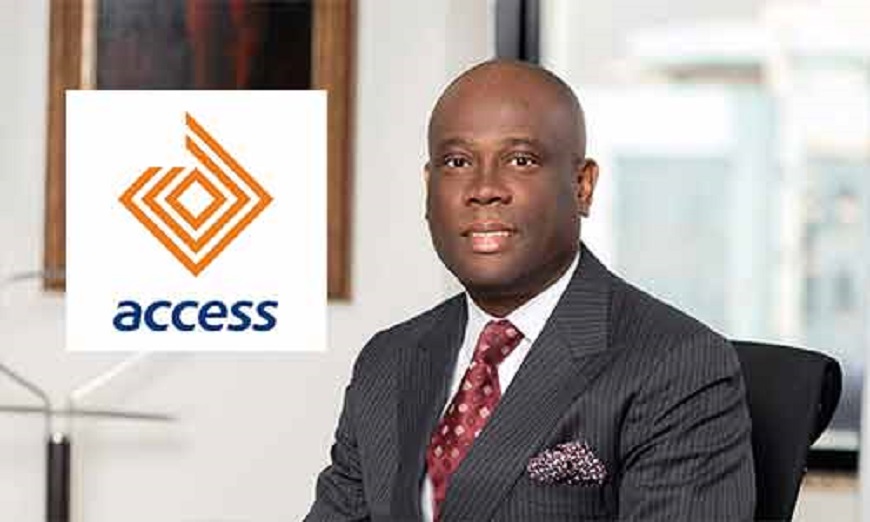
A fresh investigation by a British publication has revealed that the late Nigerian banking executive, Herbert Wigwe, was connected to as many as 106 properties across London, shedding new light on the scale of his real estate footprint in the United Kingdom.
The report, conducted by The Londoner, analysed more than 32,000 properties in London owned by overseas entities. Using newly available data, the investigation traced property ownership through complex networks of shell companies and offshore structures. This level of transparency was made possible by a UK legal reform introduced in 2022, which requires foreign entities holding property in Britain to disclose their beneficial owners.
Importantly, the publication was careful to clarify that its findings do not suggest any wrongdoing. Instead, the report simply documents ownership patterns and connections, offering a clearer picture of how international investors—particularly high-net-worth individuals—participate in London’s property market.
Herbert Wigwe, who tragically died in a helicopter crash in California in February 2024 alongside his wife, son, and a close associate, was widely regarded as one of Africa’s most influential financial leaders. As the former chief executive of Access Bank, he played a central role in transforming the institution into one of Nigeria’s largest and most competitive banks, with a growing international presence.
The latest findings suggest that his involvement in London’s real estate market was far more extensive than previously known. Earlier records had already linked him to an address on The Bishops Avenue, a prestigious residential area often referred to as one of the most exclusive streets in the city. In 2012, he was listed as a director of Carmel Gate Ltd, with a correspondence address at Allingham Court on that same avenue.
However, the new investigation indicates that this was only a small part of a much broader property portfolio. The 106 properties reportedly connected to him highlight not just personal investment activity, but also the scale at which global elites operate within London’s high-value real estate sector.
Beyond his property interests, Wigwe maintained significant ties to the UK through his professional roles. He served as a director of Access Bank UK Limited from 2008 until his death. His influence extended further through his involvement in Access Holdings, where corporate filings showed that he and the current CEO, Roosevelt Ogbonna, were the only shareholders at the time the holding company was incorporated in 2021, each holding four million ordinary shares.
The broader investigation by The Londoner paints a wider picture of foreign ownership in London. According to the report, international investors hold properties across some of the city’s most iconic and commercially valuable locations—from retail hubs like Oxford Street and Camden Market to luxury residential towers and major commercial assets.
Many of these properties are owned through offshore jurisdictions such as Jersey, Guernsey, and the British Virgin Islands, structures often used for tax efficiency, privacy, or investment management purposes. The 2022 UK legislation was specifically designed to increase transparency in this area, particularly amid concerns about hidden ownership and illicit financial flows.
The findings also highlight that Wigwe was not alone among global figures with significant property holdings in London. The report identified several high-profile institutional owners, including the Private Department of the President of the United Arab Emirates, the Qatar Central Bank, and the Libyan Investment Authority, among others.
For many observers, the revelation about Wigwe’s property links reinforces his status not just as a banking leader, but as a global investor operating at the highest levels of wealth and influence. It also reflects a broader trend of African business elites diversifying assets internationally, particularly in stable markets like the United Kingdom.
Despite the scale of the holdings uncovered, the tone of the report remains neutral, focusing on transparency rather than allegation. In the absence of any claims of misconduct, the emphasis is on understanding how wealth is structured and deployed across borders in today’s globalised financial system.
Wigwe’s legacy, therefore, continues to evolve even after his passing. While he is primarily remembered for his transformative impact on Nigeria’s banking sector and his leadership at Access Bank, this latest revelation adds another dimension to his profile—as a major player in international real estate investment.
Ultimately, the investigation underscores two key realities: the growing interconnectedness of global finance and property markets, and the increasing push for transparency in how wealth is held and managed across jurisdictions. For Nigeria and beyond, it also highlights the expanding global footprint of its leading business figures, whose influence extends far beyond their home countries.