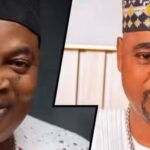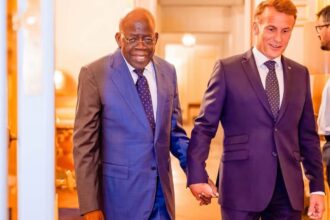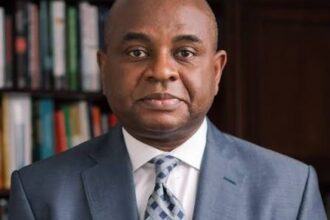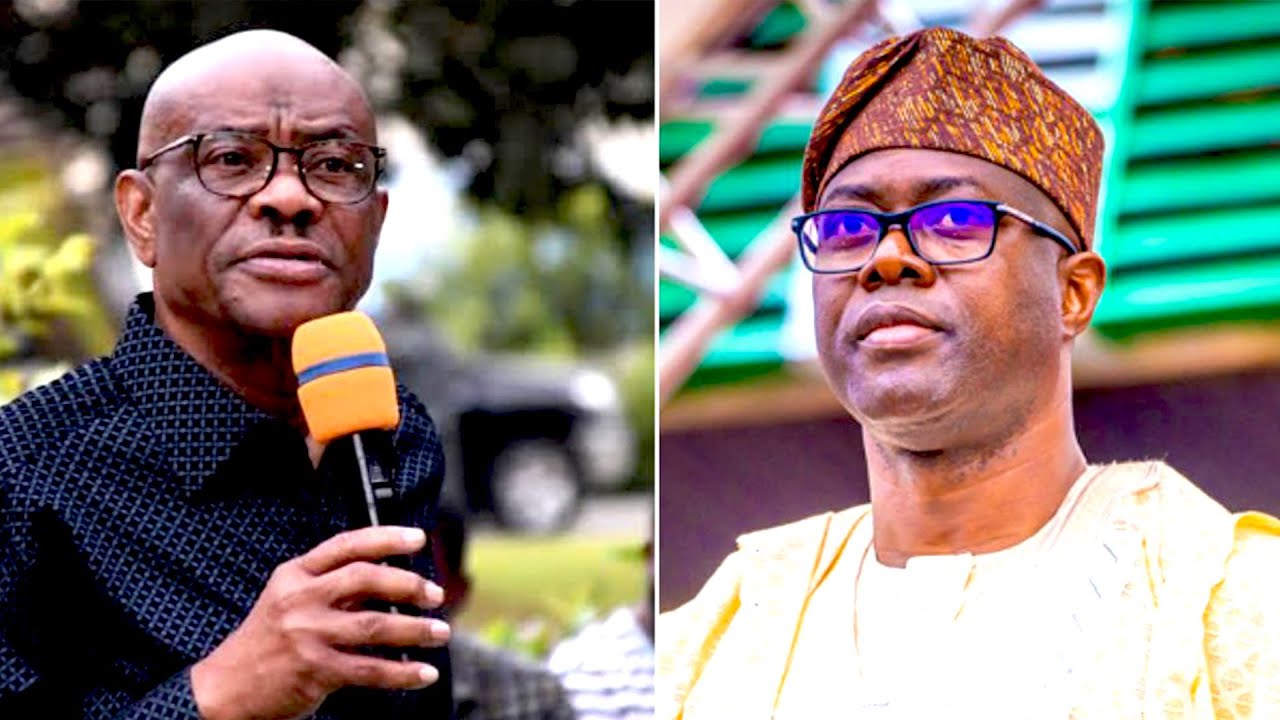
The simmering tensions within the Peoples Democratic Party (PDP) took a sharper turn on Monday as the Minister of the Federal Capital Territory (FCT), Nyesom Wike, publicly rebuked Oyo State Governor Seyi Makinde, warning him against provoking a political confrontation he “cannot fight.”
Wike made the remarks in Abuja during what was described as the 107th National Executive Committee (NEC) meeting of a PDP faction aligned with his camp. His comments, laced with pointed criticism, reflected the deepening internal divisions within the opposition party as it prepares for a crucial national convention.
At the centre of the dispute were comments allegedly made by Makinde during a recent visit to Bauchi State. According to Wike, the Oyo governor claimed that he had attended a meeting involving the FCT minister and President Bola Tinubu, and that Wike boasted about wielding influence over both the executive and the judiciary, including securing an ex parte order in Ibadan.
Wike dismissed the claim as misleading and expressed disappointment that Makinde would attribute such statements to him.
“Unfortunately, I was watching my friend Seyi Makinde when he went to Bauchi,” Wike said. “He said he had a meeting with me and the president, and that I said we were in control of government as well as the judiciary, which gave us an ex parte order at Ibadan. It’s unfortunate.”
The FCT minister’s tone quickly shifted from rebuttal to admonition. In a thinly veiled challenge, he cautioned Makinde against escalating political hostilities.
“A fight you cannot fight, you started,” Wike declared. “Politics is not contract work and not a business venture. Politics and business are two different things.”
Drawing a distinction between public office and commercial enterprise, Wike suggested that his entry into politics was driven by the pursuit of influence and authority, not financial gain. He contrasted this with what he implied were Makinde’s business interests.
“I didn’t go into politics to be a contractor. I went into politics to have power. You wanted money. You had contracts of over $1.7 million. Stay there. This is my own territory. Stay as a contractor,” he said.
The exchange underscores the broader leadership struggle within the PDP, where competing factions have clashed over control of party structures, legal recognition, and strategic direction ahead of national elections.
Beyond his criticism of Makinde, Wike used the forum to warn party members against what he described as “double dealing.” He stressed that loyalty and commitment would be decisive as the party approaches its convention.
“After this NEC meeting, anybody that doesn’t show commitment to the convention, don’t come back after and say you are fully back. I will not accept that,” he stated firmly.
Wike’s comments reflected a broader insistence on party discipline and cohesion, even as cracks within the PDP remain visible. The party has faced prolonged internal disputes, legal challenges, and defections in recent years, weakening its position as Nigeria’s main opposition force.
At the same meeting, the chairman of the PDP National Caretaker Working Committee aligned with Wike, Abdulrahman Mohammed, struck a more conciliatory tone. He declared a “no victor, no vanquished” outcome in the party’s internal disputes and emphasised reconciliation ahead of the forthcoming national convention in Abuja.
“This convention is not merely a routine exercise; it is a critical milestone that will shape the future direction of our party,” Mohammed told party members.
He acknowledged the recent turbulence within the PDP but argued that the party had made tangible progress in stabilising its structures despite legal and political setbacks. According to him, recent judicial pronouncements had been approached in a spirit of reconciliation and inclusiveness.
“There is no victor and no vanquished, only a shared commitment to rebuild, reposition, and strengthen our party,” he said.
Mohammed disclosed that ward, local government, state, and zonal congresses had been conducted across the country. He described the exercises as largely peaceful and reflective of the PDP’s democratic ideals, adding that the processes had helped restore confidence among members.
As preparations intensify for the national convention, the Caretaker Committee announced that the sale of nomination forms has commenced. The decision was made during the Abuja meeting, where party leaders reviewed timelines and logistics.
In a communiqué issued after the meeting, signed by Mohammed and Acting National Secretary Samuel Anyanwu, the faction urged aspirants to adhere strictly to established guidelines.
“NEC noted that the sale of nomination forms for the forthcoming national convention has commenced. All interested aspirants are advised to comply with the approved guidelines and timelines as issued by the party,” the communiqué read.
The committee also reaffirmed the PDP’s zoning formula for national elective positions. The zoning arrangement, designed to balance regional interests and maintain inclusivity, will serve as the guiding framework for the convention.
“NEC reaffirmed the party’s readiness for the forthcoming national convention and directed all relevant organs and committees to ensure seamless coordination for a successful, credible, and transparent exercise,” the statement added.
Importantly, the communiqué reiterated the supremacy of the party as an institution and called on members to remain united and disciplined, emphasising collective interest over individual ambition.
The unfolding drama highlights the PDP’s ongoing struggle to present a cohesive front at a time when it is attempting to reposition itself politically. The rivalry between prominent figures like Wike and Makinde reflects deeper ideological and strategic divides within the party.
While Mohammed’s appeal for reconciliation suggests an effort to stabilise the organisation, Wike’s pointed remarks indicate that internal contestations are far from resolved. As the national convention approaches, the PDP faces the delicate task of managing competing power blocs while projecting unity to the Nigerian electorate.
Whether the party can successfully navigate these tensions and emerge stronger remains to be seen. What is clear, however, is that the battle for influence within the PDP is intensifying — and the coming weeks are likely to shape not only the party’s leadership structure but also its broader political trajectory.