The President of the United States, Donald Trump, has said that several countries may deploy warships alongside American naval forces to ensure the continued security and openness of the Strait of Hormuz amid escalating tensions involving Iran.
Trump made the statement in a post published on his social media platform, Truth Social, on Saturday, suggesting that nations whose economies depend on energy shipments through the strait may contribute naval forces to support the United States in safeguarding the waterway.
According to the U.S. president, countries affected by what he described as Iran’s attempt to shut down the crucial maritime route could work together with the United States to ensure that commercial shipping remains uninterrupted.
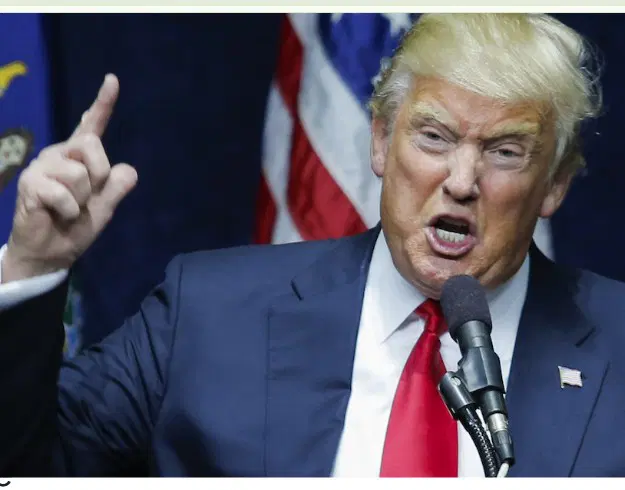
“Many countries, especially those who are affected by Iran’s attempted closure of the Hormuz Strait, will be sending warships, in conjunction with the United States of America, to keep the strait open and safe,” Trump wrote.
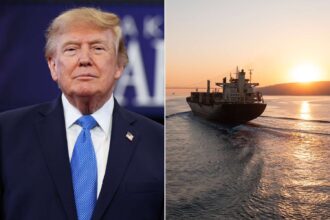
The Strait of Hormuz is widely regarded as one of the most strategically important maritime chokepoints in the world. The narrow waterway connects the Persian Gulf to the Gulf of Oman and ultimately the Arabian Sea.
Because it serves as the main export route for crude oil produced in several Gulf countries, the passage is essential for global energy supplies. Analysts estimate that roughly one-fifth of the world’s crude oil shipments pass through the strait, making any disruption there capable of triggering significant volatility in global energy markets.
Trump argued that the United States had already significantly weakened Iran’s military capabilities but warned that the country could still carry out smaller-scale attacks that could threaten maritime security in the area.
“We have already destroyed 100 percent of Iran’s military capability, but it’s easy for them to send a drone or two, drop a mine, or deliver a close-range missile somewhere along, or in, this waterway, no matter how badly defeated they are,” Trump said in the post.
He suggested that even limited attacks on commercial vessels could disrupt international shipping and create uncertainty in global markets.
Trump also called on several major global economies that rely heavily on energy supplies transported through the Strait of Hormuz to contribute naval support to protect the waterway.
Among the countries he mentioned were China, France, Japan, South Korea and the United Kingdom.
According to Trump, these countries have strong economic interests in ensuring that the strait remains open and secure.
“Hopefully China, France, Japan, South Korea, the UK, and others that are affected by this artificial constraint will send ships to the area so that the Hormuz Strait will no longer be a threat by a nation that has been totally decapitated,” he wrote.
Trump further indicated that U.S. forces would continue military operations along Iran’s coastline to prevent attacks on commercial ships navigating through the strategic corridor.
“In the meantime, the United States will be bombing the hell out of the shoreline, and continually shooting Iranian boats and ships out of the water,” he said.
Despite the ongoing tensions, Trump expressed confidence that the situation would soon be resolved and that the strategic waterway would remain open to global shipping.
“One way or the other, we will soon get the Hormuz Strait open, safe, and free,” he added.
Iran, however, has repeatedly vowed to prevent the passage of vessels through the Strait of Hormuz amid its ongoing confrontation with Western powers.
Iranian officials have suggested that the waterway could be closed as part of broader retaliatory measures, particularly if the country faces further military or economic pressure.
The escalating rhetoric has raised global concerns because of the critical role the strait plays in international trade and energy security.
The rising tensions have already begun affecting shipping activity in the region. Earlier reports indicated that a Thai-flagged cargo vessel was attacked near the disputed waterway, raising fears about the safety of commercial shipping routes.
According to reports, the cargo ship identified as MAYUREE NAREE Bangkok was struck near its stern on March 11 while navigating waters close to Iran.
The vessel, which was flying the flag of Thailand, reportedly had 23 crew members on board at the time of the attack.
Initial reports indicated that three crew members were missing following the incident, prompting urgent search efforts and concern for their safety.
Shipping data from maritime tracking service MarineTraffic showed that the vessel had departed from Dubai in the United Arab Emirates and was en route to India when the attack occurred.
Authorities have yet to provide definitive information about the cause of the attack, and investigations into the incident are ongoing.
Maritime safety experts note that the Strait of Hormuz has historically been a flashpoint for geopolitical tensions due to its strategic importance and proximity to several regional powers.
Any incident involving commercial vessels in the area tends to draw global attention because of the potential impact on energy supplies and international trade.
Over the years, tensions involving countries such as Iran, Israel and the United States have frequently escalated in the region, making navigation through the waterway particularly sensitive.
For shipping companies, the safety of crew members and cargo vessels operating in the area remains a major concern.
Families of the missing crew members from the Thai vessel are reportedly awaiting updates as search and rescue operations continue.
International maritime agencies and regional authorities are closely monitoring the situation while efforts to locate the missing sailors remain ongoing.
As geopolitical tensions persist, analysts warn that maintaining security in the Strait of Hormuz will remain a major priority for global powers due to the waterway’s crucial role in the international energy supply chain and global trade.