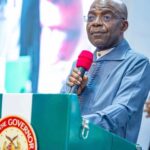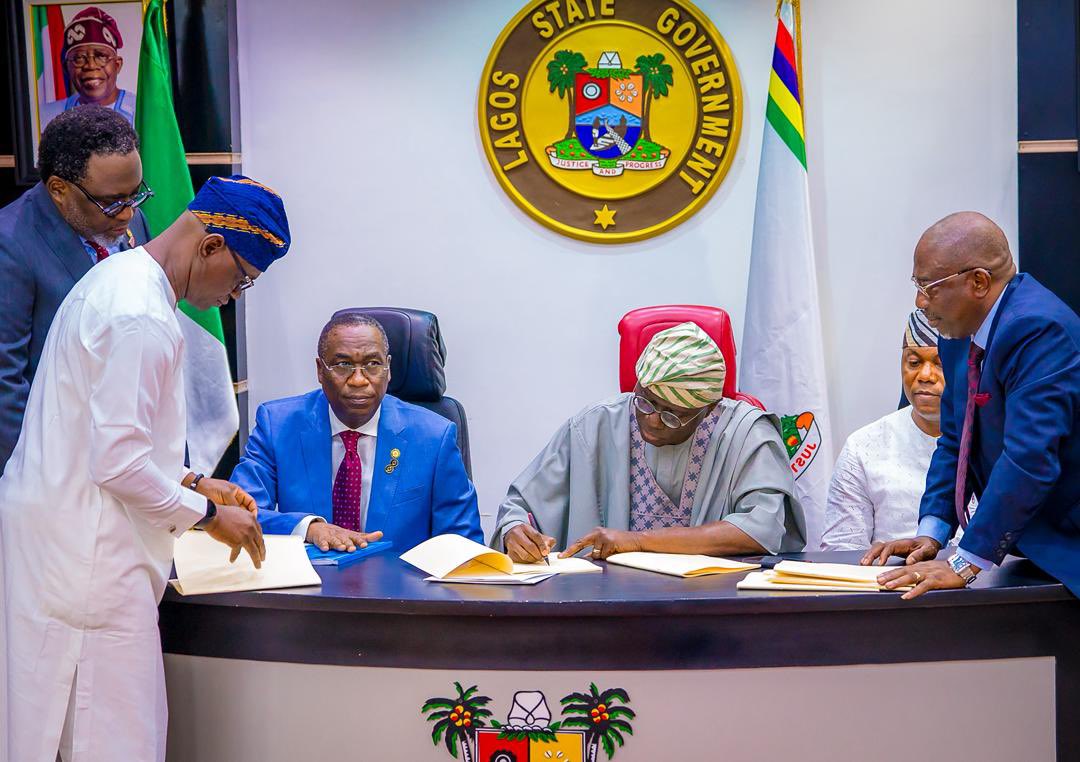
Lagos State Governor, Babajide Sanwo-Olu, has signed the 2026 Appropriation Bill into law, formally ushering in a ₦4.444 trillion spending plan aimed at driving inclusive growth, strengthening governance, and sustaining Lagos’ position as Nigeria’s economic hub.
The budget, christened the “Budget of Shared Prosperity,” was recently passed by the Lagos State House of Assembly and is now set for full implementation. According to Governor Sanwo-Olu, the 2026 fiscal plan is designed to ensure that economic growth translates into tangible benefits for residents across all parts of the state, regardless of location or socio-economic status.
Speaking after signing the budget into law, the governor said the 2026 budget reflects the administration’s commitment to building a resilient, inclusive, and competitive Lagos, capable of meeting the demands of a rapidly growing population while responding effectively to emerging challenges.
Related posts:
- Governor Sanwo-Olu Orders Demolition of Fire-Ravaged GNI Building on Lagos Island
- 2026 Budget: Ministry of Works Proposes Over ₦500 Million for Hairdressing, Make-up Training, Grinding Machines, Others
- Nigeria’s debt climbs to ₦152.4 trillion – DMO raises fresh concerns over borrowing trend
- Governor Soludo signs peace accord, commits to peaceful electoral process
“This budget is about strengthening how we govern and keeping Lagos competitive. It is built on inclusion. No matter where you live or what you do, you should feel the impact,” Sanwo-Olu said.
He explained that the budget prioritises strategic investments in key sectors such as education, healthcare, security, infrastructure, transportation, agriculture, and economic development, with the ultimate goal of improving the quality of life for Lagos residents.
A major focus of the 2026 budget is human capital development. The governor disclosed that significant resources have been earmarked for the education sector to improve learning outcomes, expand access to quality education, and upgrade school infrastructure across the state. These investments include the construction and rehabilitation of public schools, recruitment and training of teachers, and the provision of learning materials aimed at equipping students with skills relevant to a modern economy.
Healthcare delivery is also expected to receive a boost, with funds allocated for the construction and upgrade of healthcare facilities, procurement of medical equipment, and strengthening of primary healthcare services. Sanwo-Olu said the investments are geared towards improving access to quality and affordable healthcare, reducing maternal and infant mortality, and enhancing the state’s capacity to respond to public health emergencies.
Security remains a key pillar of the 2026 budget, as the government seeks to consolidate gains made in safeguarding lives and property. The governor noted that the administration will continue to invest in security infrastructure, intelligence gathering, and collaboration with security agencies to ensure that Lagos remains safe for residents, businesses, and investors.
The budget also places strong emphasis on infrastructure renewal and expansion. Sanwo-Olu said Lagos is entering the 2026 fiscal year facing real and pressing challenges, citing recent incidents such as the Balogun Market fire and ongoing environmental and coastal management efforts in areas like Ebute Metta. According to him, these events underscore the urgent need for sustained investment in infrastructure and service delivery.
“The Balogun Market fire and the difficult but necessary work along the Ebute Metta coastline remind us why infrastructure and service delivery must keep improving. This budget gives us the capacity to respond better and prepare Lagos for growth,” the governor stated.
In the transport sector, the 2026 budget is expected to support the expansion and modernisation of Lagos’ transport network, including road construction and rehabilitation, rail development, and water transport infrastructure. The government says these investments will help ease traffic congestion, reduce travel time, and enhance connectivity across the state.
Agriculture and food security also feature prominently in the spending plan. Sanwo-Olu said the administration will continue to support agricultural value chains, promote local food production, and strengthen rural livelihoods as part of efforts to cushion the impact of inflation and rising food prices. He added that the government is committed to boosting agribusiness as a source of employment and economic diversification.
Support for micro, small and medium-sized enterprises (MSMEs) is another cornerstone of the 2026 budget. The governor said targeted interventions will be rolled out to support entrepreneurs, expand access to finance, and create an enabling environment for businesses to thrive. According to him, MSMEs remain critical to job creation and economic growth in Lagos.
Job creation and economic expansion are central to the “Budget of Shared Prosperity.” Sanwo-Olu explained that the administration’s economic strategy for 2026 focuses on growing the economy in a way that benefits a broader segment of the population. This includes investments in innovation, technology, skills development, and sectors with high employment potential.
The governor assured Lagosians that the government will maintain fiscal discipline and ensure value for money in the implementation of the budget. He said prudent spending, transparency, and accountability will guide the execution of projects and programmes outlined in the appropriation law.
“We will spend responsibly and ensure value for money. Lagosians deserve nothing less,” he said.
Lawmakers in the Lagos State House of Assembly have described the 2026 budget as a realistic and forward-looking fiscal plan, noting that it reflects extensive consultations and a clear understanding of the state’s development priorities. They pledged continued oversight to ensure effective implementation and alignment with the needs of constituents.
Economic analysts say the size and focus of the 2026 budget signal the state government’s determination to sustain growth despite prevailing economic headwinds. They note that Lagos, as Nigeria’s commercial capital, faces unique pressures from rapid urbanisation, population growth, and infrastructure deficits, making sustained public investment essential.
Residents and civil society groups have expressed cautious optimism about the budget, urging the government to ensure that allocations translate into visible improvements in public services. Many have called for timely execution of projects, equitable distribution of resources, and greater engagement with communities during implementation.
As Lagos enters the 2026 fiscal year, the Sanwo-Olu administration says it remains focused on building a more inclusive, resilient, and prosperous state. With the signing of the ₦4.444 trillion Budget of Shared Prosperity into law, attention now turns to execution and the extent to which the ambitious spending plan will deliver meaningful impact for millions of Lagosians.