As the world marks World Teachers’ Day 2026, attention is once again focused on the critical role teachers play in shaping societies, developing human capital and preparing future generations for an increasingly complex world.
The theme for this year’s celebration, “Standing with teachers: 60 years of protecting the profession, advancing its status and shaping our futures,” is a powerful reminder that supporting teachers must go beyond ceremonial speeches and public praise.
For Nigeria, the theme provides an opportunity to confront the difficult realities facing millions of teachers across the country, particularly poor remuneration, inadequate working conditions, limited professional development opportunities and the declining attractiveness of the teaching profession.
Teachers are routinely described as nation builders, but many of those entrusted with educating Nigeria’s children continue to struggle with salaries that do not adequately reflect the importance and demands of their profession.
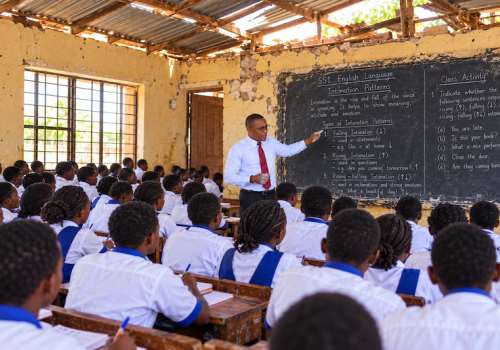
While political leaders frequently acknowledge the importance of education, the experience of many teachers tells a different story. In several parts of the country, teachers contend with delayed or inadequate salaries, overcrowded classrooms, insufficient teaching materials and poor infrastructure.
For teachers working in public schools, particularly at the state and local government levels, the challenge can be even more severe.
The cost of living has risen sharply in recent years, placing additional pressure on workers whose incomes have struggled to keep pace with inflation. Teachers must meet the same rising costs of food, transportation, housing, healthcare and other necessities as everyone else.
Yet, despite these pressures, they are expected to remain motivated and provide quality education to millions of pupils and students.
The problem of remuneration is therefore not merely an issue of workers demanding higher salaries. It is directly connected to the quality and sustainability of Nigeria’s education system.
A poorly paid teacher is likely to experience financial stress, reduced morale and difficulty meeting basic needs. These challenges can ultimately affect classroom performance and the ability of teachers to devote their full attention to their professional responsibilities.
Nigeria cannot reasonably expect to build a knowledge-based economy while treating the people responsible for producing knowledge and developing human capacity as an afterthought.
The teaching profession also faces a status problem.
For decades, teaching was regarded as one of the most respected professions in Nigerian society. Today, however, many young graduates are reluctant to pursue teaching as a long-term career because of concerns about remuneration, workload, career progression and professional recognition.
This should worry policymakers.
If the most talented young Nigerians increasingly view teaching as a temporary occupation rather than a respected career, the country could face a serious shortage of highly motivated and professionally prepared teachers.
The World Teachers’ Day 2026 theme therefore presents Nigeria with an opportunity to move from rhetoric to action.
Standing with teachers should mean ensuring that teachers are paid adequately and promptly. It should mean providing safe and functional schools, adequate teaching and learning materials, manageable class sizes and opportunities for continuous professional development.
It should also mean creating clear career pathways through which teachers can progress professionally and financially without necessarily having to leave the classroom.
Teacher welfare must be treated as an essential component of education policy rather than an issue addressed only when teachers threaten industrial action.
Government at all levels must also recognise that teachers are workers with families and legitimate economic needs. Their salaries should be reviewed regularly in response to changing economic realities.
The implementation of improved remuneration must equally be matched by accountability. Better-paid teachers should be supported to meet clearly defined professional standards, while governments must provide the resources necessary for teachers to perform effectively.
Another important issue is the disparity in the treatment of teachers across Nigeria.
A teacher’s welfare should not depend entirely on whether he or she works in a wealthy state or a financially constrained local government. There must be stronger national standards for teacher welfare, recruitment, training and professional development.
The Federal Government, state governments, local authorities, teacher unions, professional associations and education stakeholders must therefore work together to develop a sustainable framework for improving the teaching profession.
Nigeria also needs to change the culture of celebrating teachers without adequately investing in them.
A plaque, certificate or public commendation cannot compensate for years of poor remuneration, inadequate housing, difficult working conditions or limited career opportunities.
Teachers deserve respect, but respect must be demonstrated through policy and investment.
As Nigeria joins the global community to celebrate World Teachers’ Day 2026, the most important question should not be how loudly the country praises its teachers, but how seriously it is prepared to improve their lives.
The phrase “Standing with teachers” should translate into better pay, stronger professional protection, improved working conditions and greater respect for the teaching profession.
Nigeria’s future depends heavily on the quality of its education system, and the quality of that system depends significantly on the people standing in classrooms every day.
If the country truly wants to shape a better future, it must first stand firmly with the teachers who are shaping that future.
World Teachers’ Day should therefore be more than an annual celebration. It should serve as a national reminder that investing in teachers is an investment in Nigeria itself.