Israel and the United States launched a sweeping air campaign against Iran on Saturday, striking multiple targets across the country in what President Donald Trump described as a “massive and ongoing operation.” The coordinated assault, according to the White House, is aimed at dismantling Iran’s military infrastructure, crippling its missile and nuclear capabilities, and weakening the regional proxy networks supported by Tehran’s theocratic leadership.
The strikes mark one of the most significant escalations in Middle Eastern hostilities in recent years, raising fears that the confrontation could spiral into a broader regional war.
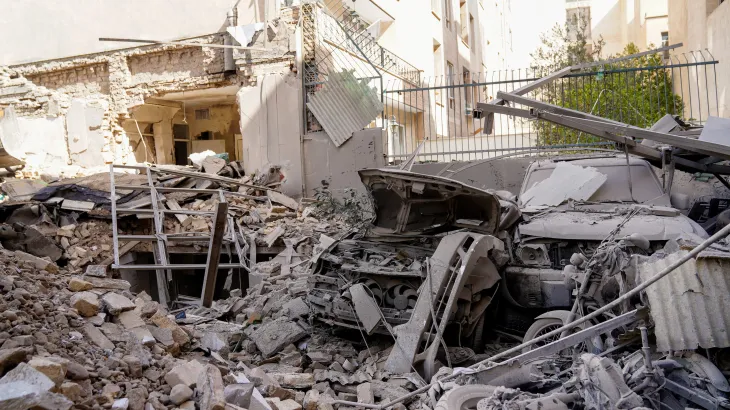
The campaign began early Saturday morning, a regular workday in Iran, with Israeli warplanes striking high-value targets in Tehran. Residents reported explosions near the compound of Supreme Leader Ali Khamenei, as well as in the vicinity of the presidential palace, the National Security Council, and key ministries including defense and intelligence. Facilities associated with the Atomic Energy Organization and a military complex were also reportedly hit.
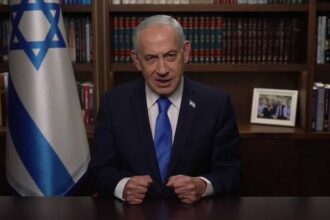
Israeli Prime Minister Benjamin Netanyahu, a long-time advocate of decisive military action against Iran, declared that the campaign would persist “as long as needed.” For years, Netanyahu had urged Washington to take direct action against Tehran’s nuclear ambitions and regional activities.
In an eight-minute video address posted to Truth Social, Trump outlined an expansive military objective. He vowed to eliminate Iran’s missile stockpiles and production facilities, neutralize its naval forces, and ensure that Tehran’s allied militias and armed groups could no longer destabilize the region or threaten U.S. forces.
“We are going to destroy their missiles and raze their missile industry to the ground,” Trump said. “We are going to annihilate their navy. We will ensure that Iran does not obtain a nuclear weapon.”
He further urged the Iranian public to challenge their government, asserting that the operation could create an opening for political transformation. “When we are finished, take over your government,” he said, framing the campaign as both a military and ideological confrontation.
Iran responded swiftly and forcefully. Missile barrages were reported targeting Israeli territory as well as U.S. military installations in the United Arab Emirates, Qatar, Bahrain, Kuwait, Iraq, and Jordan. Residents in Jordan, Syria, and Lebanon described seeing missiles crossing their skies en route to Israel.
The Iranian Foreign Ministry issued a statement declaring that “Iranians have never surrendered to aggression” and promising decisive retaliation. Iranian Foreign Minister Abbas Araghchi, who had been leading negotiations with U.S. officials in Oman-mediated talks, described the attack as “wholly unprovoked, illegal, and illegitimate.”
He criticized Trump’s foreign policy posture, writing on social media that “America First” had become “Israel First,” and warned that Iran’s armed forces were prepared to deliver a severe response.
Iranian state media reported that President Masoud Pezeshkian, Araghchi, and senior military officials were unharmed. Reuters cited an Iranian official who said Khamenei had been relocated before strikes hit near his compound.
Explosions were also reported in other Iranian cities including Isfahan, Karaj, Kermanshah, Qom, Urmia, and Minab. In Minab, an airstrike allegedly struck a girls’ school, resulting in significant casualties, according to Iran’s IRNA news agency.
In Tehran, scenes of panic unfolded as residents rushed to purchase food and essential supplies. Supermarket shelves were emptied within hours. Social media images showed highways leading out of the capital clogged with vehicles as families attempted to flee potential follow-up strikes.
Cellphone and internet services were temporarily disrupted before being restored.
Airspace closures rippled across the region, with commercial airlines suspending flights to affected countries. The rapid escalation prompted fears that shipping lanes and energy infrastructure in the Persian Gulf could also become targets.
Araghchi informed Iraqi Foreign Minister Fuad Hussein that Iran would focus its retaliation on U.S. military bases in the region and characterized its response as an act of self-defense.
The outbreak of hostilities occurred just two days after the United States and Iran concluded a third round of negotiations in Geneva, brokered by Oman, aimed at reducing tensions and averting military conflict. Although Trump publicly expressed dissatisfaction with the pace and sincerity of Iran’s negotiating position, Oman’s Foreign Minister Badr Albusaidi had suggested a diplomatic breakthrough was within reach.
Following the strikes, Albusaidi expressed deep concern, stating that serious negotiations had once again been undermined. He urged Washington not to become further entangled in what he characterized as a conflict that would not serve American interests or global peace.
The U.S. strikes immediately triggered debate on Capitol Hill. Several Democratic lawmakers and a small number of Republicans accused the administration of bypassing Congress before launching military action.
Senator Mark Warner, vice chair of the Senate Intelligence Committee, criticized the lack of prior authorization, emphasizing that the risk of American casualties warranted thorough congressional deliberation.
Representative Ro Khanna called for swift passage of a war powers resolution co-sponsored with Representative Thomas Massie, seeking to compel the administration to obtain congressional approval before engaging in further hostilities.
Conversely, some Republican lawmakers defended the president’s actions. Senator Roger Wicker, chair of the Senate Armed Services Committee, described the operation as decisive and necessary to counter what he termed a leading state sponsor of terrorism.
Secretary of State Marco Rubio reportedly notified members of Congress’ “Gang of Eight” prior to the strikes, though the White House did not immediately clarify the timeline or scope of its consultations.
The opening phase of the air campaign signals the potential start of a prolonged conflict with unpredictable consequences. With missile exchanges already crossing borders and civilian populations experiencing direct impact, the prospect of a wider regional war looms large.
Whether diplomatic channels can be revived remains uncertain. For now, military escalation has replaced negotiation, and the Middle East stands at a precarious crossroads.