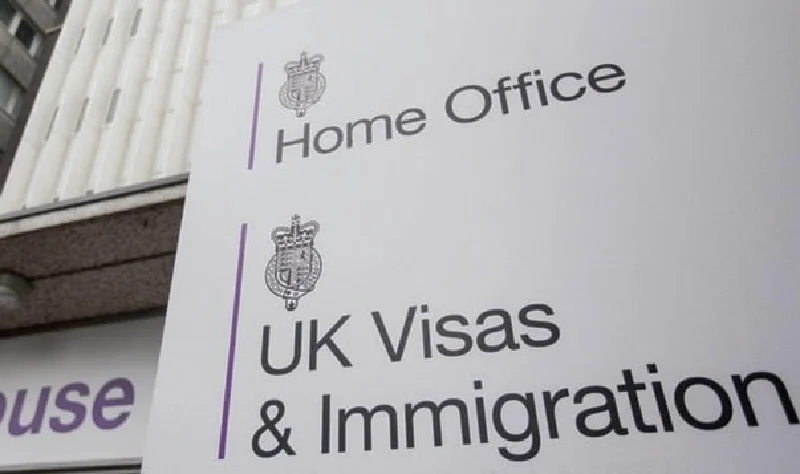
The United Kingdom has announced a significant shift in its immigration documentation process, confirming that from February 25, 2026, visitors who require a visa to enter the country will no longer receive physical visa documents. Instead, eligible travellers will be issued electronic visas, known as eVisas.
The update was communicated by UK Visas and Immigration (UKVI) in a post on X (formerly Twitter) on Friday. According to the agency, the move forms part of the UK government’s broader transition to a fully digital immigration system.
“From 25 February 2026 visitors to the UK, who need a visa, will get an eVisa only. Create your UKVI account and view your eVisa, before you travel to the UK,” the statement read.
Under the new system, travellers will no longer receive physical visa vignettes—stickers placed in passports—or other paper-based immigration endorsements. Instead, their immigration status will be stored and accessed digitally through a UKVI online account.
The UK government describes an eVisa as a secure digital record of an individual’s identity and immigration status. This record contains key information, including the type of visa granted, the duration of stay permitted, and any conditions attached to the visa. Such conditions may include whether the individual is allowed to work, study, or undertake other activities while in the UK.
Officials say the transition to eVisas is intended to modernise the immigration system, improve efficiency, and reduce reliance on physical documents that can be lost, stolen, or tampered with.
The introduction of mandatory eVisas for visitors builds on previous reforms already implemented by the Home Office. Biometric Residence Permits (BRPs), which were previously issued to many foreign nationals residing in the UK, have already been replaced by eVisas. The government also confirmed that Biometric Residence Cards (BRCs) and traditional “wet ink” stamps or visa stickers in passports will be phased out as part of the digital transformation.
According to official guidance, travellers will typically receive an eVisa once their visa application or other request for permission to enter or remain in the UK has been approved. Rather than collecting a physical document, applicants will be able to log into their UKVI account to access and review their immigration status online.
To use the new system, visa holders must create a UKVI account if they do not already have one. The government has clarified that there is no fee to set up an account or to access an eVisa. Through the account, users can view their visa details, update passport or travel document information, and generate a “share code” to prove their immigration status to third parties when required.
The share code system allows individuals to provide time-limited digital proof of their immigration status to employers, landlords, or other organisations that are legally required to verify a person’s right to work or rent in the UK. This digital verification process is expected to streamline status checks and reduce administrative delays.
Before travelling to the UK, visitors must ensure that their passport or travel document details are correctly linked to their UKVI account. Airlines and border officials will rely on digital records to verify visa status, meaning travellers who fail to complete the required steps risk delays or being denied boarding.
The UK government has emphasised that individuals should access and review their eVisa well in advance of travel to confirm that all information is accurate. Any discrepancies should be resolved before departure to avoid complications at the border.
While the transition represents a major operational change, UK authorities maintain that the application process itself will remain largely unchanged. Applicants will continue to submit visa applications online and, where required, provide biometric information at visa application centres. The primary difference lies in how approved visas are issued and stored.
The move aligns with the UK’s broader strategy to digitise public services and enhance border security through integrated data systems. By centralising immigration records in digital form, the government aims to reduce fraud, improve record accuracy, and enhance real-time verification capabilities.
However, the shift to a fully digital system also places greater responsibility on travellers to manage their online accounts and ensure their personal information is up to date. Those unfamiliar with digital systems may need to seek assistance to navigate the new requirements.
With the February 2026 implementation date approaching, prospective visitors are being encouraged to familiarise themselves with the UKVI account system and prepare for the end of physical visa documentation. From that date onward, entry clearance for visitors requiring visas will exist solely in electronic form.