The United Arab Emirates has issued its clearest warning yet to Iran, signaling that it may shift to a more forceful military posture if missile and drone attacks on its territory continue. The statement underscores rising tensions across the Gulf as the broader Israel–Iran confrontation spills into neighboring states.
Speaking to CNN’s Becky Anderson, UAE Minister of State for International Cooperation Reem Al-Hashimy emphasized that while the country remains committed to stability, it will not tolerate sustained assaults on its sovereignty.
“We are prepared to defend ourselves,” she said. “We hope it doesn’t come to it, but we’re not going to sit idly by as we continue to be recipients of such a barrage of attacks.”
When pressed on whether the UAE could adopt a more combative role, Al-Hashimy responded bluntly: “If it needs to come to that, it will come to that.”
Her remarks represent a calibrated but firm shift in tone from earlier statements that framed the UAE’s posture strictly as defensive.
One of the Largest Direct Attacks in UAE History
The warning follows what Emirati officials described as one of the most extensive direct assaults on the country in recent history. According to the UAE Ministry of Defence, Iran launched at least 137 ballistic missiles and 209 drones toward Emirati territory in a coordinated barrage.
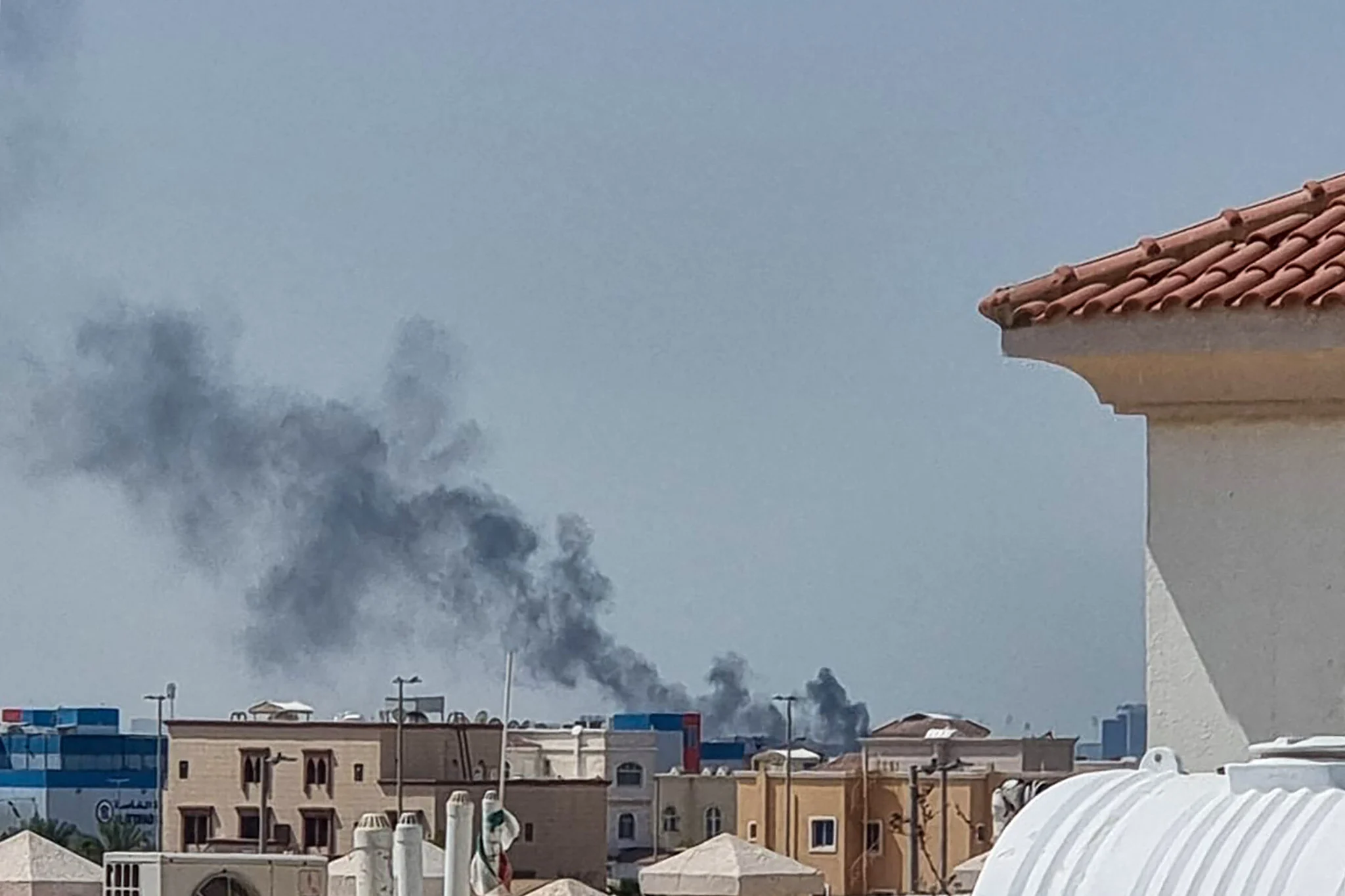
Air defense systems reportedly intercepted the overwhelming majority of incoming projectiles. However, authorities confirmed that at least 14 drones made impact, causing localized damage and triggering emergency responses in several areas.
The strikes targeted key urban centers, including Abu Dhabi and Dubai, heightening fears that the Gulf could become a sustained secondary theater in the expanding Israel–Iran conflict.
While officials have not publicly detailed the full extent of damage, the scale of the barrage represents a significant escalation, both militarily and symbolically. The UAE is widely regarded as one of the most secure and economically stable states in the region. Direct strikes on its territory carry strategic implications far beyond immediate material damage.
Defensive Posture — For Now
The UAE has thus far characterized its response as defensive and proportionate. Al-Hashimy stressed that the country possesses advanced missile defense capabilities and remains confident in its protective infrastructure.
“We have one of the best air-to-missile defense systems in the world,” she said. “We are doing everything to ensure that we are safe and secure.”
The UAE has invested heavily over the past decade in integrated air defense systems, including layered missile interception technology designed to counter ballistic and drone threats. These systems appear to have significantly mitigated what could have been far more catastrophic consequences.
Nonetheless, officials signaled that continued aggression could prompt a strategic reassessment.
Diplomatic Signaling Toward Tehran
Al-Hashimy framed the situation as a test of Iran’s regional intentions. “The ball is in Iran’s court,” she said, adding that the UAE has historically sought to maintain pragmatic and stable relations with Tehran despite broader geopolitical rivalries.
The UAE shares maritime boundaries with Iran across the Gulf and has long pursued a policy balancing security partnerships with diplomatic engagement. In recent years, Emirati and Iranian officials have engaged in periodic talks aimed at reducing tensions and maintaining trade links.
However, sustained missile and drone strikes risk eroding that diplomatic equilibrium.
By publicly stating that escalation “will come to that” if necessary, Abu Dhabi is signaling both deterrence and conditional restraint. The message is calibrated: the UAE does not seek confrontation, but it will not absorb repeated attacks without consequence.
Strategic Context: Expanding Regional Conflict
The barrage against the UAE comes amid intensifying hostilities following US and Israeli strikes on Iranian targets. Iran has responded by launching attacks against US military installations and allied states across the Middle East.
As a close security partner of the United States and a host to Western military assets, the UAE occupies a sensitive strategic position. It is both an economic hub and a logistical node within the Gulf security architecture.
The spillover into Emirati territory suggests that Iran is broadening its retaliatory calculus to include states perceived as aligned with Washington and Tel Aviv.
Security analysts note that widening the geographic scope of strikes increases pressure on US allies and complicates coalition defense coordination. It also raises the risk of miscalculation, particularly if defensive interceptions result in collateral damage.
Economic and Civilian Implications
Beyond the military dimension, the attacks carry substantial economic ramifications. The UAE is a central node in global aviation, trade, finance, and energy markets. Any perception of sustained instability could affect investor confidence and disrupt commercial flows.
So far, Emirati authorities have worked to reassure residents and the international community. Al-Hashimy emphasized that the country’s infrastructure remains intact and resilient.
“We are in a safe place that has very strong infrastructure,” she said. “We will leave no stone unturned to make sure that continues to be the case for all of our citizens and residents alike.”
Airports, ports, and financial centers have remained operational, though heightened security measures are in place.
Military Calculus and Deterrence
The UAE’s warning raises questions about what a “more forceful military posture” might entail. Options could include direct retaliatory strikes, expanded defensive deployments, or deeper operational integration with allied forces.
Historically, the UAE has demonstrated a willingness to project military power beyond its borders, including operations in Yemen and participation in coalition campaigns. However, any escalation against Iran would carry significant regional risk.
A direct Emirati offensive action could invite further retaliation, potentially transforming the Gulf into an active battlefield. As such, the UAE’s language appears intended to strengthen deterrence rather than signal imminent offensive operations.
Regional Stability at a Crossroads
The Gulf has long balanced competition and coexistence among rival powers. The current cycle of missile exchanges threatens to disrupt that balance.
If Iran continues large-scale attacks, Gulf states may coordinate a collective security response. Conversely, diplomatic backchannels could still de-escalate tensions if Tehran recalibrates its strategy.
For now, the UAE’s message is clear: it prefers stability but is prepared for confrontation if necessary.
The coming days will test whether deterrent signaling can contain the crisis or whether the region edges closer to sustained military escalation. As missile defenses remain active and diplomatic lines strain under pressure, the Gulf stands at a pivotal moment — one where restraint or retaliation could define the next chapter of regional security.