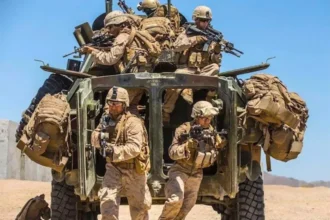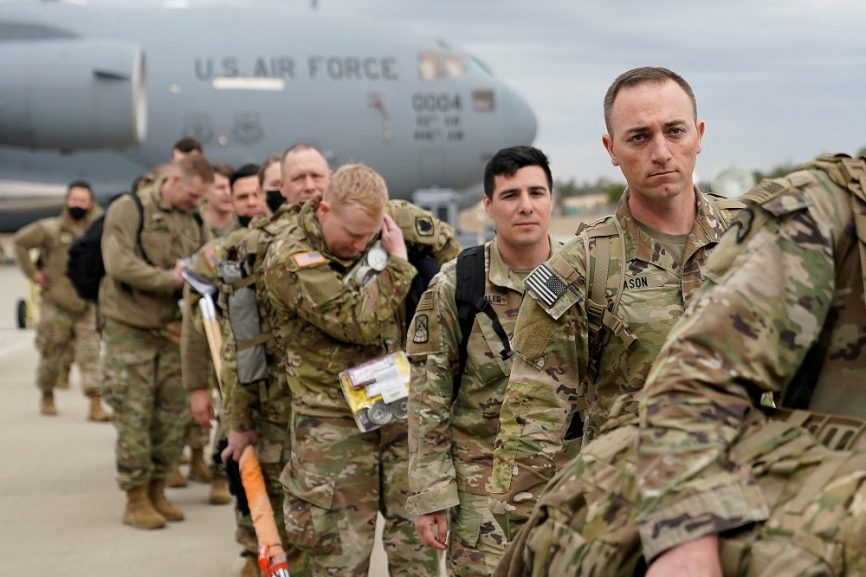
The United States has officially confirmed the deployment of a small contingent of its military personnel to Nigeria, marking the first public acknowledgment that American forces are now operating on the ground in the West African nation amid worsening insecurity and persistent terrorist threats.
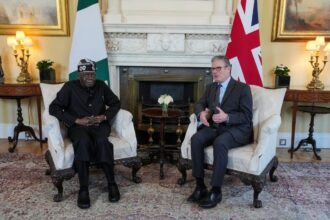
The confirmation was made by General Dagvin R.M. Anderson, Commander of the United States Africa Command (AFRICOM), who disclosed that the deployment followed high-level discussions with Nigerian President Bola Ahmed Tinubu during a meeting in Rome late last year. According to the top U.S. general, both governments agreed that existing efforts to address terrorism and violent extremism in the region required stronger cooperation and additional support.
Speaking to journalists during a press briefing on Tuesday, General Anderson said the decision reflected a shared recognition by Washington and Abuja that the security challenges confronting Nigeria and the wider West African region have reached a critical stage.
“That has led to increased collaboration between our nations, to include a small U.S. team that brings some unique capabilities from the United States in order to augment what Nigeria has been doing for several years,” Anderson said.
While the U.S. military has long maintained intelligence-sharing arrangements and provided training support to Nigerian security forces, the announcement marks the clearest indication yet that American personnel are physically present in the country in an operational support role. The size of the team was not disclosed, nor were precise details provided about its location or duration of deployment.
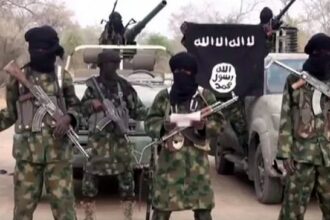
General Anderson also declined to specify when the team arrived in Nigeria, but defense sources indicated that the personnel are expected to provide specialized assistance in intelligence, planning and operational coordination. The support is aimed at strengthening Nigeria’s capacity to combat extremist groups, including factions linked to Boko Haram and the Islamic State West Africa Province (ISWAP), which continue to carry out deadly attacks despite years of military pressure.
The deployment comes against the backdrop of escalating insecurity across multiple regions of Nigeria. In the northeast, insurgents remain active, while the northwest and north-central zones have been plagued by banditry, mass kidnappings and attacks on rural communities. In the south, oil theft and militancy continue to pose economic and security challenges.
U.S. officials have repeatedly expressed concern about the regional implications of instability in Nigeria, Africa’s most populous country and largest economy. Washington views Nigeria as a critical security partner in West Africa, where extremist networks have expanded their reach across porous borders, exploiting weak governance and local grievances.
General Anderson emphasized that the American presence is intended to complement—not replace—Nigeria’s own security efforts. He noted that Nigerian forces have been engaged in counterterrorism operations for years and have made sacrifices in confronting insurgent groups.
“The intent is not to take over Nigeria’s fight,” he said, “but to support and enhance what Nigerian forces are already doing.”
The confirmation of U.S. boots on the ground follows another significant development in U.S.–Nigeria security relations: American airstrikes carried out on December 25 last year against an Islamic State-affiliated group. Those strikes, which were not widely publicized at the time, underscored Washington’s growing concern about the threat posed by extremist groups operating in the region.
Although U.S. officials have not publicly linked the airstrikes directly to the newly confirmed deployment, analysts say both actions point to a more assertive U.S. security posture in Nigeria and West Africa. The strikes reportedly targeted senior figures within an extremist network believed to be planning attacks against local and regional targets.
The presence of U.S. military personnel in Nigeria is likely to spark debate within the country, where issues of sovereignty and foreign military involvement have historically been sensitive. Past reports and rumors of foreign troops operating in Nigeria have often generated public controversy, particularly when details were unclear or officially denied.
In recent years, Nigerian authorities have emphasized the importance of international partnerships in addressing insecurity, while also insisting that the country retains full control over its military operations. The Tinubu administration has repeatedly stated that Nigeria welcomes support from allies, provided it respects national sovereignty and legal frameworks.
Security analysts say the confirmation of the U.S. deployment could signal a shift toward deeper operational cooperation, particularly in intelligence-driven counterterrorism efforts. Intelligence gaps, analysts note, have often hindered Nigeria’s ability to preempt attacks, track insurgent movements and dismantle extremist networks operating across difficult terrain.
The U.S. team is expected to bring advanced intelligence, surveillance and planning expertise, areas in which American forces have extensive experience from operations in other conflict zones. Such capabilities could help Nigerian forces improve targeting, coordination and overall effectiveness.
However, critics warn that foreign military involvement alone cannot resolve Nigeria’s complex security challenges. They argue that lasting stability will require addressing underlying issues such as poverty, unemployment, weak local governance and community grievances that extremist groups often exploit.
Human rights groups have also urged both governments to ensure that counterterrorism operations respect civilian lives and international humanitarian standards. Past military campaigns in Nigeria have drawn criticism over allegations of civilian casualties and abuses, which have, in some cases, fueled further radicalization.
For the United States, the deployment reflects broader strategic concerns about the spread of extremist violence across the Sahel and coastal West Africa. In recent years, militant groups linked to al-Qaeda and the Islamic State have expanded operations in Mali, Burkina Faso and Niger, raising fears of a widening arc of instability.
Nigeria’s role as a regional anchor state makes its security situation particularly significant for U.S. and international interests. Any further deterioration, analysts warn, could have ripple effects across the region, including increased refugee flows, cross-border violence and threats to international economic interests.
As of the time of reporting, Nigerian authorities have not issued a detailed public statement responding to General Anderson’s comments. However, government sources indicated that the Tinubu administration remains committed to strengthening partnerships with allies as part of a broader strategy to restore security and stability.
While many details surrounding the U.S. deployment remain undisclosed, the confirmation alone marks a notable moment in U.S.–Nigeria relations. It signals a new phase of cooperation at a time when both countries acknowledge that the threat posed by terrorism in West Africa requires closer coordination, shared intelligence and sustained international engagement.