United States President Donald Trump has said that Britain is considering sending two aircraft carriers to the Middle East amid the ongoing war with Iran, but insisted that American forces do not require British military assistance to secure victory in the conflict.
Trump made the remarks in a message posted on his social media platform, Truth Social, where he suggested that the United Kingdom was only now contemplating a stronger military role after the most decisive phase of the war had already passed. His comments appeared to reflect growing frustration in Washington over what he views as Britain’s delayed response to the crisis.
In the post, Trump wrote that London was “finally giving serious thought” to dispatching two aircraft carriers to the region, implying that the move came too late to significantly influence the outcome of the war.
“The United Kingdom, our once great ally, maybe the greatest of them all, is finally giving serious thought to sending two aircraft carriers to the Middle East,” Trump wrote.
Although he acknowledged the potential deployment, the president added that the United States had already reached a point in the conflict where additional assistance was no longer necessary. According to him, American forces had already achieved the key objectives of the military campaign.
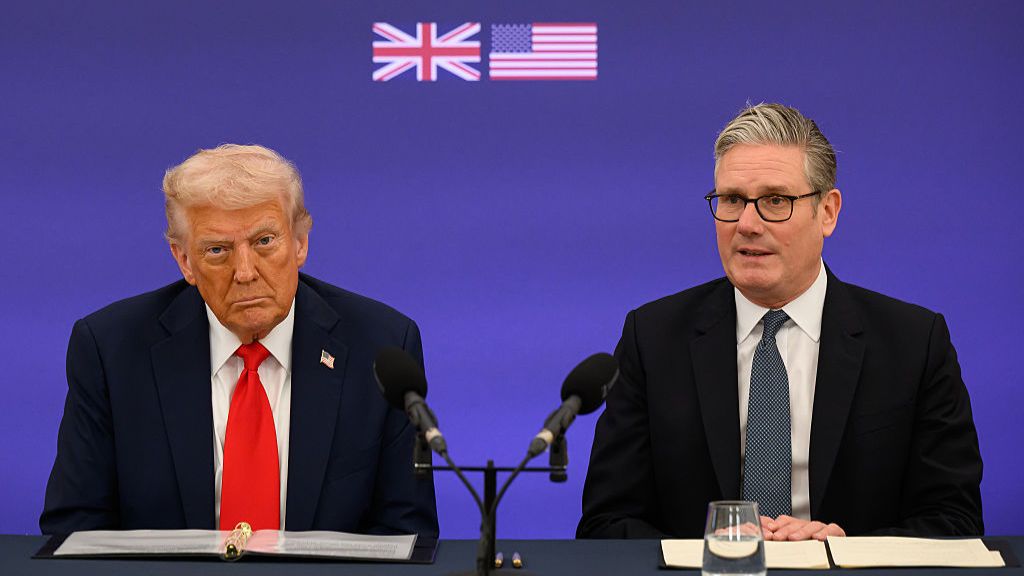
“That’s OK, Prime Minister Starmer, we don’t need them any longer,” Trump continued. “But we will remember. We don’t need people that join wars after we’ve already won.”
The comments represent the latest sign of rising tensions between Washington and London, two countries that have traditionally maintained one of the closest strategic partnerships in the world. The relationship between the allies has come under strain in recent weeks following disagreements over the early stages of the U.S.-led military operations against Iran.
At the centre of the dispute was Britain’s initial decision to block the use of its military bases for American strikes on Iranian targets. The United States had sought access to several facilities operated jointly with the United Kingdom in the region, but the British government declined to grant immediate approval.
British Prime Minister Keir Starmer defended the decision at the time, explaining that the government needed to carefully review the legal implications of the proposed military action before offering support. He said London was committed to ensuring that any involvement in the conflict complied with international law and followed proper procedures.
Starmer also emphasised that the government wanted to evaluate the potential consequences of the strikes before allowing British territory or assets to be used in offensive operations. According to British officials, the decision was based on legal caution rather than a lack of support for the United States.
Despite the initial refusal, Britain later changed its position. The government subsequently allowed U.S. forces to use certain British bases for what officials described as defensive military operations. These operations reportedly involved targeting Iranian missile depots and launch facilities believed to pose an immediate threat to American and allied forces in the region.
While the shift signaled some level of cooperation, it did not fully resolve the disagreement between the two governments. Trump has repeatedly criticised Starmer in recent days, suggesting that the British leader’s hesitation undermined the traditionally strong alliance between the United States and the United Kingdom.
The president’s latest remarks about the potential aircraft carrier deployment appear to reinforce his view that Britain failed to act decisively when the conflict first escalated. By implying that the United States had already secured victory, Trump suggested that any additional military contribution from Britain would have little practical impact.
Meanwhile, officials in London have taken a more cautious approach to the situation. Britain’s Ministry of Defence confirmed that preparations are underway for the aircraft carrier HMS Prince of Wales to be placed on standby for a possible deployment to the Middle East. The carrier is one of the Royal Navy’s most advanced vessels and is capable of launching fighter jets, helicopters, and other aircraft as part of a carrier strike group.
However, British defence authorities stressed that no final decision has been made regarding whether the carrier will actually be sent to the region. Officials said the deployment is still under consideration and will depend on developments in the conflict as well as consultations with international partners.
The possibility of sending additional naval forces reflects growing concern in Europe about the expanding war between the United States, Israel, and Iran. Many governments fear that the fighting could widen further and threaten global energy supplies, maritime security, and regional stability.
Despite the strategic concerns, British officials have sought to downplay the political aspect of Trump’s criticism. Responding to the president’s comments, British Home Secretary Yvette Cooper said the government would focus on practical security decisions rather than engaging in public disputes on social media.
Speaking to reporters, Cooper emphasised that British leaders prefer a calm and measured approach to major international crises. She said the government’s priority is to ensure that any military actions taken by the United Kingdom are responsible, lawful, and carefully planned.
According to Cooper, national security decisions require careful evaluation rather than rapid responses to political rhetoric.
“We focus on the practical decisions that keep our country safe and support our allies,” she said, adding that Britain’s approach involves steady leadership rather than reacting to statements made on social media platforms.
The disagreement over the Iran conflict is only the latest issue to create tension between Washington and London this year. Relations between the two countries have faced several challenges in recent months, raising questions about the future of what has long been described as a “special relationship.”
One earlier source of friction involved Trump’s proposal that the United States should purchase Greenland, the large Arctic island that is an autonomous territory within the Kingdom of Denmark. Although Britain was not directly involved in that dispute, many European governments viewed the idea as controversial and unrealistic.
Trump has also criticised the role of European forces in past military operations, including the war in Afghanistan. He has argued that many European countries relied too heavily on American military resources during the conflict and did not contribute enough to the overall mission.
These broader disagreements have contributed to an increasingly complicated diplomatic environment between the United States and several of its traditional allies.
Nevertheless, analysts note that the United States and the United Kingdom still maintain extensive military cooperation through NATO and other defence partnerships. Joint operations, intelligence sharing, and combined training exercises continue to form the backbone of the alliance.
For now, the focus remains on developments in the Middle East, where the conflict with Iran continues to reshape the region’s security landscape. While Trump insists the United States is close to securing victory, military exchanges between Iranian forces and their adversaries have not yet fully subsided.
Whether Britain ultimately decides to deploy its aircraft carrier group could depend on how the situation evolves in the coming days and weeks. A full deployment would represent one of the most significant British naval commitments in the region in recent years.
Until then, both governments appear to be balancing their strategic cooperation with political differences that have become increasingly visible during the unfolding crisis.