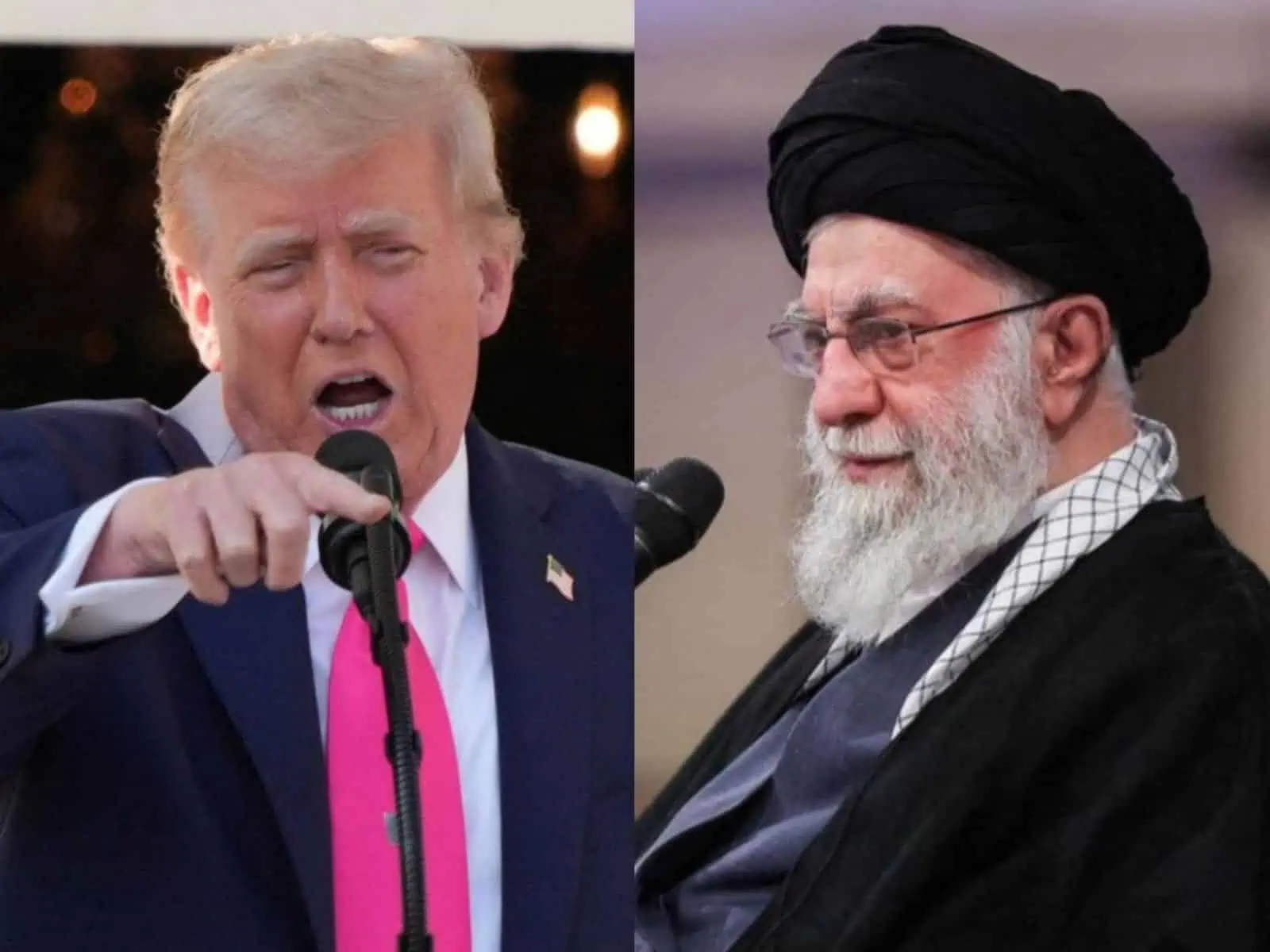
United States President, Donald Trump, has declared that he must play a role in determining who succeeds Iran’s late Supreme Leader, Ayatollah Ali Khamenei, following the cleric’s death amid the ongoing military conflict in the Middle East.
Trump made the remarks during an interview with Axios on Thursday, where he openly rejected the possibility of Khamenei’s son, Mojtaba Khamenei, taking over the powerful position.
According to the U.S. president, allowing Mojtaba Khamenei to succeed his father would be unacceptable, insisting that Washington must have a say in the selection of the next Iranian leader.
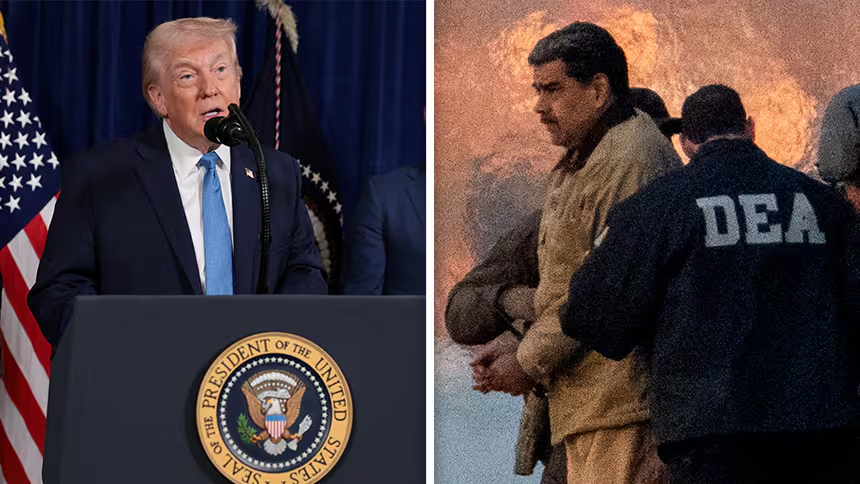
“They are wasting their time. Khamenei’s son is a lightweight. I have to be involved in the appointment, like with Delcy [Rodriguez] in Venezuela,” Trump said during the interview.
Trump’s reference to Venezuela was in relation to Delcy Rodríguez, who assumed power as interim leader after U.S. forces captured former Venezuelan president Nicolás Maduro earlier this year. The U.S. administration has since maintained significant influence over political developments in the South American country.
The American leader argued that the choice of Iran’s next Supreme Leader could determine whether the region moves toward stability or renewed conflict. He warned that selecting a successor who continues the policies of the late Ayatollah Khamenei could lead to another confrontation between Washington and Tehran within a few years.
“Khamenei’s son is unacceptable to me. We want someone that will bring harmony and peace to Iran,” Trump said, adding that the United States would likely find itself back at war with Iran within five years if the same ideological direction continues.
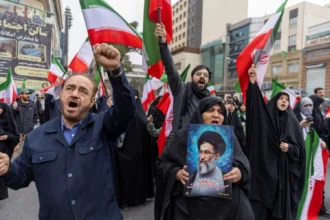
The comments come amid heightened tensions following a series of joint United States–Israeli airstrikes across Iran that resulted in the death of Ayatollah Ali Khamenei and several top officials within the Iranian political and military establishment.
Mojtaba Khamenei, the second son of the late supreme leader and a mid-ranking cleric with strong connections to Iran’s Revolutionary Guards, has widely been considered one of the leading contenders to replace his father. Despite surviving the recent airstrikes that killed several senior figures of the Islamic Republic, his potential elevation to the position has sparked international debate.
Trump’s position suggests a willingness by Washington to influence the leadership transition in Tehran, a development that could further complicate an already volatile situation in the Middle East.
The U.S. president also indicated that the selection of Iran’s next leader should prioritize reconciliation and stability rather than the continuation of policies associated with the late leader’s tenure.
Political analysts say the statement reflects Washington’s broader strategic objective of reshaping the regional balance of power following the ongoing military campaign targeting Iran’s missile infrastructure and defence capabilities.
Trump’s remarks came just one day after officials at the White House sought to clarify that the United States’ military operations against Iran were not primarily aimed at regime change. Instead, administration officials had earlier stated that the focus of the campaign was to neutralise Iran’s military capacity and reduce threats to regional allies.
However, Trump’s latest comments appear to blur that distinction by suggesting that the United States intends to influence the leadership outcome in Tehran.
Iran’s Supreme Leader holds the highest authority in the country’s political and religious system. The position exercises sweeping control over key state institutions, including the armed forces, the judiciary, intelligence agencies and major strategic policies.
Under Iran’s constitutional framework, the Supreme Leader is selected by the Assembly of Experts, an 88-member body of Islamic clerics elected by the public. The assembly is responsible for appointing, supervising and, if necessary, dismissing the supreme leader.
Following Khamenei’s death, Iranian authorities reportedly established a temporary leadership arrangement to oversee the country’s affairs while deliberations continue over who will ultimately succeed him.
Iranian officials have so far delayed announcing a final decision, although several influential clerics and political figures have reportedly been considered as potential candidates.
Among the names frequently mentioned in political discussions are Mojtaba Khamenei, former Iranian President Hassan Rouhani, senior cleric Sadegh Larijani and Hassan Khomeini, the grandson of the founder of the Islamic Republic, Ayatollah Ruhollah Khomeini.
The delay in announcing a successor reflects the complex political negotiations taking place within Iran’s ruling elite, particularly as the country faces unprecedented external pressure and internal uncertainty.
Meanwhile, the ongoing military confrontation between Iran and the United States–Israel alliance has intensified regional instability, with missile strikes, drone attacks and retaliatory operations continuing across multiple locations.
The conflict has already resulted in hundreds of casualties and raised fears of a wider war that could draw in additional regional actors and disrupt global energy markets.
Trump’s statement that Washington should have a role in deciding Iran’s next leader is therefore likely to provoke strong reactions from Tehran and its allies, who have historically resisted foreign interference in the country’s internal political affairs.
As the situation unfolds, global attention remains focused on the outcome of Iran’s leadership transition, which analysts believe will shape the future direction of the country’s domestic politics and its relationship with the international community.
The coming weeks are expected to be critical as Iranian political authorities move closer to announcing the individual who will assume one of the most powerful positions in the Islamic world.