President Bola Tinubu has raised fresh concerns about the economic impact of the escalating crisis in the Middle East, warning that Nigeria could face another surge in inflation that would further erode the purchasing power of citizens already grappling with high living costs.
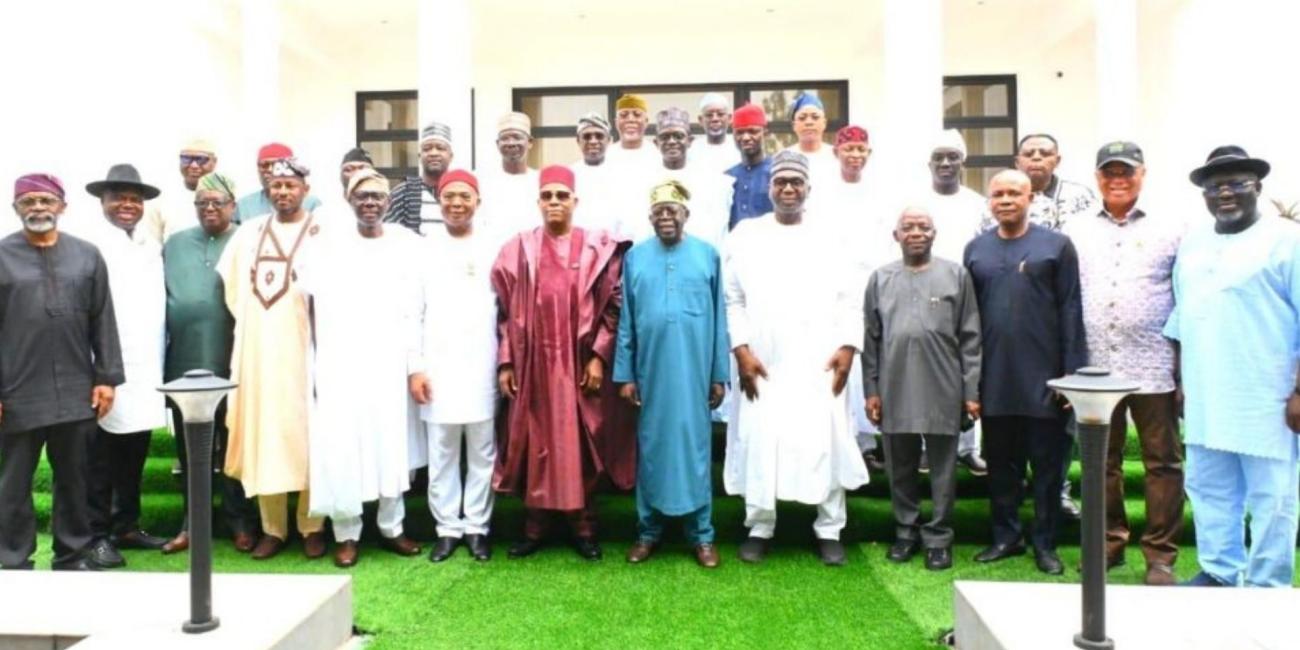
The President made the remarks during an Eid-el-Fitr gathering at his Lagos residence, where he hosted Vice President Kashim Shettima and 23 state governors. The occasion, meant to celebrate the end of Ramadan in a spirit of unity and reflection, also became a platform for candid discussions about the nation’s economic and security outlook.
In a statement issued by his Special Adviser on Information and Strategy, Bayo Onanuga, Tinubu revealed that his recent diplomatic engagements in the United Kingdom were primarily focused on strengthening Nigeria’s security capabilities and deepening international cooperation.
The President had just returned from a three-day state visit to the United Kingdom, where he was hosted by Charles III and held talks with British Prime Minister Keir Starmer. According to the presidency, discussions during the trip centred on security partnerships, investment opportunities, and diplomatic collaboration.
But beyond diplomacy, Tinubu used the Eid gathering to address a looming economic concern: the ripple effects of geopolitical instability in the Middle East. He cautioned that prolonged tensions in the region—particularly those affecting oil supply chains and global energy markets—could drive up prices internationally, with direct consequences for Nigeria’s fragile economy.
“We should care more for the vulnerable,” Tinubu said, acknowledging the hardship many Nigerians are already facing. “I know this Middle East crisis will spike inflation and affect our purchasing power. The labour union and others will be gearing to ask us to support more due to the effect of the Middle East war and crisis.”
His comments reflect a recognition that Nigeria, though an oil-producing nation, remains deeply interconnected with global markets. Disruptions in energy-producing regions often lead to volatility in fuel prices, transportation costs, and imported goods. For ordinary Nigerians, this translates into higher food prices, increased transport fares, and greater strain on household budgets.
The President’s remarks come at a time when inflation has remained stubbornly high, with citizens expressing concern about the rising cost of essentials. By referencing potential demands from labour unions, Tinubu appeared to anticipate renewed pressure for wage adjustments and expanded social support programmes.
He urged state governors not to rely solely on political messaging but to implement concrete policies that directly improve living conditions. According to him, the responsibility to shield citizens from economic shocks must be shared across all levels of government.
Tinubu specifically highlighted the need to cushion the impact of rising costs in critical sectors such as energy and transportation. These areas, he noted, have a cascading effect on nearly every aspect of daily life—from food distribution to school attendance and small business operations.
Beyond economic matters, the President also addressed ongoing security challenges across the country. He called for stronger coordination between the federal government and state administrations to tackle what he described as the “tyranny” of criminal elements.
Nigeria continues to face security threats ranging from insurgency in the northeast to banditry and kidnapping in other regions. Tinubu stressed that collaboration, intelligence sharing, and the deployment of modern technology would be central to improving safety nationwide.
He commended Vice President Shettima for recently visiting Borno State to condole with communities affected by insecurity. The visit, he said, demonstrated the administration’s commitment to empathy and direct engagement with victims.
Tinubu assured those present that new technological tools would soon be introduced to strengthen protection efforts. While he did not provide detailed specifications, the emphasis suggests a focus on surveillance systems, intelligence gathering platforms, and advanced defence equipment—areas reportedly discussed during his UK trip.
Speaking on behalf of the governors, Chairman of the Nigerian Governors’ Forum and Kwara State Governor AbdulRahman AbdulRazaq praised Tinubu’s diplomatic engagement in the United Kingdom. He described the visit as “bold and significant,” noting that strong international relationships are essential for attracting investment and strengthening security cooperation.
AbdulRazaq also addressed one of the most debated issues in Nigeria’s security architecture: state policing. He confirmed that deliberations among governors on the subject are ongoing and that the forum would soon present its proposals to the National Assembly.
The concept of state policing has gained momentum in recent years, as many argue that decentralised law enforcement could improve responsiveness to local security challenges. However, it remains a sensitive constitutional matter requiring legislative adjustments.
The Eid gathering, therefore, served as more than a festive reunion. It became a strategic conversation about Nigeria’s economic resilience, national security, and intergovernmental collaboration at a time of global uncertainty.
Tinubu’s warning about inflation underscores the vulnerability of developing economies to external shocks. While Nigeria has taken steps to reform its fiscal and monetary policies, external crises—particularly in geopolitically sensitive regions—can quickly offset domestic gains.
For millions of Nigerians, the immediate concern remains affordability: food on the table, fuel in vehicles, and stability in prices. The President’s appeal for compassion toward vulnerable groups suggests that the government is preparing for potential economic headwinds.
As global tensions persist, much will depend on how swiftly Nigeria can adapt its policies, stabilise key sectors, and strengthen safety nets. Tinubu’s message to the governors was clear: rhetoric alone will not suffice. Practical, coordinated action is needed to protect citizens from both internal insecurity and external economic shocks.
In the coming weeks, Nigerians will be watching closely to see how these warnings translate into tangible measures—whether through targeted subsidies, security reforms, or broader economic adjustments designed to safeguard livelihoods in uncertain times.